





The Seven Lakes That Serve a Megacity
Mumbai's water doesn't come from the sea that surrounds it, but from a complex network of seven lakes and dams located up to 160 kilometres away. These reservoirs—Upper Vaitarna, Modak Sagar, Tansa, Middle Vaitarna, Bhatsa, Vihar, and Tulsi—are the city's
lifeline, capturing monsoon rains to supply its residents throughout the year. The water travels through a vast and aging network of pipelines and tunnels, some over a century old, to be treated at massive plants like the one in Bhandup, one of Asia's largest, before it reaches homes and businesses across the island city and its sprawling suburbs.
Demand vs. Supply: A Widening Deficit
While 4,100 MLD is the official supply figure, Mumbai's actual daily requirement is estimated to be much higher, between 4,600 and 4,665 MLD. This creates an immediate daily shortfall of over 500 MLD. The Brihanmumbai Municipal Corporation (BMC) projects that by 2041, the city's demand will soar to 6,424 MLD, driven by population growth and increased commercial activity. If new sources aren't established, the deficit could explode to over 2,300 MLD, transforming the current strain into a full-blown crisis. The situation is made worse by unpredictable monsoons; deficient rainfall in 2026 forced the BMC to implement a 10% water cut to preserve reservoir levels, a measure that could extend well into 2027.
The Problem of 'Non-Revenue Water'
Not all the water that leaves the reservoirs reaches the taps. A significant challenge for the city is 'non-revenue water', which accounts for a staggering 34% of the supply. This loss, amounting to nearly 1,400 MLD, is attributed to a combination of factors: leakages from aging pipelines, water theft through illegal connections, and inaccuracies in metering and billing. This means that for every three litres supplied, one is lost before it can be used or billed. The BMC has identified reducing this wastage as a critical priority, setting a target to save around 400 MLD by tackling these systemic issues head-on.
Future-Proofing Mumbai's Water Supply
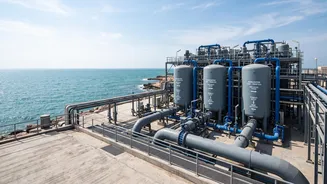
To bridge the ever-widening gap, the BMC is pursuing a multi-pronged strategy. Several large-scale projects are in various stages of development. These include the Gargai (440 MLD) and Pinjal (865 MLD) dam projects, along with the ambitious Damanganga-Pinjal river-linking scheme (1,586 MLD). However, these projects face significant delays, from planning hurdles to inter-state coordination. To diversify from rain-dependent sources, the city is also turning to technology. Desalination plants are planned for Manori and Versova, each with a 200 MLD capacity, and preliminary work has already begun. Alongside this, there is a renewed push to rejuvenate thousands of old wells and promote wastewater recycling for non-potable uses like gardening and construction, aiming to ease the burden on the primary supply system.