

Deconstructing the Iconic Duo
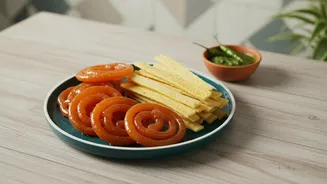
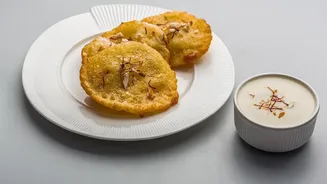
On its own, each component of this beloved pairing is a star. Fafda are savoury, brittle strips of gram flour (besan), seasoned with carom seeds and turmeric, then fried to a crisp. They are salty, earthy, and possess a satisfyingly sharp crunch. Then
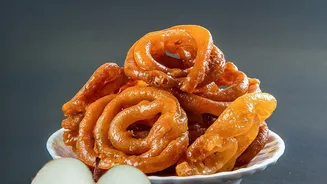
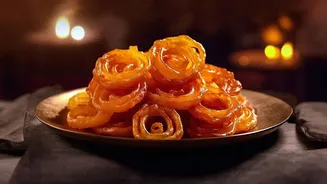
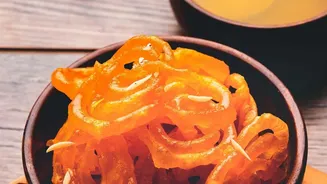
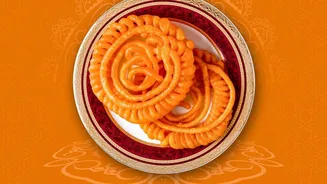
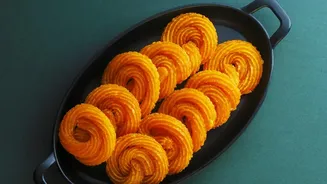
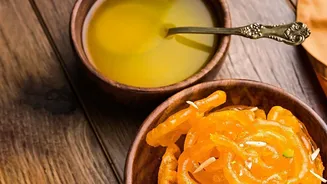
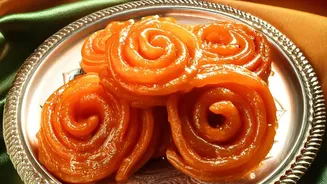
there is the jalebi, a glistening, chaotic spiral of fermented batter, deep-fried and plunged into a fragrant sugar syrup. It’s intensely sweet, with a slightly chewy-crisp texture that gives way to a burst of syrupy goodness. One is purely savoury; the other is pure indulgence. Together, they create a culinary dialogue that has defined Gujarati breakfast for generations.
A Symphony of Contrasts
The genius of Jalebi-Fafda lies in its deliberate and masterful contrast. It’s a perfect illustration of the Gujarati culinary philosophy, which excels at balancing sweet, salty, spicy, and sour notes, often within a single bite. The salty, muted spice of the fafda cuts directly through the sugary intensity of the jalebi. Conversely, the jalebi’s sweetness provides a delightful counterpoint to the fafda’s savoury flavour. It’s a push-and-pull on the palate that keeps you coming back for more. The textural play is just as important; the dry, snappy crunch of the fafda is the perfect foil for the jalebi’s softer, syrup-drenched exterior. This isn’t just a random pairing; it's a carefully engineered taste experience.
The Essential Supporting Cast
No plate of Jalebi-Fafda is complete without its accompaniments, which add yet another layer of complexity. Typically served alongside is a helping of fried green chillies, whose sharp, immediate heat provides a jolt of excitement. There is also a chutney, often a bright and tangy relish made from raw papaya or a gram flour-based 'kadhi' chutney. This introduces a sour and spicy element that ties the primary sweet and salty flavours together, rounding out the entire profile. Each element on the plate serves a purpose, creating a balanced and multi-dimensional experience that engages every part of the palate.
More Than a Meal, A Cultural Ritual
The pairing is especially popular during the festival of Dussehra. After nine nights of Navratri fasting, a fast is traditionally broken with a dish made from gram flour, making fafda a perfect choice. The jalebi, meanwhile, symbolises the sweetness of victory, celebrating Lord Rama’s triumph over Ravana. Legend suggests that jalebi (or its ancient form, 'Shashkuli') was a favourite of Lord Rama, while gram flour snacks were favoured by Hanuman. By eating them together, celebrants honour both figures. This tradition transforms a simple breakfast into a meaningful ritual, connecting food to faith and festivity. It's a Sunday morning staple for many, but on Dussehra, it becomes an integral part of Gujarat’s cultural identity.
A Taste of the Gujarati Ethos
Ultimately, Jalebi-Fafda is more than just a delicious snack. It’s a metaphor for the Gujarati approach to life itself. The state's cuisine is known for its ability to create harmony from contrasting elements, a skill reflected in its broader culture. This principle of balance—of finding the sweetness in the everyday, of tempering indulgence with simplicity, and of understanding that different elements can come together to create a stronger whole—is at the core of the Gujarati ethos. This simple plate of fried snack and sweet represents a sophisticated culinary intelligence that understands that the most memorable flavours are rarely one-dimensional.