
A Tradition Steeped in Festivity
For many, especially in Gujarat, the sight and smell of this duo signal celebration. The tradition is particularly strong during Dussehra, which marks the victory of good over evil. After nine nights of Navratri, which often involve fasting or dietary
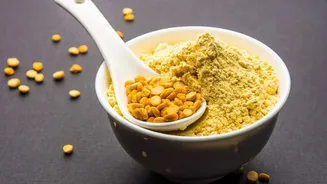
restrictions, this indulgent breakfast is seen as a well-deserved reward and a festive transition. Mythological tales add another layer of meaning; some believe Lord Rama, whose victory is celebrated on Dussehra, loved a sweet similar to jalebi, while his devotee Hanuman was fond of snacks made from gram flour (besan), the base for fafda. Thus, eating the two together becomes a tribute to their bond and the triumphant spirit of the festival.
The Anatomy of a Perfect Fafda
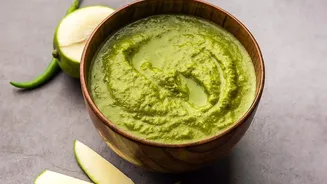
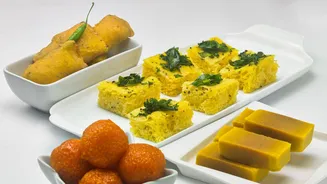
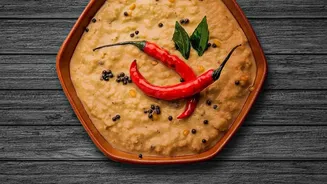
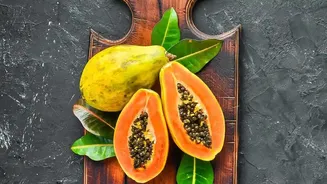
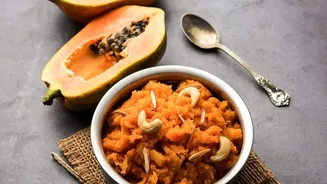
At its core, fafda is a study in savoury crispiness. Made primarily from gram flour (besan), it's seasoned with salt, turmeric, and carom seeds (ajwain), which lend a subtle, thyme-like fragrance. The dough is kneaded until soft and then expertly stretched by hand into long, thin strips before being deep-fried to a brittle, golden perfection. The texture is key—it's not a hard crunch, but a light, airy crispness that shatters with each bite. Fafda is rarely served alone. It's almost always accompanied by a side of 'sambharo' (a tangy raw papaya salad) and fried green chillies, which provide a fresh, sharp counterpoint to the fried snack.
Unravelling the Syrupy Jalebi
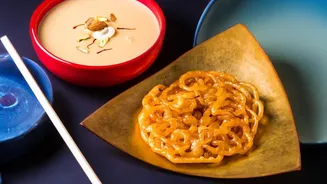
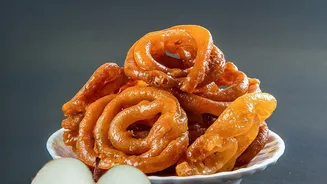
Jalebi is fafda’s sweet, intricate counterpart. It begins as a fermented batter of all-purpose flour (maida), which gives it a slight tangy taste. This batter is piped in chaotic, beautiful spirals directly into hot oil. The heat makes the batter puff up, creating a web of crispy exteriors and a slightly chewy, hollow interior. As soon as they're fried to a golden crisp, these spirals are plunged into a warm sugar syrup, often scented with saffron or cardamom. The jalebi soaks up the syrup, transforming it into a juicy, intensely sweet confection that leaks sugary goodness when you bite into it.
A Symphony of Opposites
The true genius of Jalebi-Fafda lies in the harmony created by their opposition. It’s a complete sensory experience where every element balances another. The salty, spiced flavour of the fafda cuts through the intense, sugary sweetness of the jalebi, preventing either from becoming overwhelming. Texturally, it’s a playground for the palate. You get the brittle, light crunch of the fafda followed by the substantial, syrup-filled crisp of the jalebi. Often, the jalebi is served warm while the fafda is at room temperature, adding a temperature contrast to the mix. It is this dynamic interplay—sweet against salty, crispy against crispy-chewy, warm against cool—that makes the combination so deeply satisfying and memorable.