

What Exactly Is the Gaia Sausage?
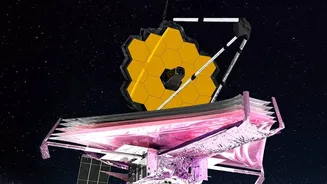
The "Gaia Sausage" isn't a celestial body you can spot with a telescope. Instead, it’s the name astronomers gave to the stellar wreckage of an ancient dwarf galaxy that merged with our own. The name comes from a discovery made using data from the European
Space Agency's Gaia satellite, which is meticulously mapping the positions and movements of over a billion stars. When scientists plotted the velocities of a specific group of stars, the resulting graph looked like a sausage. These stars were the tell-tale sign of a massive object that had been torn apart. This former galaxy is also known as Gaia-Enceladus, but the quirky 'Sausage' nickname has stuck, perfectly capturing the shape of the data that revealed this cosmic ghost.
A Collision of Galactic Proportions
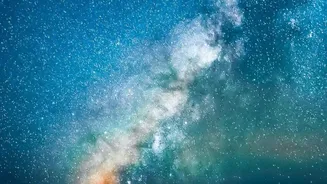
This wasn't a minor fender-bender; it was the last major merger in our galaxy's history and a defining event. Around 8 to 11 billion years ago, long before our sun and Earth existed, this smaller dwarf galaxy collided head-on with a young Milky Way. While smaller, the Gaia Sausage galaxy was still immense, possessing a mass more than 10 billion times that of our sun. At the time of the merger, the Milky Way itself was smaller, making the impact ratio roughly four to one. The collision tore the Sausage galaxy to shreds, scattering its stars, gas, and dark matter throughout our galaxy over a period of hundreds of millions of years.
How a Ghost Galaxy Remade the Milky Way
The impact of the Gaia Sausage was catastrophic and transformative. The debris from the shattered galaxy helped form two of the Milky Way's most prominent features: the central bulge and the vast, surrounding stellar halo. The collision also 'puffed up' the Milky Way's existing disc of stars, thickening it, and triggered a massive burst of star formation that lasted for billions of years. The powerful event may have even been responsible for flipping the entire disc of the Milky Way by more than 90 degrees into its current orientation. The stars from the Sausage galaxy were thrown into long, narrow, needle-like orbits, a motion that is radically different from the more circular paths of most native Milky Way stars.
The Evidence Hiding in Plain Sight
The clues to this ancient collision are all around us. Thanks to the Gaia mission's unprecedented precision, astronomers could identify stars that didn't belong. These 'immigrant' stars move in strange, elongated orbits and travel in the opposite direction to the majority of our galaxy's stars. They also have a different chemical composition, marking them as outsiders. Furthermore, astronomers have linked at least eight large globular clusters—dense, spherical collections of ancient stars—to the Sausage galaxy. Our galaxy continues to absorb smaller galaxies, like the Sagittarius dwarf galaxy, but the Gaia Sausage was the most massive of them all, leaving an unmistakable imprint on the Milky Way’s DNA.