






Powering a Lunar Future
At the MAX POWER aerospace expo at Kennedy Space Center, NASA made it clear that a sustainable lunar presence depends on solving the power problem. The announcements centred on the agency's strategy to build a robust infrastructure on the Moon before
astronauts make a long-term return. This involves creating reliable energy sources to survive the 14-day lunar nights and extreme temperatures. The expo showcased a multi-pronged approach, moving from theoretical plans to concrete industrial partnerships that will form the backbone of a future lunar economy.
A Nuclear Rover Named PROMISE
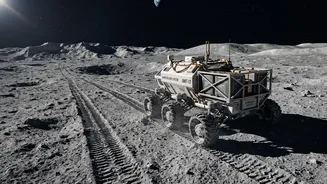
One of the headline announcements was the development of a nuclear-powered rover named PROMISE, which stands for Polar Rover for Observation, Mapping, and In-Situ Exploration. Unlike solar-powered predecessors, PROMISE is designed to operate continuously, even during the long, dark lunar nights and in permanently shadowed craters. NASA awarded Blue Origin a $94 million contract, with performance-based options worth an additional $140 million, to deliver the rover to the lunar South Pole using its Mark 1 lander. The rover itself will be built by NASA's Jet Propulsion Laboratory, reusing hardware and engineering models from the successful Curiosity and Perseverance Mars rovers. Its mission, targeted for late 2028, is to search for water ice and other resources by drilling up to a meter below the surface.
Ten Billion for Commercial Deliveries
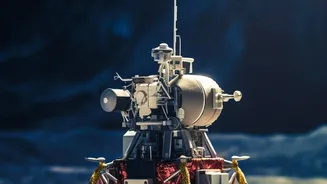
Signaling a major shift in strategy, NASA announced a new $10 billion framework for its Commercial Lunar Payload Services (CLPS) initiative. This 'CLPS 2' contract allows eight companies to compete for missions to deliver cargo to the Moon over the next decade. The selected companies are a mix of established giants and newer players: Blue Origin, Firefly Aerospace, Intuitive Machines, ispace-U.S., Lockheed Martin, Northrop Grumman, SpaceX, and Voyager Technologies. This approach spreads the risk and fosters a competitive commercial market for lunar logistics, with NASA acting as an anchor customer rather than the sole operator. The goal is to have essential equipment and supplies waiting on the surface when astronauts arrive.
Building the Broader Infrastructure
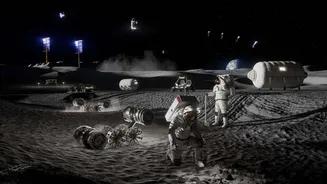
Beyond the big-ticket items, NASA also detailed smaller but critical infrastructure projects. Awards were given to companies like Honeybee Robotics, Redwire, and Yank Technologies to develop a 'miniCAST'—a mini communications and solar tower. This system will demonstrate combined power generation, battery storage, and wireless power transmission to support various surface operations. Other awards under the Small Business Innovation Research (SBIR) program focus on modular solar arrays, robotic arms with sensory feedback, and techniques for creating sturdy landing pads from lunar soil—all essential for building a permanent, functioning outpost.