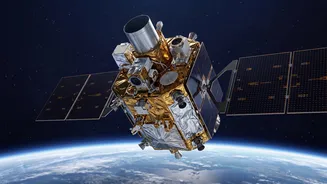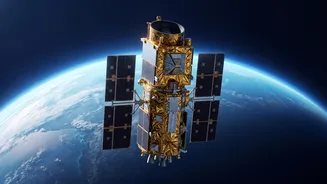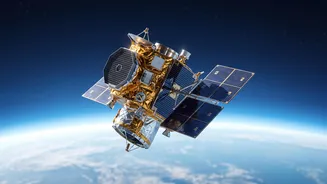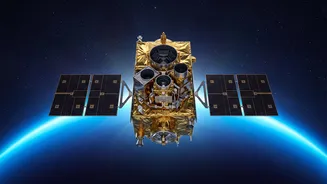




After almost 22 years of chasing the most violent explosions in the universe, one of NASA's most successful observatories has come to a dramatic end. NASA's Neil Gehrels Swift Observatory met its fate on November 4 in a fiery plunge to Earth.
A Watcher in the Darkness
For more
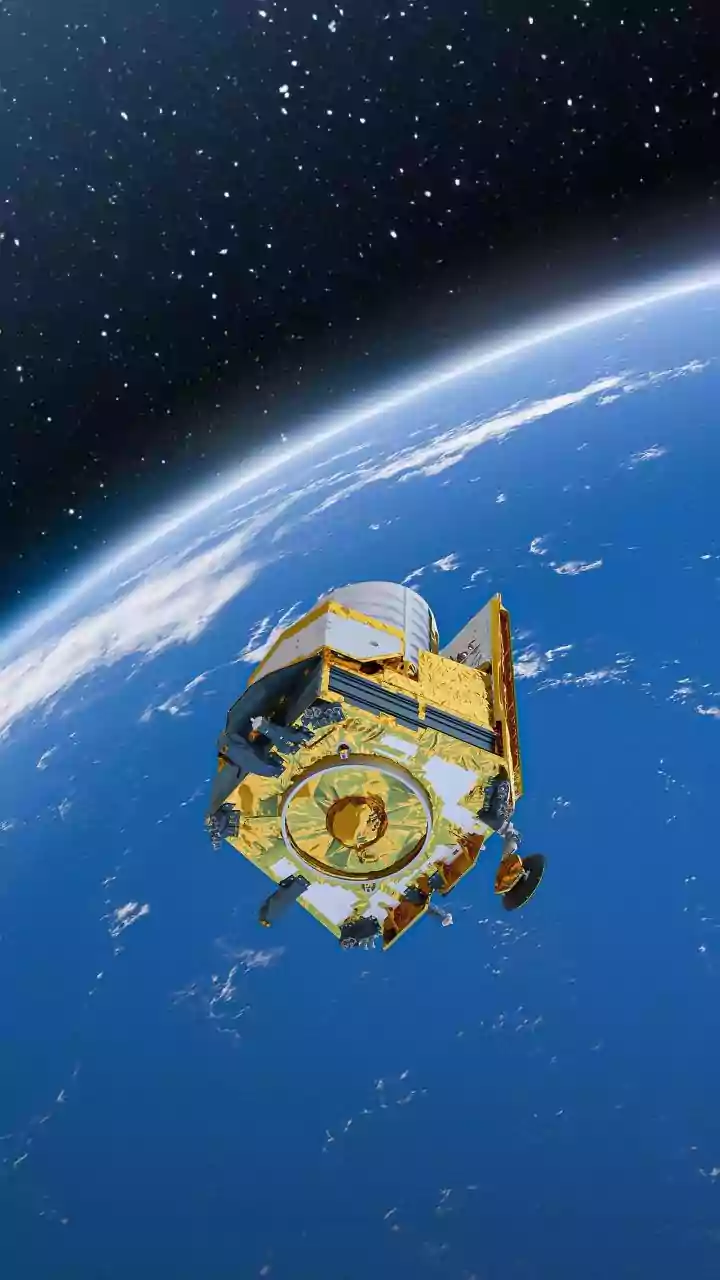
than two decades, the Neil Gehrels Swift Observatory served as NASA’s premier cosmic detective. Launched in November 2004 for what was planned as a two-year mission, it far outlasted its original lifespan. Its primary job was to hunt for gamma-ray bursts (GRBs), the most powerful explosions in the universe since the Big Bang. These fleeting, high-energy flashes are often linked to cataclysmic events like the collapse of massive stars into black holes or the collision of dense neutron stars. Before Swift, these events happened so quickly that scientists struggled to study them in detail. Swift was designed to solve that problem with unprecedented speed, forever changing our view of the transient, violent cosmos.
The 'Swift' Mission in Action
The observatory's name was not an acronym but a direct reference to its agility, like the bird. Swift carried a trio of telescopes designed to work in sequence. First, the Burst Alert Telescope would detect a new gamma-ray flash. Within about a minute, the entire spacecraft could pivot, or 'slew', to aim its other instruments at the source. An X-ray Telescope and an Ultraviolet/Optical Telescope would then capture the fading afterglow across different light spectrums. This rapid-response capability allowed scientists worldwide to receive an alert and train other ground-based and space telescopes on the event before the evidence vanished. This process unlocked the ability to pinpoint the origins of GRBs and study them in detail for the first time.
Two Decades of Discovery
Over its remarkable career, Swift observed more than 2,000 gamma-ray bursts and over 1,400 supernova explosions. Its data contributed to roughly 7,000 scientific papers. In 2005, it made history by locating the source of a 'short' GRB for the first time, strengthening the theory that these are caused by merging neutron stars. It spotted a supernova in the very act of exploding and detected a GRB so bright it could have been seen with the naked eye despite being 7.5 billion light-years away. The observatory also became a versatile tool for general astrophysics, studying everything from comets and asteroids in our solar system to stars being torn apart by supermassive black holes.
An Inevitable Fiery Farewell
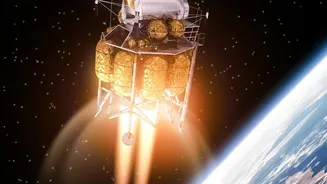
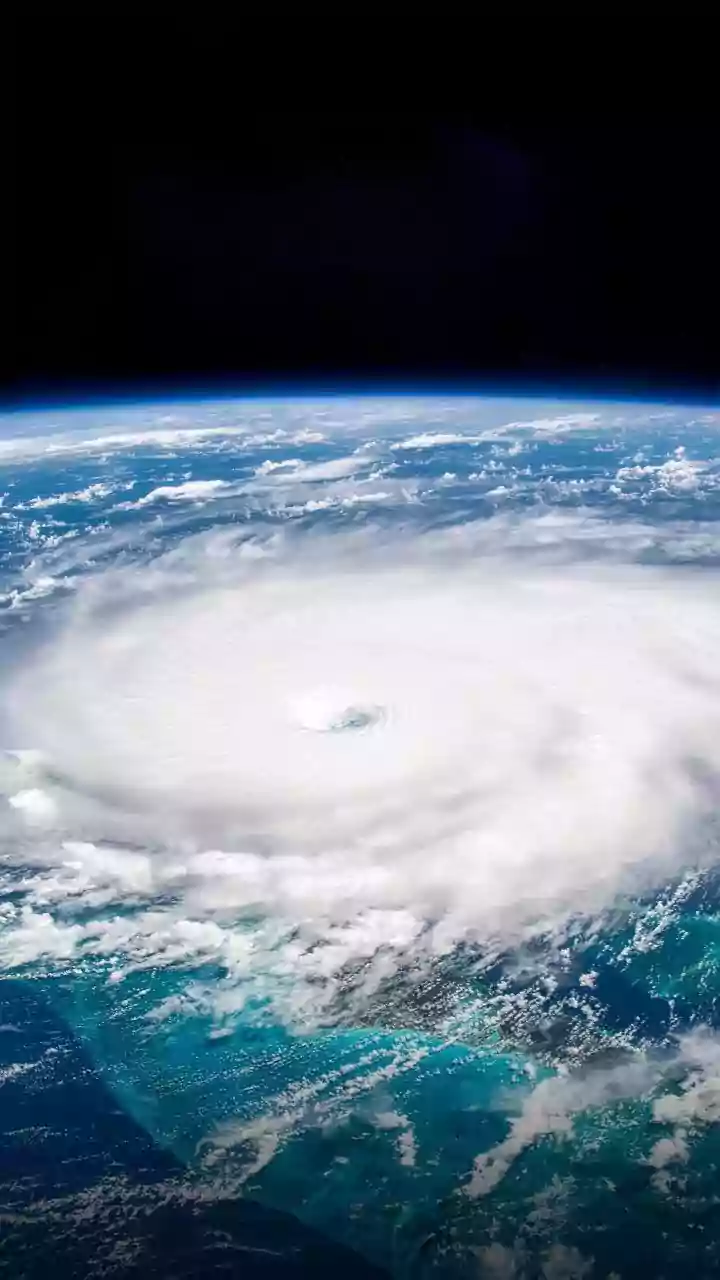
Like all satellites in low_Earth orbit, Swift was constantly subjected to atmospheric drag, which slowly pulled it downwards. In recent years, an increase in solar activity caused Earth's upper atmosphere to expand, accelerating the observatory's orbital decay. A last_ditch rescue mission was attempted in 2026. NASA paid a private company, Katalyst Space, $30 million to build and launch a robotic 'tug' called LINK to grab Swift and boost it into a higher orbit. However, the LINK spacecraft suffered a malfunction shortly after its July launch and began spinning, making a rendezvous impossible. With the rescue called off, Swift's fate was sealed. Its final scientific observation was made on October 20, 2026, as its altitude dropped too low to steadily point its telescopes.
The Final Plunge
On November 4, 2026, the 3,200_pound (about 1,450 kg) observatory made its final, uncontrolled descent. The U.S. Space Force confirmed that Swift re_entered the atmosphere at 7:_39 a.m. EST over the North Sumatra region of Indonesia. While most of the spacecraft was expected to burn up upon re_entry, NASA acknowledged that some dense components might survive the plunge. The agency calculated the risk of harm to anyone on the ground as low, at approximately 1 in 2,_100. No injuries or damage from debris have been reported.