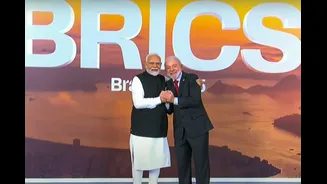








The return of Luiz Inácio Lula da Silva to Brazil's presidency continues to reshape its global relationships. For India, this has meant a significant deepening of economic and strategic ties, moving beyond transactional trade to a robust partnership.
A Partnership Renewed
Since President Lula’s return to office, the India-Brazil strategic partnership has gained considerable momentum. This isn't just a continuation of past policies but a deliberate pivot towards strengthening South-South cooperation. Both nations, as key members of BRICS and influential voices in the G20, share a vision for a more multipolar world order. Prime Minister Narendra Modi's congratulatory message to Lula emphasized working together on the shared priorities of the Global South. This political alignment has created a fertile ground for economic collaboration, with both leaders setting an ambitious target to more than double bilateral trade.
The Current State of Trade
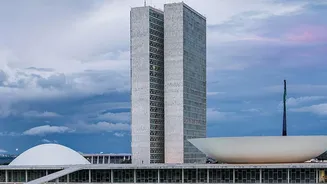
Brazil stands as India's most significant trading partner in Latin America. While bilateral trade saw a peak of over $15 billion, figures for recent years have stabilized, reaching around $15.07 billion in the 2025-26 fiscal year. Building on this, the two countries are now aiming for an ambitious bilateral trade target of $30 billion by 2030. To facilitate this growth, India and Brazil are actively using a Trade Monitoring Mechanism (TMM) to address challenges and reduce non-tariff barriers, with the latest meeting held in Brasília. There is also a concerted effort to expand the scope of the Preferential Trade Agreement between India and the Mercosur trade bloc, which includes Brazil, Argentina, Uruguay, and Paraguay.
What We Buy, What We Sell
The trade basket between India and Brazil is diverse and complementary. India's major exports to the South American nation include petroleum products (especially diesel), agrochemicals like insecticides and fungicides, pharmaceuticals, and automotive components. In return, India is a major importer of Brazilian goods, primarily crude petroleum, raw sugar, and soybean oil. This exchange highlights a strategic interdependence; Brazil relies on Indian chemicals and pharmaceuticals to support its vast agricultural and health sectors, while India's energy and food security are bolstered by Brazilian exports. In 2024, Brazil's top exports to India were raw sugar ($1.64B) and crude petroleum ($1.18B), while India's top exports to Brazil were refined petroleum ($586M) and nitrogen heterocyclic compounds ($550M).
New Frontiers: Biofuels and Defence
Beyond traditional goods, the partnership is expanding into high_tech and strategic sectors. Bioenergy is a particularly promising area. Brazil, with its decades_long experience in sugarcane_based ethanol and flex_fuel vehicles, is a natural partner for India, which has ambitious goals for ethanol blending. The two nations are collaborating on sustainable aviation fuel (SAF) and ethanol production technology, seeing it as a path to energy security and rural development. Defence and critical minerals are other emerging frontiers. Brazilian aerospace major Embraer has established an office in India to explore local production, signaling deeper industry integration. Furthermore, agreements on the supply of critical minerals and rare earths aim to diversify India's supply chains away from dependency on single sources.
Challenges and the Road Ahead
Despite the positive momentum, the path to $30 billion in trade is not without its challenges. Both countries must navigate complex regulatory environments and work to simplify market access. India, for instance, has pushed for more predictable regulatory pathways for its pharmaceutical products in Brazil. Similarly, discussions are ongoing to resolve phytosanitary issues to improve market access for agricultural products from both sides. However, the shared political will and consistent high_level engagement suggest a strong commitment to overcoming these hurdles. The establishment of an office for ApexBrasil, Brazil's trade promotion agency, in New Delhi is another concrete step aimed at boosting business_to_business links and investment.