
The Search for Buried Treasure
For decades, scientists have known that Mars holds vast quantities of water ice. This ice is a critical resource for future human missions, capable of providing drinking water, breathable oxygen, and even rocket fuel. The problem is that most of this
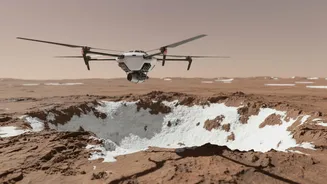
ice isn't sitting on the surface. Outside of the planet's poles, it's buried under layers of red dust and rock. Orbiting spacecraft have mapped Mars extensively but their radar can't effectively see into the crucial first few feet below the surface where this ice is thought to be most accessible. This is the gap that a new generation of aerial explorers is being designed to fill, providing a close-up view that was previously impossible.
Skyfall: Ingenuity's Successor
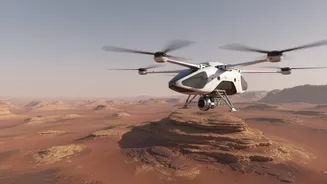
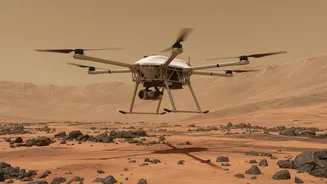
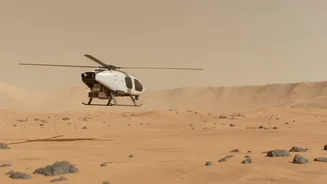
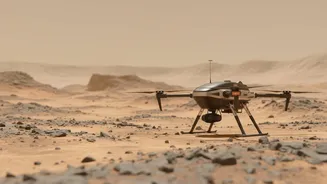
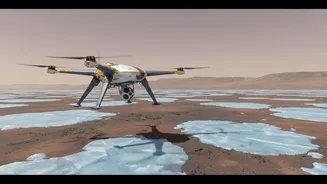
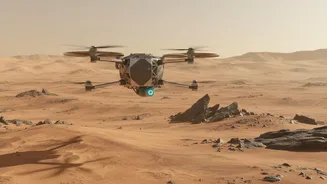
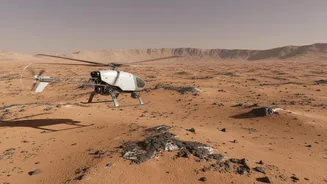
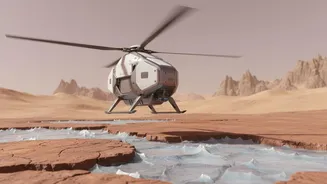
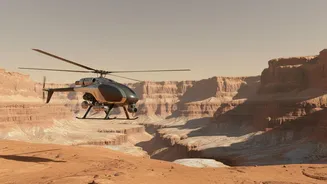
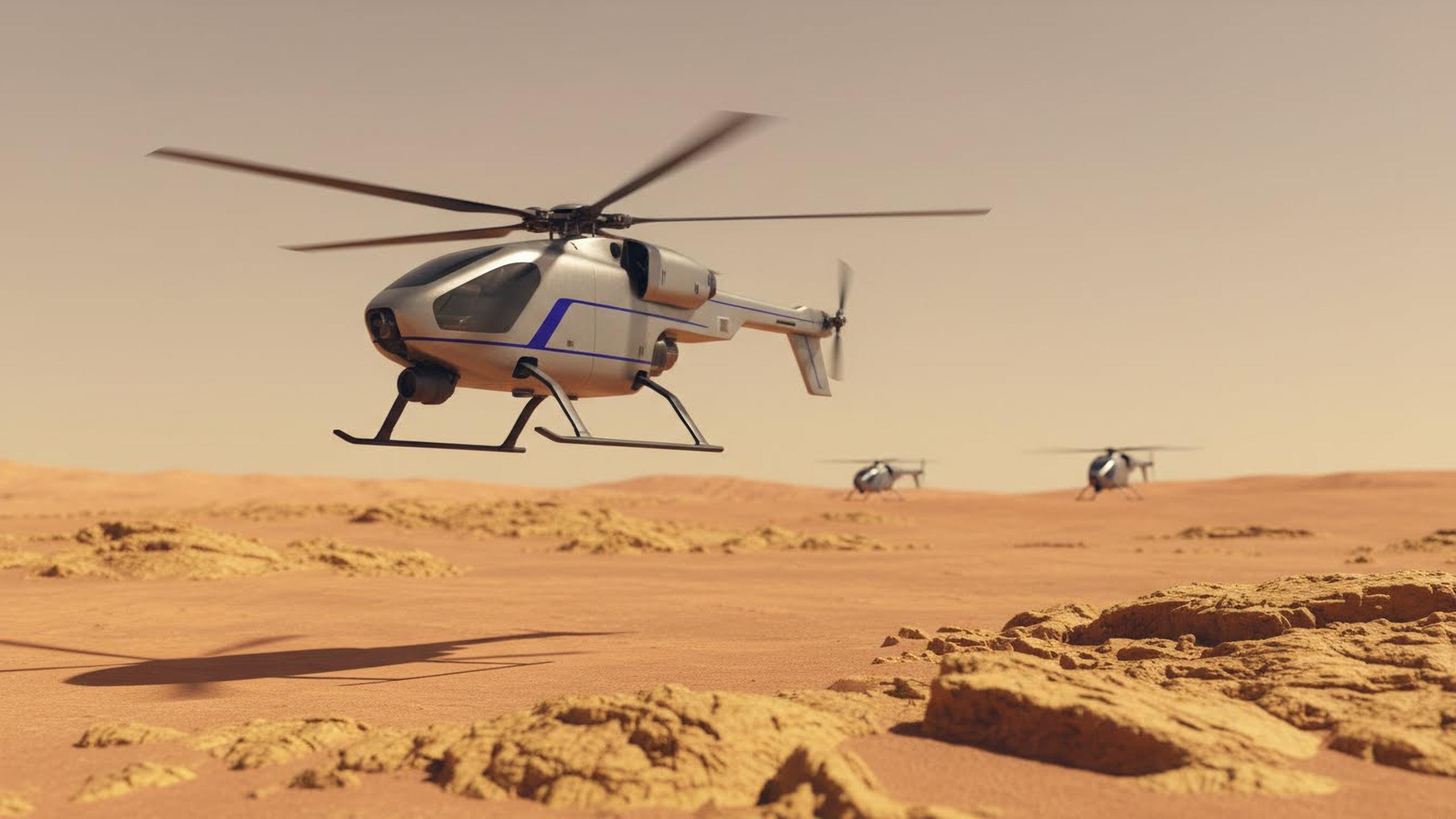
Building on the groundbreaking success of Ingenuity, the first helicopter to achieve powered flight on another planet, NASA is developing a far more ambitious concept called Skyfall. Where Ingenuity was a small technology demonstrator weighing just 1.8 kilograms, the Skyfall mission envisions sending a trio of larger, more capable helicopters to the Red Planet. These rotorcraft won't need a rover to act as a communications relay, granting them greater autonomy to explore. Their primary mission is to serve as advanced scientific scouts, equipped with a suite of instruments to map the Martian surface and, most importantly, peer beneath it.
Seeing with Radar 'Capes'
The key technology that allows Skyfall to hunt for hidden ice is a lightweight, ground-penetrating radar (GPR). This is similar in principle to the RIMFAX instrument on the Perseverance rover, which uses radar waves to map geologic structures underground. For a helicopter, however, the antenna needed to be incredibly light and resilient. Engineers at NASA's Jet Propulsion Laboratory (JPL) developed a unique solution: a flexible antenna that unfurls during flight and looks like a small cape. This design allows the helicopter to fly low and slow, sending radar signals that can penetrate up to 16 feet (5 meters) below the surface to detect the telltale signature of water ice.
An Innovative Deployment
Getting the helicopters onto the Martian surface is another area of innovation. The concept includes a dramatic mid-air deployment called the 'Skyfall Maneuver'. Instead of being carefully lowered by a lander, the entry capsule would release the three helicopters during its descent through the thin Martian atmosphere. The helicopters would then start flying and land themselves under their own power. This approach, if successful, could dramatically reduce the cost, complexity, and risk associated with traditional landing systems. The mission, which is a collaboration between NASA and AeroVironment, is tentatively scheduled for a launch in the late 2020s.
Paving the Way for Astronauts
The data gathered by the Skyfall helicopters would be revolutionary. They could create detailed 3D maps of subsurface ice deposits, helping scientists understand Mars' climate history and identifying the most promising locations for resource extraction. This information is not just scientifically valuable; it's essential for planning the first human missions to Mars. By identifying accessible water ice, the Skyfall concept could help determine the safest and most resource-rich landing sites for future astronauts, bringing the prospect of a human presence on the Red Planet one step closer to reality.