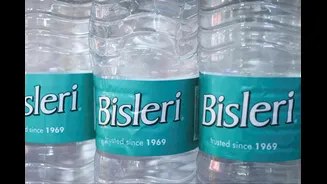









A recent regulatory order against a batch of Bisleri water from its Goa plant has raised questions among consumers. This was not a nationwide recall but a targeted action. Here’s a breakdown of what happened and why it affects only one specific batch.
What Exactly Happened?
On November 23, 2026, the Food Safety and Standards Authority of India (FSSAI) confirmed it had issued an order prohibiting the sale of a specific batch of Bisleri packaged drinking water. The order was directed at 'Batch GO 270', which was manufactured at Bisleri International's plant in Verna, South Goa, on September 27, 2025. This action followed a series of quality tests on a sample from this batch. It's important to note that this was a 'prohibition of sale' order for a single batch, not a suspension of the plant's license or a nationwide recall of all Bisleri products. The Goa Food and Drugs Administration (FDA) has since increased its surveillance of all packaged water brands in the state as a precautionary measure.
The Reason Behind the Flag
The regulatory action stemmed from a complex testing process. A sample from Batch GO 270 was first tested at a primary laboratory, which found levels of bromates—a chemical byproduct of water disinfection—to be above the permissible limit. As is their right under food safety laws, Bisleri appealed this finding. The sample was then sent to a national referral laboratory for a final, binding test. This second test found that bromates were actually within the safe limit. However, it detected the presence of another substance: Polycyclic Aromatic Hydrocarbons (PAHs), a group of chemicals that can enter food and water through environmental contamination. Based on this final finding from the referral lab, the FSSAI issued its order against the specific batch.
Why Was Only One Batch Affected?
The action was limited to a single batch because that’s how modern food safety regulation is designed to work. Products like bottled water are manufactured in distinct batches, each with a unique identification number (in this case, GO 270). This system of batch tracking allows regulators and companies to trace products from the factory to the store shelf with high precision. When a quality issue is detected through random sampling and testing, authorities can isolate the problem to the specific batch where it occurred. This prevents the need for massive, disruptive recalls of all products, which would be necessary if there were no way to distinguish between different production runs. It’s a sign of a functioning, targeted system. Bisleri itself noted that it produces over 50,000 batches annually across its 143 plants, putting the single-batch issue into perspective.
How the Regulatory Process Protects Consumers
This case is a real-world example of India's Food Safety and Standards (Food Recall Procedure) Regulations, 2017, in action. These rules provide a clear framework for identifying, removing, and addressing unsafe food products. A recall or sale prohibition can be initiated by the FSSAI or voluntarily by the company if it discovers an issue. The process includes identifying the affected product and its specific batch numbers, notifying the authorities, and ensuring the product is removed from the supply chain. By focusing on batch-level data, the system protects public health efficiently without causing unnecessary panic or punishing a company for an isolated error that doesn't reflect its overall product quality. The FSSAI has directed Bisleri to conduct a root cause analysis to determine the source of the PAH contamination in that specific batch.
Bisleri's Response and What's Next
Bisleri has publicly addressed the situation, welcoming the FSSAI's clarification that the initial concern over bromates was cleared upon re-testing. The company has emphasized that the order pertains to a single batch manufactured over a year ago, which is no longer in circulation in the market. It also stated that it had highlighted discrepancies in the PAH test results and has been seeking further re-testing since February 2026. The company has reassured consumers that its products are safe and that all its manufacturing facilities, including the one in Goa, continue to be fully operational and compliant with all FSSAI regulations.