








The Brain's Shortcut for Scent
Have you ever caught a whiff of a particular perfume and been instantly transported back to your school days, or smelled a dish that reminded you vividly of your grandmother’s kitchen? This isn’t just nostalgia; it’s neuroscience. Our sense of smell has
a unique and powerful connection to our brain. When we smell something, the signals travel through the olfactory bulb, which has a direct pathway to the brain's limbic system. This system includes the amygdala, which processes emotions, and the hippocampus, which is responsible for forming memories. Unlike our other senses like sight and sound, which have to pass through a sort of relay station called the thalamus, scents get a VIP pass straight to our emotional and memory centres. This is why a scent-triggered memory often feels more immediate and emotionally charged than a memory sparked by a photograph or a song.
Familiarity Breeds Calm
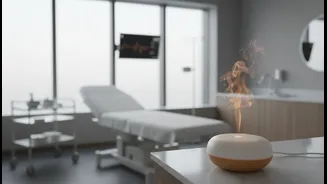
When we are in a stressful environment like an exam room, our body's fight-or-flight response can kick in, making it hard to focus. This is where a familiar scent acts as a powerful anchor. While certain scents like lavender or chamomile are widely known for their general calming properties, a personally familiar scent can be even more effective. The power lies in the positive association. If a scent is linked to a safe, happy, or comfortable memory—like the smell of your mother's sari, the specific brand of soap used at home, or the perfume you wore on a happy holiday—inhaling it sends a signal to your brain that everything is okay. Research has shown that exposure to the scent of a loved one can lead to lower perceived stress and even reduced levels of cortisol, the body's primary stress hormone. In an unfamiliar setting, this familiar sensory input can disrupt the anxiety cycle and create a small, personal bubble of comfort, making the strange room feel less intimidating.
How to Create a 'Scent Anchor'
Harnessing this phenomenon for yourself is simple. The key is to be intentional. First, choose your scent. It doesn't have to be a fancy essential oil; it can be anything with a positive, calming association for you. This could be a specific lotion, a familiar spice from your kitchen, a drop of vanilla essence, or even the scent of a particular book. Once you've chosen it, you need to reinforce the connection. Start using or smelling this scent during moments of relaxation—while reading a book, listening to calm music, or winding down before bed. This process strengthens the association between the scent and a state of peace. When it's time for the exam or appointment, bring the scent with you. A few drops of an essential oil on a handkerchief, a small scented sachet in your pocket, or a familiar lip balm you can discreetly apply are all excellent options. Before you enter the room, and any time you feel a wave of anxiety, take a moment to inhale the scent deeply. This small, deliberate action can help ground you in the present and activate the calming memories associated with the smell.
Beyond the Exam Hall
The utility of a scent anchor extends far beyond academic or medical settings. Consider using this technique for any situation that makes you nervous. A high-stakes job interview, a public speaking engagement, a difficult conversation, or even the first day at a new job can all be made a little easier with a familiar scent. It’s a discreet and personal coping mechanism that you can carry with you anywhere. By creating a portable pocket of calm, you are giving your brain a reliable cue to relax, helping you to think more clearly and perform at your best, no matter the pressure. It’s a reminder that even when you can't control the environment around you, you have tools to manage your internal response to it.