




Smaller, Lighter, and More Efficient
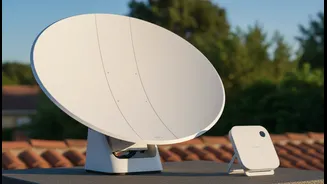
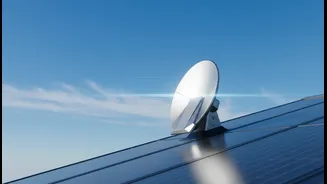
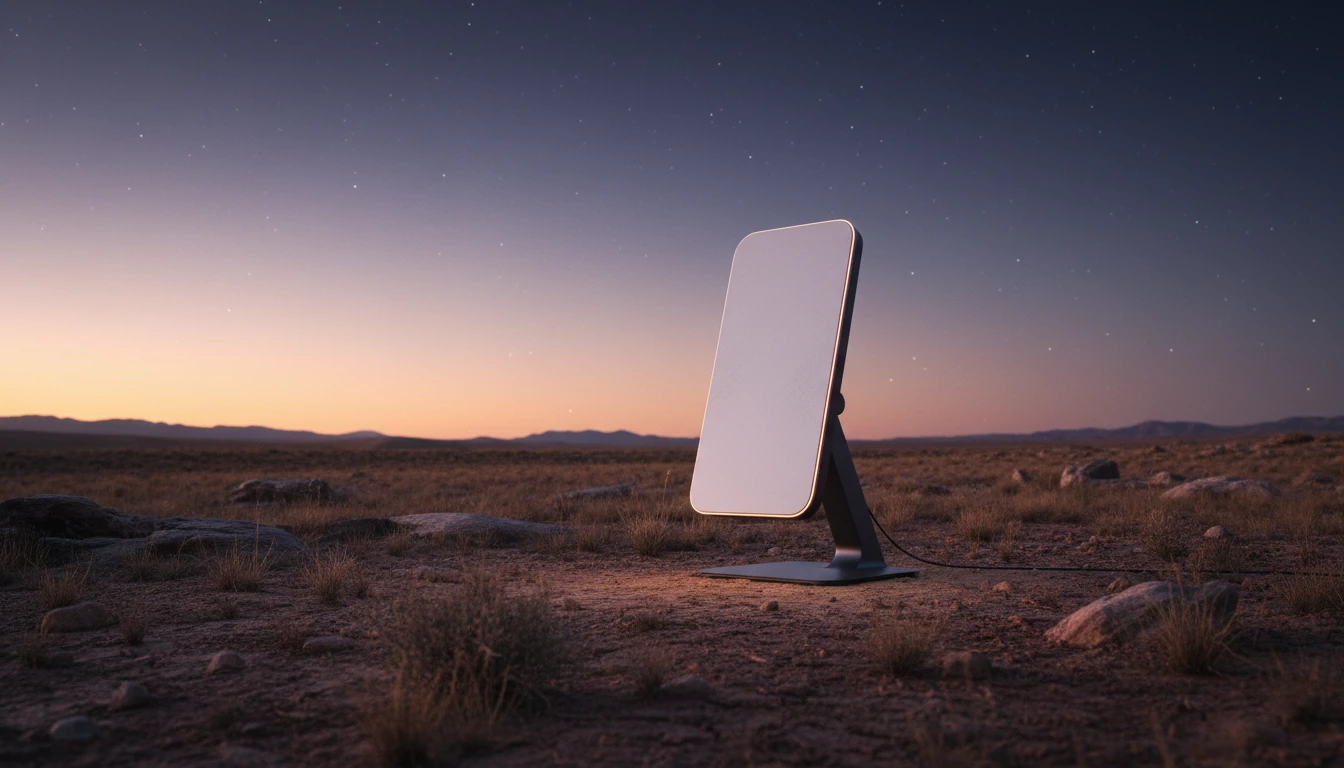
The most significant changes with the Starlink V5 are not about raw speed, but about its physical design and power needs. The new V5 dish is dramatically smaller and lighter than its predecessor, the V4. It weighs just 1.1 kg (2.4 pounds), a steep drop
from the V4's 2.9 kg (6.4 pounds). This makes it much easier for customers to handle and install themselves, a key advantage for a service that often requires rooftop or pole mounting. Beyond the weight reduction, the V5 is also far more power-efficient. It consumes an average of 35-50 watts, compared to the 75-100 watts used by the V4. This near-50% reduction in power draw makes it a much more practical option for users in off-grid locations who rely on solar power and battery systems.
A Trade-Off on Top Speed
Interestingly, the V5 is not being marketed as a speed upgrade. In fact, its stated peak download speed is slightly lower than the previous generation. SpaceX lists the V5 with a top speed of 375+ Mbps, whereas the V4 was rated for 400+ Mbps. However, this 25 Mbps difference in the theoretical maximum is unlikely to be noticed by the majority of users. Real-world internet speeds are more dependent on factors like network congestion in a specific area, a clear view of the sky, and the user's service plan. For most typical activities like streaming 4K video, gaming, and video calls, the V5's performance is expected to be seamless. The focus of the V5 appears to be on creating a more scalable, reliable, and user-friendly hardware experience rather than chasing the highest possible peak speed.
What's in the New Kit?
The Starlink V5 kit comes with several updated components. Along with the new, smaller dish, it includes a compact 'Router Mini' and, notably, a pipe adapter for mounting, which was previously a separate purchase. The inclusion of the pipe adapter in the box simplifies the installation process for many residential users. However, the switch to the Router Mini might be a trade-off for some households, as it has a more limited Wi-Fi range compared to the Router 3 that came with some V4 kits. This might require users in larger homes to consider adding a mesh node or other network extenders to get full coverage. The V5 system still requires a clear view of the sky and is not intended for in-motion use, a market segment served by other Starlink products like the Starlink Mini.
The Limited Rollout Strategy
Currently, the Starlink V5 is only available to select residential customers in the United States. SpaceX has not specified the exact areas, but this kind of limited launch is a common strategy for technology companies. It allows the company to test the new hardware in real-world conditions, gather feedback, and gradually increase manufacturing before a full-scale global launch. The company has stated that as production ramps up, the V5 will become available in additional areas. This staggered approach helps manage supply chains and ensures that customer support can handle the transition smoothly. There is currently no firm timeline for when the V5 will be available internationally or replace the V4 entirely across all plans.
Why V5 Matters for Starlink's Future
The design philosophy behind the V5 offers clues about SpaceX's long-term strategy for Starlink. By creating a smaller, lighter, and more power-efficient dish, the company can likely reduce its manufacturing and shipping costs. This makes it easier to scale production to meet the massive global demand for internet connectivity. Starlink already connects over 9 million customers and is rapidly expanding. Efficient, easy-to-install hardware is crucial for penetrating markets in rural and remote regions where traditional internet is unavailable. The V5 represents a maturation of the Starlink platform, shifting from pure performance to a more balanced approach focused on reliability, accessibility, and the practical realities of being a global utility for millions.