






A New Record for Solar Power
In the world of renewable energy, efficiency is everything. Recently, researchers have made significant strides, pushing a new type of solar cell past the 30% efficiency mark. Specifically, a team of Chinese researchers from Nanjing University developed
a perovskite-silicon tandem cell that achieved a certified efficiency of 33.0%. This isn't just another incremental improvement; it represents a major leap forward. For years, the theoretical maximum efficiency of conventional, single-junction silicon solar cells—the kind that dominate today's market—has been a known barrier. By successfully layering a perovskite material on top of traditional silicon, scientists are proving that this ceiling can be shattered.
What Are Tandem Solar Cells?
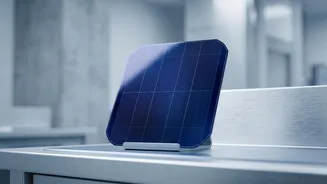
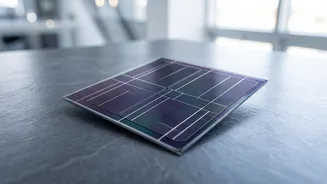
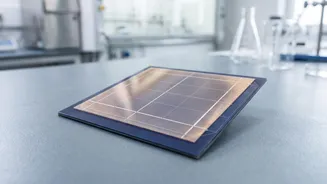
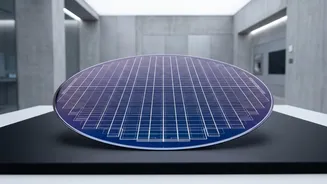
Think of a tandem solar cell as a high-performance team. It stacks two different solar-absorbing materials on top of each other. The top layer, typically made of a synthetic crystalline material called perovskite, is excellent at capturing high-energy light, like the blue and green parts of the solar spectrum. The light that it doesn't absorb—the lower-energy red and infrared light—passes through to the bottom layer, which is a conventional silicon cell. This silicon layer then captures that remaining light. By working together, the two layers convert more of the total solar spectrum into electricity than either material could on its own, drastically boosting overall efficiency.
Why 30% is the Magic Number
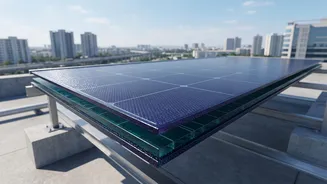
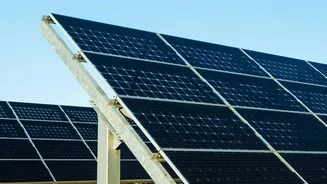
For decades, the standard silicon solar cell has been the workhorse of the industry, but its efficiency has been plateauing, with commercial panels typically operating in the 22-24% range and a theoretical limit just under 30%. Breaking the 30% barrier is a psychological and economic game-changer. It proves that the tandem approach offers a clear path to generating significantly more power from the same amount of space. This is crucial for residential rooftops with limited area and for large-scale solar farms where land use is a major cost factor. More power per panel means fewer panels, less mounting hardware, and lower installation costs are needed to reach a desired energy output.
The Bridge from Lab to Factory
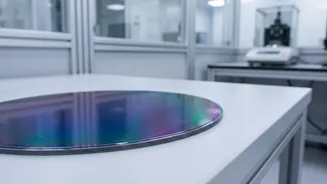
What makes the latest achievements particularly exciting is the focus on scalability. Past efficiency records were often set using expensive materials or complex processes that were not viable for mass production. However, the recent 33% efficiency record from Nanjing University was achieved using a blade-coating process under ambient air conditions. This method is much more suitable for large-scale, cost-effective manufacturing than techniques requiring a controlled inert atmosphere. This focus on manufacturability connects the scientific breakthrough directly to commercial potential, signaling that these high-efficiency cells are not just a laboratory curiosity but a tangible future product.
The Road to Commercialization
While the technology is incredibly promising, a few hurdles remain before tandem solar panels become commonplace. Long-term durability and stability have historically been a challenge for perovskite materials, which can degrade when exposed to moisture and heat. However, significant progress is being made with new encapsulation and material engineering techniques designed to ensure a 25-year lifespan. Companies like Oxford PV and GCL are already operating pilot production lines and beginning to ship the first commercial tandem modules, initially for premium and utility-scale projects. As manufacturing volumes increase, analysts expect costs to fall, potentially reaching parity with high-end silicon panels by the end of the decade. For a country like India with ambitious solar targets, this technology could be instrumental in maximizing energy generation from available land and rooftops in the coming years.