







The Original Dream
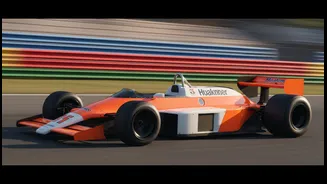
In the late 1960s, McLaren was the undisputed king of the Can-Am racing series, with cars that were brutally fast and technologically advanced. Founder Bruce McLaren, a brilliant engineer and driver, saw an opportunity to translate this track dominance
to the street. He envisioned a road car that would be the fastest and quickest in the world—a civilized version of his ferocious M6A race car. The result was the M6GT. This wasn't just about building a car; it was about creating a legacy. Bruce planned a production run to compete with the likes of Ferrari and Lamborghini, using the M6GT prototype as his personal car and daily driver, famously using the bright red coupe for meetings and race weekends. It was lightweight, impossibly low, and powered by a thundering American V8—a direct link to the winning formula of its racing sibling.
A Vision Cut Short
The M6GT project was well underway, with plans to homologate the car for endurance racing and build a limited series for customers. Bruce McLaren was pouring his passion into the project, creating what many believed would have been a game-changing supercar. But in June 1970, tragedy struck. While testing a new Can-Am race car at the Goodwood Circuit in England, Bruce McLaren was killed in an accident. He was just 32 years old. With his untimely passing, the driving force behind the company was gone, and his dream of a McLaren road car died with him. The M6GT project was shelved, and only a couple of prototypes ever existed, leaving it as one of the great “what if” stories in automotive history.
A Legacy Reborn
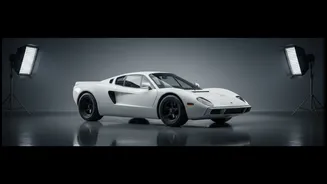
For over half a century, the M6GT remained a footnote—a tantalizing glimpse of what might have been. The McLaren F1 of the 1990s would eventually establish the company as a builder of road cars, but the original seed was planted decades earlier. Now, McLaren Special Operations (MSO), the company's bespoke division, has finally finished what its founder started. This is not a modern reinterpretation or a restomod. MSO embarked on a painstaking mission to create a one-off M6GT that was as faithful to Bruce's original 1969 vision as possible, a project described as “archaeology on four wheels.” The goal was to build the car that would have been, using historical records and period-correct techniques to resurrect a ghost.
Obsessive Authenticity
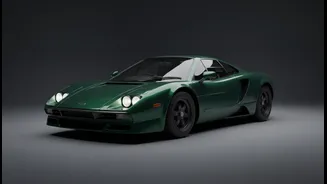
The level of detail in this recreation is staggering. The project began with a genuine chassis from a period M6A race car. The team then unearthed the original body moulds in the UK, which even showed evidence of design modifications made back in the late 60s—details that MSO chose to preserve as part of the car's historical record. The car is powered by a period-correct small-block Chevrolet V8, mated to a five-speed manual gearbox. The build consumed some 3,000 hours, with aerospace craftsmen hand-setting rivets and the team sourcing imperial-spec bearings that have been out of production for decades. The interior features custom green vinyl and a hand-turned walnut gear knob, while the exterior is finished in a bespoke Colnbrook White, a tribute to the factory where Bruce first developed his road car ideas.
A Poignant Debut at Goodwood
In a move full of historical significance, the finished M6GT is making its public debut at the 2026 Goodwood Festival of Speed. This is the modern event held on the grounds of the Goodwood estate, home to the very same circuit where Bruce McLaren tragically lost his life 56 years ago. The return of his first road car vision to this location is a poignant and powerful tribute. This one-off car will not be sold; instead, it will become the first piece in MSO's new heritage collection, a living reminder of the company's origins and the ambition of its founder. It serves as the missing chapter that bridges the gap between McLaren's racing dominance and every road car that has worn the badge since.