





The Hidden Weight of a Simple Pot
A single large terracotta or concrete planter may seem manageable when it’s empty. But the real weight calculation begins after you’ve set it up. First, add the soil. Then, add the plant itself. Now, factor in the significant weight of water after a thorough
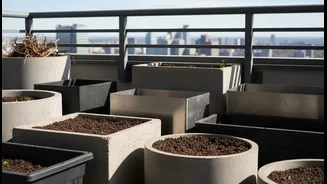
soaking. A large pot filled with wet soil can easily weigh over 100 kilograms, and some exceptionally large ones can approach 450 kilograms. This is far more than a simple decorative item; it’s a serious load. Most people underestimate this cumulative weight, but the physics are undeniable. What starts as a simple gardening project can quickly become a heavy piece of permanent furniture, one that your balcony might not be prepared to support long-term.
Why the Edge Is Especially Risky
Understanding why the edge is the worst spot for weight requires thinking about how most balconies are built. Many are cantilevers—structures that are supported on only one end, projecting out from the building. Think of it like a diving board. A person standing at the base of the board places much less stress on it than a person standing at the very tip. The same principle applies to your balcony. Placing a heavy planter near the building’s wall allows the structure to support the load more effectively. When you move that same heavy pot to the outer railing, you are maximizing the force and creating a point of significant stress. It’s not just about the total weight on the balcony, but where that weight is concentrated. The edge is the most vulnerable point.
Understanding Your Balcony’s Limits
Building codes provide a safety net, but they aren't an invitation to test the limits. In India, the National Building Code has stringent rules for railing height and strength to prevent falls. However, the floor itself has its own capacity. While professionally engineered, residential balconies are typically designed to support a 'live load' of about 40 to 60 pounds per square foot (psf). This is meant to accommodate people, outdoor furniture, and other typical uses. It is not designed for concentrated, heavy static loads like a massive planter left in one spot for years. Without consulting a structural engineer, it's impossible to know your specific balcony's exact limit. The safest approach is always to be conservative and assume your balcony is built for regular residential use, not for storing heavy industrial weights.
Smarter Ways to Garden Safely
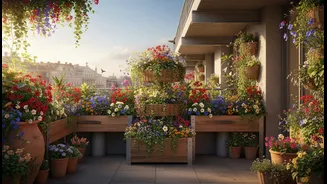
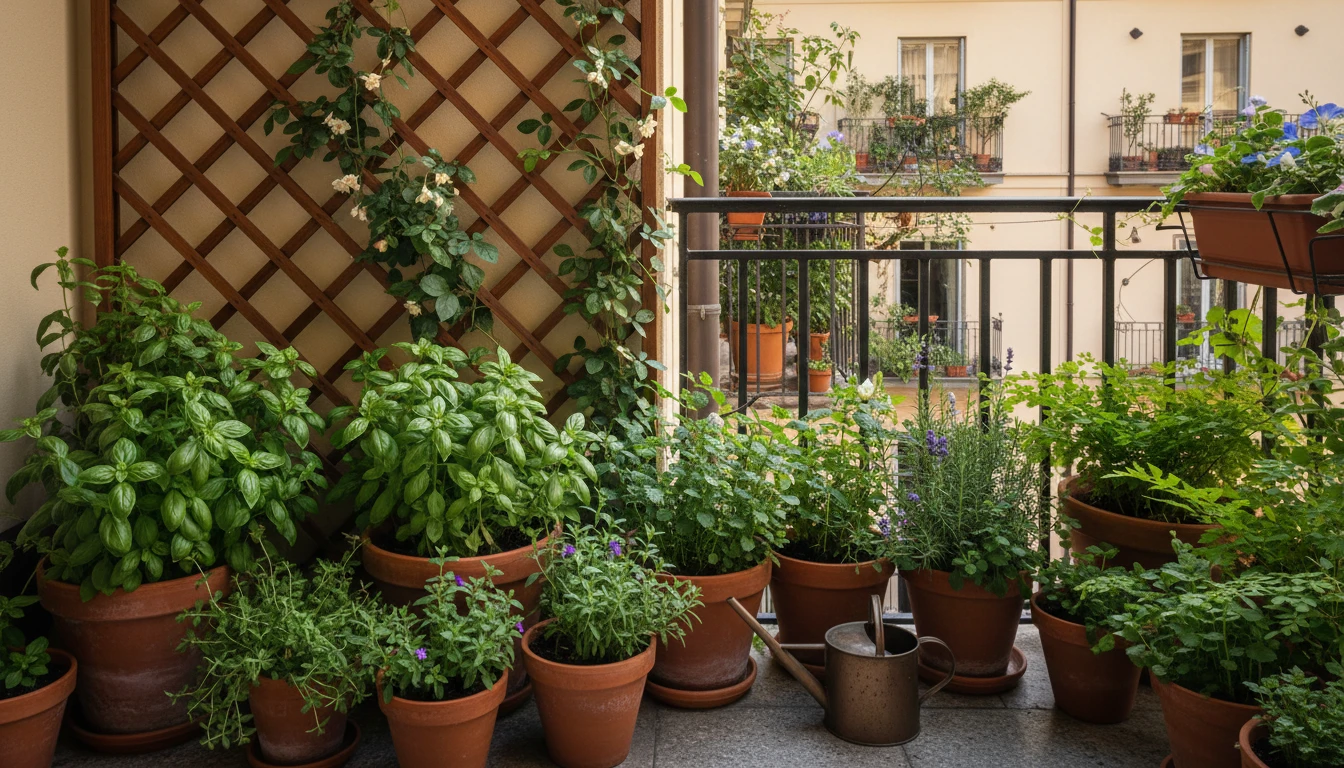
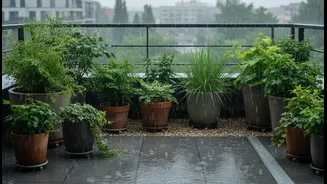
The good news is that you can have a gorgeous, dense balcony garden without the risk. The key is to be strategic. First, choose your containers wisely. Lightweight materials like high-quality resin or fibreglass offer the look of stone or terracotta at a fraction of the weight. Second, rethink your growing medium. Traditional soil is heavy. Use lighter potting mixes that incorporate ingredients like coco peat, perlite, or vermiculite to reduce weight while improving drainage. Third, spread the load. Instead of one giant, immovable planter, use several smaller pots. This allows you to distribute the weight more evenly across the balcony's surface. Finally, always place your heaviest pots against the wall of the building, where the balcony has the most structural support. Lighter, smaller pots can be placed further out.
Beware of Wind and Water
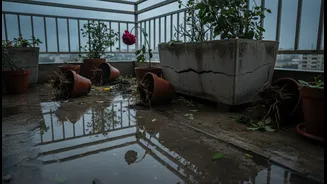
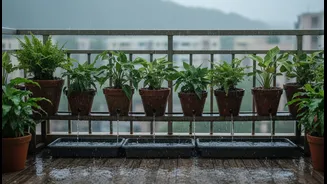
Weight isn't the only safety concern for balcony gardeners. Wind can be a powerful force, especially on higher floors. A tall plant in a narrow pot can act like a sail, creating a risk of it tipping over and falling—a danger to anyone below. Always choose wide, stable bases for your pots. Consider using pot stabilizers or grouping containers together for mutual support away from the edge. Water is another factor. Ensure every pot has proper drainage, but also consider where that water is going. Constant moisture dripping onto the balcony surface can, over years, degrade concrete and cause damage. Using trays under pots can help manage runoff, but be sure to empty them to prevent them from becoming a source of trapped moisture and a breeding ground for pests.