





Kashmiri Noon Chai
Instantly recognizable by its beautiful pink hue, Noon Chai is a world away from sweet, milky teas. Hailing from the Kashmir Valley, this traditional brew is made with special green tea leaves, milk, a pinch of baking soda—which gives it its signature
colour—and salt ('noon' means salt in Kashmiri). Often garnished with crushed nuts, it’s a savoury, creamy, and warming experience, traditionally prepared in a samovar.
Hyderabadi Irani Chai
A legacy of Persian migrants who settled in Hyderabad, Irani chai is famously thick, creamy, and sweet. The preparation is unique: a rich, potent tea decoction is brewed separately from a large pot of milk that has been simmered for hours until it thickens and reduces. To serve, a small amount of the decoction is poured into a cup, which is then topped with the luscious, creamy milk, creating a truly indulgent brew often enjoyed with Osmania biscuits.
Mumbai's Cutting Chai
More a concept than a specific recipe, 'cutting' is an integral part of Mumbai's fast-paced life. It refers to a half-portion of strong, sweet masala chai, served in small glasses at roadside stalls or 'tapris'. The name comes from the practice of 'cutting' a full glass into two, making it an affordable, quick pick-me-up for workers and a perfect excuse for multiple tea breaks throughout the day without overdoing it.
Kolkata's Lebu Cha
On the streets of Kolkata, Lebu Cha offers a zesty, refreshing alternative to milk-based teas. This is a simple yet flavourful black tea, brought to life with a generous squeeze of fresh lemon (lebu) and often a mix of 'moshla' including black salt and roasted cumin. It's a tangy, invigorating drink, perfect for cutting through the city's humidity and is often served as a digestive aid.
Kerala's Sulaimani Chai
Immortalised in Malayali culture, Sulaimani Chai is a golden-hued, milk-free tea from the Malabar coast. With roots in Arab trade history, its name means 'man of peace'. This light black tea is brewed with spices like cardamom, cloves, and cinnamon, then finished with a squeeze of lemon and sweetened with honey or sugar. It’s a popular digestive served after heavy meals, especially a flavourful biryani.
Assam's Ronga Saah
In the heart of India's largest tea-producing region, the default way to drink tea is Ronga Saah, which translates to 'red tea'. Unlike the spiced, milky chai popular elsewhere, this is simply strong black tea brewed to a rich reddish-brown liquor, served without milk. It is enjoyed sweetened and celebrates the pure, robust, and malty flavour of the local Assam tea leaves.
Parsi Choi
The Parsi community has its own distinct take on tea, known as 'choi'. Influenced by their Persian roots and the British tea custom, Parsi Choi is a fragrant brew typically infused with fresh mint leaves and lemongrass ('leeli choi'). While some enjoy it black, it is often served with a splash of milk and sugar, striking a delicate balance of herbal and aromatic notes that sets it apart from a heavily spiced masala chai.
Gujarati Ukado
More of a wellness-focused herbal concoction than a simple tea, Ukado is Gujarat's go-to immunity-boosting drink. While recipes vary by household, it is typically a water-based brew packed with ingredients like ginger, turmeric, mint, tulsi, black pepper, and cloves. It is often had during cold and flu season, offering warmth and soothing relief with its intense, spicy flavour.
The Ubiquitous Masala Chai
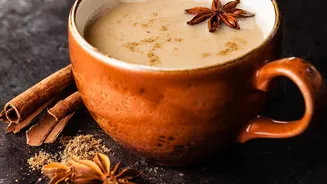
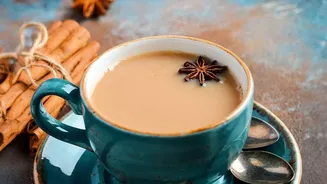
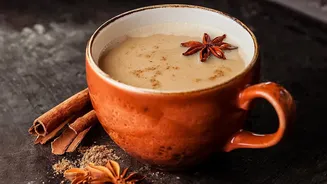
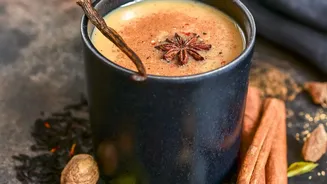
No list of Indian teas would be complete without the pan-India icon: Masala Chai. While it's found everywhere, every region and every family has its own secret blend of spices. The foundation is black tea, milk, and sugar, but the 'masala' can include any combination of cardamom, ginger, cloves, cinnamon, and black pepper. It's the daily ritual that unites the nation, yet in its subtle variations, it still tells a story of its region.
Tandoori Chai
A modern and theatrical addition to India's chai scene, Tandoori Chai has become a popular sensation. The process involves heating an empty clay pot (kulhad) in a tandoor until it's red hot. Freshly prepared masala chai is then poured into the super-heated pot, where it sizzles, froths, and overflows. This process infuses the tea with a unique, earthy, and smoky flavour that is both dramatic and delicious.