






The Navigation Problem on the Moon
Navigating on the Moon is far more challenging than it appears. Without a magnetic field for a compass and with a landscape where distances are deceiving, early Apollo astronauts found it difficult to judge their position. Currently, lunar missions rely
on a constant, data-intensive conversation with the Deep Space Network (DSN) on Earth. This method is slow, can only track one spacecraft at a time, and is completely dependent on a clear line of sight to our home planet. For the ambitious Artemis program, which aims to build a sustainable base and conduct complex operations, this system is a major bottleneck. Imagine trying to coordinate rovers, landers, and astronauts if every single one needed to call a single operator on another continent for directions. That is the problem NASA needs to solve.
LunaNet: An Internet and GPS for the Moon
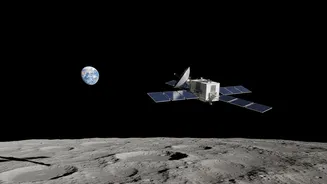
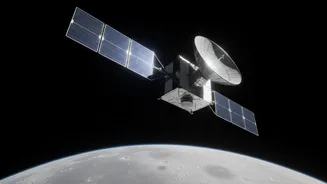
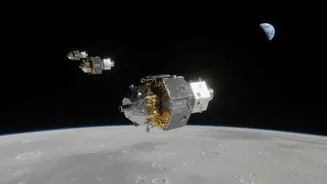
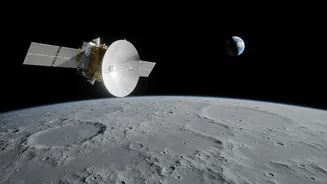
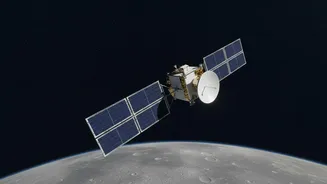
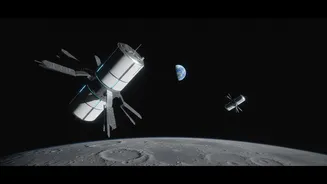
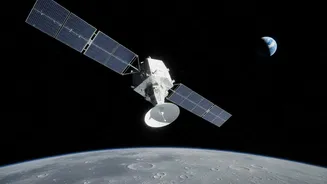
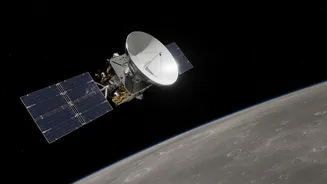
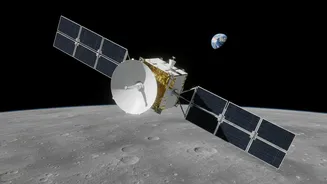
NASA's answer is an ambitious architecture called LunaNet. It’s a framework designed to create a network of communication and navigation services around the Moon, much like the internet and GPS serve us on Earth. The core of the idea is to place a series of relay satellites in lunar orbit. These satellites will talk to each other and to assets on the lunar surface, creating a seamless web of connectivity. This system, part of the broader Lunar Communications Relay and Navigation Systems (LCRNS) project, aims to provide position, navigation, and timing (PNT) services to any user, whether they are in orbit or exploring a crater. This means astronauts and robotic missions could know their precise location and communicate in real-time without constantly phoning home to Earth.
How a Lunar 'GPS' Works
While it's called 'GPS-like', LunaNet is a unique solution for a unique environment. Some proposals involve developing incredibly sensitive receivers that can pick up the faint signals from Earth's existing GPS and Galileo satellites at lunar distances. However, the primary plan involves a dedicated constellation of lunar satellites. These orbiting relays will broadcast their own timing and positioning signals. A receiver on a lunar rover or an astronaut's suit could then calculate its position by triangulating signals from multiple satellites in orbit around the Moon. But LunaNet goes beyond just location. It will also provide high-speed data relay, essentially creating a local internet. It can even offer science services and send out critical alerts for events like solar flares, directly to astronauts on the surface.
The Backbone for the Artemis Generation
This new lunar infrastructure is not just a technological upgrade; it is an absolute necessity for the success of the Artemis missions. To establish a permanent lunar base, especially in the strategically important but hard-to-reach South Pole, requires robust and independent communication and navigation. With LunaNet, landers can achieve more precise landings in scientifically valuable areas. Astronauts on Extra-Vehicular Activities (EVAs) can venture farther from their base with confidence, and multiple robotic and human missions can operate simultaneously without interfering with each other's communications. It provides the safety, efficiency, and operational freedom required to move from short-term visits to long-term habitation.
A Collaborative, Interoperable Network
Crucially, NASA is not building this system in a vacuum. LunaNet is designed from the ground up to be interoperable, allowing international and commercial partners to connect to it. The European Space Agency (ESA) is developing its own 'Moonlight' initiative, and Japan's JAXA is planning a similar system, all designed to be compatible with LunaNet standards. Commercial companies like Intuitive Machines are already contracted to deploy the first relay satellites. This collaborative approach mirrors the structure of the internet itself, creating a shared, scalable infrastructure that benefits all parties exploring the Moon. It signals a shift towards a future where cislunar space is a busy hub of activity, supported by a shared network of essential services.