

Rethink the Grain and Lentil Base
The soul of any khichdi lies in its foundation of rice and dal. While short-grain rice and moong dal are traditional for their creamy texture, the possibilities are vast. For a healthier, nuttier flavour and added texture, swap white rice with options
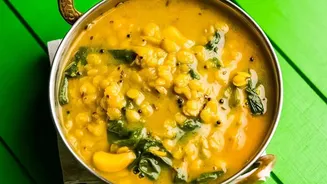
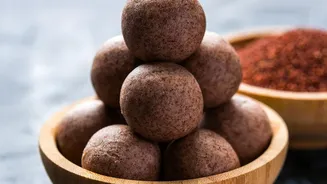
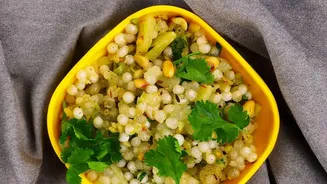
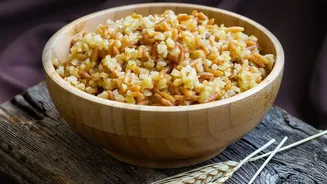
like brown rice, quinoa, or millets like bajra (pearl millet) and foxtail millet. Millets not only boost the nutritional profile but also lend a rustic earthiness to the dish. Similarly, don't limit yourself to just moong dal. A mix of lentils—known as panchmel dal—can add incredible depth. Try incorporating toor (pigeon pea), masoor (red lentil), or even chana dal (split chickpea) for different textures and flavours. Roasting the dal in ghee before cooking, a common practice in Bengali khichuri, imparts a wonderful nutty aroma that elevates the entire dish.
Introduce a Medley of Vegetables
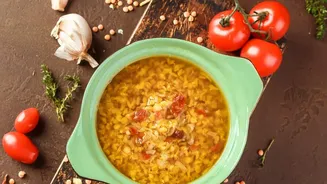
Moving beyond the basic potato and peas can dramatically change your khichdi's character. Almost any vegetable can find a happy home in this one-pot meal. For a touch of sweetness and colour, add diced pumpkin, carrots, or sweet potatoes. To create a more robust, 'masala' style khichdi, build a base by sautéing onions, tomatoes, and ginger-garlic paste before adding the grains and lentils. Leafy greens like spinach (palak) or fenugreek (methi) can be stirred in towards the end of cooking, adding a fresh, vibrant flavour and boosting the dish's nutritional value. Sautéing the vegetables in ghee or oil with spices before adding them to the pot ensures their flavour is enhanced and distributed throughout.
Unlock Flavour with a Perfect Tadka
The 'tadka', or tempering, is the final flourish that can make or break a khichdi. It's where you can inject a powerful dose of aroma and flavour just before serving. A classic tadka involves heating ghee and sputtering cumin seeds, mustard seeds, a pinch of asafoetida (hing), and a dried red chilli. But this is just the starting point. For a different profile, try adding curry leaves, whole spices like cloves and cinnamon, or finely chopped garlic that becomes golden and fragrant in the hot ghee. This final step not only adds a layer of complexity but also a textural contrast, taking your khichdi from simple to sensational.
Experiment with Regional Twists
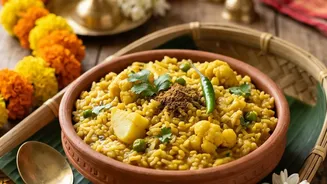
India's diverse culinary landscape offers a wealth of inspiration. Look to regional variations to discover new flavour combinations. The Bengali 'bhoger khichuri', often served during festivals, uses roasted moong dal and aromatic Gobindobhog rice, and is typically spiced with ginger and whole spices. In Gujarat, 'vaghareli khichdi' is celebrated for its distinct tempering and is often served with a side of kadhi. Down south, Ven Pongal is a creamy, porridge-like version made with black peppercorns, ginger, and curry leaves, offering a comforting yet peppery kick. Exploring these regional styles can provide a roadmap for your own kitchen experiments, showing how different fats, spices, and grains can create entirely unique dishes.