








The Scale of the Stoppage
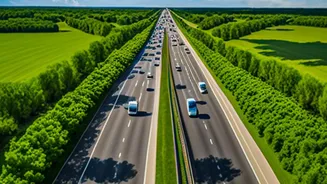
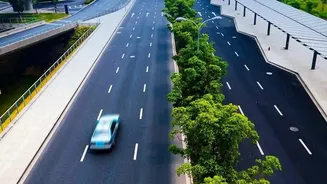
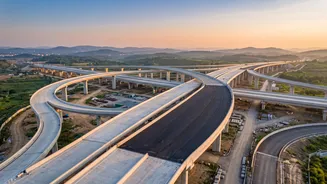
The numbers paint a stark picture of the challenges facing one of India's most critical infrastructure programs. As per information presented to Parliament, a staggering 629 out of 1,191 active National Highway (NH) projects have overshot their original
deadlines. These delays are widespread, affecting states across the country. Maharashtra leads with 60 delayed projects, followed by Karnataka with 47 and Uttar Pradesh with 44. In some smaller states, the problem is even more acute; Kerala has reported delays in 15 of its 16 ongoing projects. This persistent lag in execution not only slows down the pace of development but also triggers significant cost escalations, with overall infrastructure projects reporting cumulative cost overruns of several lakh crore.
The Land Acquisition Labyrinth
One of the most significant and persistent bottlenecks is the process of land acquisition. Before a single kilometre of road can be built, land must be secured, a process often fraught with legal challenges, protests from local communities, and disagreements over compensation. While laws exist to streamline the process, resolving disputes remains a major hurdle that can stall projects for years. The problem is so pervasive that even the Union Minister for Road Transport and Highways, Nitin Gadkari, has cited legal disputes and conflicts over land acquisition as a primary reason for the extensive delays on high-profile projects like the Mumbai-Goa highway.
Regulatory Hurdles and Contractor Issues
Beyond land, projects often get entangled in a web of regulatory red tape, particularly in securing environmental and forest clearances. Coordinating between various central ministries, state governments, and local bodies creates multiple points where a project can stall. Compounding these institutional challenges are issues with the contractors executing the work. Poor performance, weak project planning, and financial troubles within construction companies can bring progress to a grinding halt. The government has acknowledged this, with the highways minister vowing to take stricter action against underperforming contractors, having already penalised or blacklisted over 100 agencies in recent years for quality issues and delays.
The Economic and Geopolitical Toll
These delays are more than just an inconvenience; they carry a substantial economic cost. Time overruns lead to budget blowouts, postponing the economic benefits of improved connectivity for businesses and commuters. Slower logistics and higher transport costs ultimately impact everyone. Recently, geopolitical factors have added another layer of complexity. The conflict in West Asia, for example, has disrupted supply chains and driven up the prices of critical construction materials like bitumen, steel, and fuel by 5-8%, further straining project budgets and timelines.
The Road Ahead
The government is not blind to these challenges. Prime Minister Narendra Modi has personally reviewed delayed projects, urging officials to resolve bottlenecks related to land and clearances. In response to persistent issues, the government is implementing digital tracking systems like the 'BhoomiRashi' portal for land compensation and the 'Parivesh' platform for environmental clearances to speed up approvals. Furthermore, there is a push for stricter enforcement against contractors who fail to deliver, with Union Minister Nitin Gadkari expressing his frustration and resolve to blacklist those responsible for poor execution. The success of these measures will be critical in determining whether India can clear these roadblocks and accelerate its journey towards world-class infrastructure.