






The Two Faces of Cinnamon
When you buy 'cinnamon' at most supermarkets, you are almost certainly buying Cassia cinnamon. It is the most common and cheapest variety, sourced from countries like China and Indonesia. It has a strong, spicy-sweet flavour and its sticks are characterized
by a thick, hard layer of bark. The other main type is Ceylon cinnamon, often called 'true cinnamon'. Hailing primarily from Sri Lanka, it is more expensive, lighter in colour, and has a more delicate, complex flavour. Its sticks are made of many thin, fragile layers rolled together like a cigar. While both have health benefits, their primary difference lies in the concentration of a single compound: coumarin.
What Exactly Is Coumarin?
Coumarin is a naturally occurring aromatic compound found in many plants, including Cassia cinnamon, tonka bean, and even strawberries, though in much smaller amounts. It's responsible for the sweet smell often associated with these plants. However, while natural, coumarin can be problematic in high doses. Studies have linked high intake of coumarin to potential liver toxicity in a small subset of sensitive individuals. This is why health authorities have taken a closer look at its presence in our food supply, with Cassia cinnamon being a significant source. Ceylon cinnamon, by contrast, contains only trace amounts of coumarin, sometimes up to 250 times less than Cassia.
The Health Risk Explained
The primary concern with high coumarin consumption is hepatotoxicity, or potential liver damage. When ingested, coumarin is processed by the liver. In some sensitive people, high, sustained intake can cause liver inflammation or damage, though this effect is typically reversible once consumption stops. Regulatory bodies like the European Food Safety Authority (EFSA) have established a Tolerable Daily Intake (TDI) for coumarin to guide safe consumption. The TDI is set at 0.1 milligrams (mg) of coumarin per kilogram of body weight. It's important to note that occasional exposure above the TDI is not considered a significant health risk; the concern is geared towards prolonged, high-level intake.
How Much Is Too Much?
Putting the TDI into practical terms reveals why Cassia cinnamon is the main focus. A single teaspoon of ground Cassia cinnamon can contain anywhere from 7 to 18 mg of coumarin. For a 70 kg adult, the daily limit is about 7 mg. This means that less than one teaspoon of some Cassia powders could push you over the daily recommended limit. By contrast, a teaspoon of Ceylon cinnamon contains virtually negligible amounts of coumarin, making it a safer choice for those who consume cinnamon daily or in large quantities, such as in supplements or health-focused smoothies. For most people, a light sprinkle of Cassia cinnamon on their food here and there is unlikely to cause harm. The risk is primarily for those who consume it heavily and consistently.
Your Guide to Buying Smarter
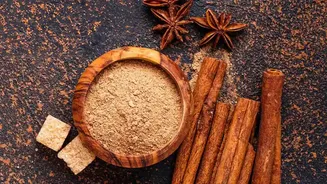
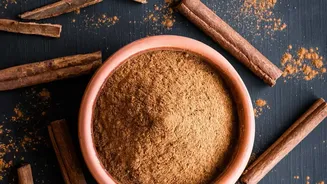
So how can you tell which cinnamon you have? If the label simply says 'cinnamon', it is almost always the less expensive Cassia variety. Ceylon cinnamon is typically more expensive and will be clearly labelled as 'Ceylon Cinnamon' or 'Cinnamomum verum'. When looking at sticks, the difference is clear: Cassia is a single, thick, hollow-looking piece of dark bark, while Ceylon is a light-brown quill made of many paper-thin layers. For powders, colour is a clue—Cassia is a darker, reddish-brown, whereas Ceylon is a lighter tan. For those concerned about coumarin, seeking out labelled Ceylon cinnamon is the most reliable strategy.