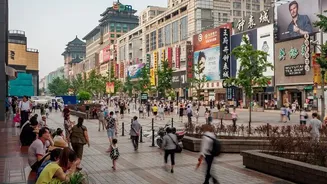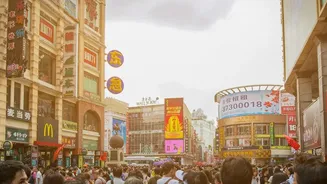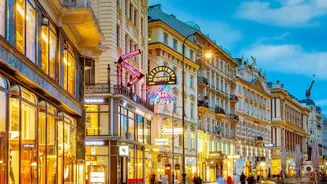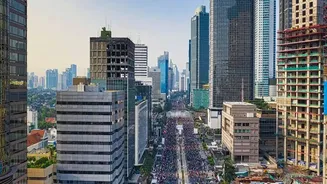







In the constant tug-of-war between cars and commerce, a growing number of cities are betting on a simple idea: prioritise people. By transforming bustling shopping streets into pedestrian havens, they are creating more than just retail spaces.
Copenhagen's Strøget: The Pioneering Promenade
Often hailed
as one of the world's first and longest pedestrian shopping streets, Strøget in Copenhagen is more than just a retail strip; it's a success story. In 1962, the city made the radical decision to ban cars from this 1.1-kilometre stretch as a temporary experiment. Shopkeepers were initially furious, fearing that a lack of cars meant a lack of customers. The opposite happened. The street, whose name fittingly translates to 'to stroll,' quickly became a vibrant hub for locals and tourists alike. Today, its design is a masterclass in simplicity: wide, continuous paving, ample space for street performers, public seating, and a seamless integration with historic squares and fountains. Strøget's success demonstrated that foot traffic could not only sustain but significantly boost business, inspiring countless other cities to rethink their own urban cores.
Glasgow's Buchanan Street: Culture Meets Commerce
Known as the spine of Glasgow’s 'Style Mile,' Buchanan Street is a testament to the power of ambitious urban regeneration. Pedestrianised in phases starting in the 1970s, the street was fully transformed into a walker's paradise, linking the city's grid with grand Victorian architecture. Designers identified it not just as a thoroughfare but as Glasgow’s ‘front door,’ a place for civic life to unfold. The design focuses on high-quality public realm features, including distinctive lighting and easy access to the subway. More than just a collection of high-end shops and department stores like House of Fraser and the Argyll Arcade, the street is a stage for street performers and seasonal markets, fostering a lively atmosphere day and night. Its success has been so profound that it's widely recognised as the UK's second-best shopping destination after London.
Bordeaux's Rue Sainte-Catherine: A Historic Axis Reimagined
Stretching for 1.2 kilometres, Rue Sainte-Catherine in Bordeaux is one of Europe's longest and most impressive pedestrian shopping streets. Following the path of an ancient Roman road, this historic artery was fully pedestrianised in 1984, transforming it from a traffic-clogged street into a thriving commercial and social corridor. A major refurbishment between 2000 and 2003 further enhanced its appeal. The design is complemented by modern additions like the Promenade Sainte-Catherine, an open-air shopping centre that cleverly integrates with the historic streetscape, creating a multi-level 'urban oasis' with vertical gardens and public squares. This blend of old and new proves that even ancient city layouts can be adapted for modern, people-focused life, creating a vibrant space that is both a UNESCO World Heritage site and a major retail hub.
The Principles of Great Pedestrian Design
These successful streets share more than just a lack of cars. Their design is intentional, focusing on the human experience. Key elements include wide, continuous and accessible walkways that allow people of all abilities to move freely. Good design also creates a 'sense of place' with amenities like public art, unique paving, abundant seating, and green infrastructure like street trees that provide shade and buffer noise. These spaces are not just corridors to get from A to B; they are destinations in themselves, encouraging social interaction and community events like markets and performances. Crucially, they are well-connected to public transport, ensuring they are accessible to everyone, not just those who live nearby. Studies have consistently shown that these improvements lead to increased footfall and retail sales, proving that when you design for people, business often follows.