


The Warming Roof of the World
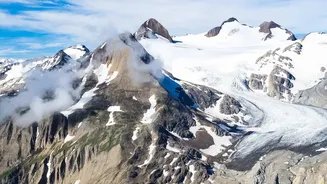
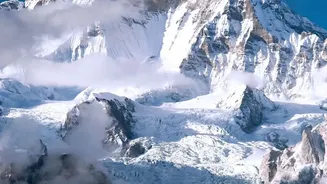
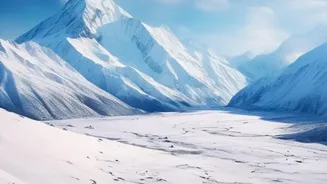
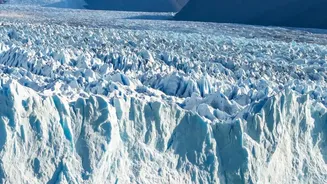
The Himalayan region, often called the 'Third Pole', is warming at nearly twice the global average. This accelerated warming is the primary driver behind a series of cascading environmental changes. Glaciers are retreating at an alarming pace, with studies
indicating ice loss rates have doubled since the year 2000. This isn't just about losing the vast stores of fresh water that over a billion people depend on; it's about fundamentally altering the stability of the mountain landscape itself. As the ice that once acted as a powerful glue disappears, the mountains are becoming more volatile.
The Growing Threat of Bursting Lakes
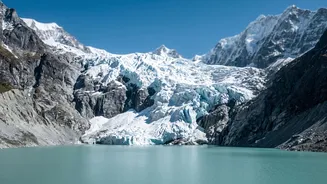
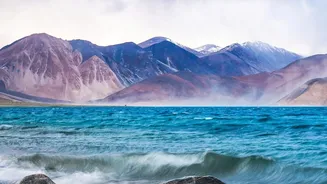
One of the most immediate dangers is the rapid formation and expansion of glacial lakes. As glaciers melt, the water pools behind natural dams made of loose rock and debris called moraines. Climate change is causing these lakes to grow in size and number, increasing the pressure on their unstable natural dams. When these dams fail, they can unleash a catastrophic Glacial Lake Outburst Flood (GLOF), a sudden torrent of water, rock, and ice that surges down narrow valleys with immense destructive force. Events like the one in Sikkim in October 2023, where a GLOF wiped out hydropower assets and settlements, highlight the devastating potential of these floods. India now monitors approximately 200 high-risk glacial lakes across its Himalayan states.
Unstable Slopes and More Landslides
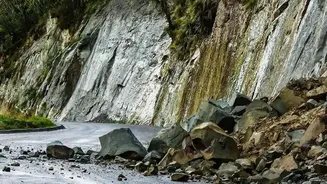
Climate change is also making Himalayan slopes more prone to landslides. There are two main reasons for this. First, the warming is causing permafrost — permanently frozen ground that binds soil and rock together — to thaw. As this subterranean ice melts, the ground loses its structural integrity, making it much less stable. Second, weather patterns are changing. Instead of steady snowfall, the region is experiencing more erratic, intense rainfall events, often in the form of cloudbursts. These downpours saturate the soil on steep, deforested slopes, triggering thousands of landslides that can block roads, destroy homes, and isolate communities, as seen in Himachal Pradesh during the summer of 2023.
A Cascade of Hazards
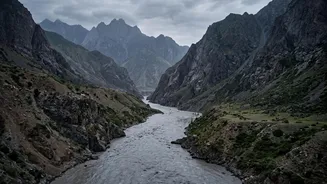
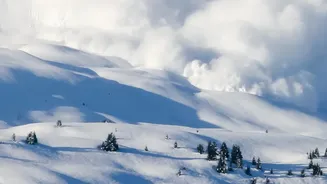
These dangers are not isolated; they are interconnected in what scientists call cascading hazards. A landslide can crash into a glacial lake, triggering a GLOF. An avalanche of rock and ice can turn into a debris flow that temporarily dams a river before causing a flash flood, a sequence of events suspected in the 2021 Chamoli disaster in Uttarakhand. This creates a new dimension of risk that is extremely difficult to predict and provides very little warning time for downstream communities. Furthermore, as more people and critical infrastructure—like roads and hydropower projects—are concentrated in the vulnerable river valleys, the potential for catastrophic losses grows. Human activity, from construction to deforestation, often exacerbates the underlying vulnerability created by the warming climate.