


Tempura, Japan
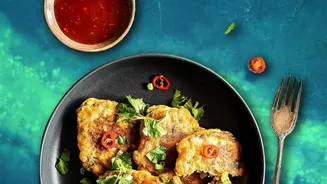
A world away from heavy, oily batters, Japanese tempura is celebrated for its incredibly light and crispy coating. This culinary art form involves dipping fresh seafood and various vegetables into a simple, ice-cold batter of flour, egg, and water before
quickly frying them. The technique was actually introduced to Japan by Portuguese missionaries in the 16th century, but has since been perfected into a uniquely Japanese specialty. The goal is to fry the items so quickly that the ingredients inside are steamed more than fried, preserving their natural flavour and texture.
Churros, Spain
These ridged sticks of fried dough are a beloved treat, especially when served with a cup of thick, hot chocolate for dipping. The most popular origin story suggests that Spanish shepherds created churros as an easy-to-cook substitute for fresh bread during long stints in the mountains. The name 'churro' is said to come from the 'Churra' breed of sheep, whose horns resemble the pastry's shape. Now a global sensation, you can find them plain with sugar, or filled with everything from caramel to fruit preserves.
Arancini, Italy
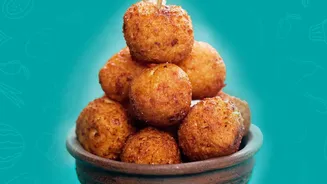
Hailing from Sicily, arancini are a masterclass in turning leftovers into a delicacy. The name means 'little oranges', a nod to their shape and golden colour after frying. These delectable rice balls are typically made from leftover risotto, stuffed with fillings like ragù (meat sauce), mozzarella, and peas, then coated in breadcrumbs and deep-fried to perfection. Dating back to the 10th century, these savoury bites are a cornerstone of Sicilian street food and a testament to the region's rich culinary history.
Coxinha, Brazil
Meaning 'little thigh' in Portuguese, the coxinha is one of Brazil's most popular snacks, ingeniously shaped to resemble a chicken drumstick. It features a flavourful filling of shredded, seasoned chicken, often mixed with creamy catupiry cheese, which is then enveloped in a soft dough, coated, and fried until golden and crispy. Legend has it the snack was invented for a picky Brazilian royal who would only eat chicken thighs, but it has since become a beloved street food staple across the country.
Beignets, USA
While its roots trace back to ancient Roman fried dough, the beignet is famously associated with New Orleans. Brought to Louisiana by French-Acadian settlers in the 18th century, these pillowy, square-shaped pastries are fried to a golden-brown puff and then lavishly dusted with powdered sugar. Unlike a typical doughnut, they are made from a choux-style pastry that rises with its own steam. Enjoying a fresh, hot beignet with a café au lait is a quintessential New Orleans experience.
Scotch Egg, United Kingdom
A perfect picnic food, the Scotch egg is a surprisingly hearty snack. It consists of a hard-boiled or soft-boiled egg wrapped in seasoned sausage meat, coated in breadcrumbs, and then deep-fried or baked until crisp. Despite the name, its origins are debated, with the London department store Fortnum & Mason often credited with its invention in 1738 as a portable snack for wealthy travellers. Another theory links it to the Indian dish 'nargisi kofta', which features a similar concept of a meat-wrapped egg.
Akara, West Africa
A popular breakfast food and street snack across West Africa, particularly in Nigeria, akara are savoury fritters with a wonderfully fluffy interior and a crispy exterior. They are made from a batter of soaked and peeled black-eyed peas, blended with onions and peppers. Whipping air into the batter before frying is key to their light texture. This dish also has deep roots in Brazil, where it is known as 'acarajé', a culinary tradition carried across the Atlantic.
Papanasi, Romania
This indulgent Romanian dessert is a unique type of doughnut. Papanasi are made from a sweet dough enriched with soft cow's cheese, which gives them a distinct flavour and a light, fluffy texture. They are fried and typically served warm in a distinctive shape: a larger doughnut ring on the bottom, topped with a generous dollop of sour cream and a fruit preserve (often sour cherry or blueberry), and finished with the smaller doughnut hole placed on top.
Banh Ran, Vietnam
A popular Vietnamese street food, Banh Ran (in the north) or Banh Cam (in the south) are deep-fried glutinous rice balls. The exterior, often covered in sesame seeds, becomes wonderfully crispy and chewy upon frying. The inside can be hollow or filled with a sweet mung bean paste, sometimes scented with jasmine flower essence. They are a delightful study in textures, with the crunchy shell giving way to a soft, sticky interior and a sweet, savoury filling.
Falafel, Middle East
Though its exact origin is a topic of hot debate, falafel is a cornerstone of Middle Eastern cuisine. These savoury fritters are made from ground chickpeas or fava beans (or a combination), mixed with herbs and spices like parsley, coriander, and cumin, and then deep-fried. Often served in a pita pocket with salads, pickled vegetables, and tahini sauce, falafel is celebrated globally as a delicious and satisfying street food. Many believe it originated in Egypt as a meat substitute for Coptic Christians during Lent.