







The Heart of India's Strawberry Country
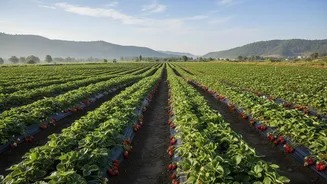
When you think of strawberries in India, you think of Mahabaleshwar. This hill station in Maharashtra is responsible for around 85% of the country's total strawberry production. The region's unique climate, with its cool winters and well-drained, iron-rich
soil, creates the perfect conditions for growing the sweet, juicy berries that are loved across the nation. The industry supports thousands of farming families and is so integral to the area's identity that in 2010, Mahabaleshwar Strawberries were granted a Geographical Indication (GI) tag, recognizing their unique origin and quality. For decades, this has been a success story, turning small family-run farms into the engine of a thriving local economy.
Mounting Pressures on a Prized Crop
Despite its celebrated status, Mahabaleshwar's strawberry industry has been under increasing threat. Climate change is a primary culprit, bringing with it a host of problems. Farmers are grappling with warmer winters, erratic rainfall, and unseasonal heatwaves that disrupt the delicate growing cycle. The optimal temperature for strawberries to thrive is between 15°C and 25°C, but recent years have seen temperatures soar past 30°C as early as March. This extreme heat causes plants to stress, flowers to drop, and fruits to ripen prematurely, resulting in smaller, less flavorful berries and significant yield losses, sometimes up to 40%. Furthermore, these fluctuating weather patterns create a fertile ground for pests and fungal diseases, forcing farmers to spend more on protective measures and further squeezing their profits.
Science Offers a Solution
In response to these growing challenges, researchers from Mahatma Phule Krishi Vidyapeeth (MPKV), a leading agricultural university in Maharashtra, have stepped in. Their work has focused on developing a set of standardised practices specifically tailored to the unique conditions of Mahabaleshwar. This scientific 'package of practices' is designed to give farmers a reliable, evidence-based framework for cultivation. According to Dr. Darshan Kadam, an assistant professor of Horticulture at MPKV, the university has worked on standardising planting schedules, fertiliser recommendations, and the application of growth regulators. While the university is also engaged in long-term projects like developing new climate-resilient strawberry varieties through partnerships with institutions like the Bhabha Atomic Research Centre (BARC), these immediate guidelines offer practical, near-term support for farmers on the ground.
A New Toolkit for Farmers
These new standardised practices are not about reinventing the wheel but optimising every step of the cultivation process. The recommendations cover crucial aspects like water management, soil health, and pest control. For instance, the research reinforces the superiority of drip irrigation, specifying optimal water volumes to avoid the stress that can reduce fruit size and quality. It also provides clear guidance on managing soil nutrition and controlling pests and diseases with greater precision. By moving away from a patchwork of traditional methods and anecdotal knowledge towards a unified, scientific protocol, the goal is to make farming outcomes more predictable and resilient. For farmers, this standardisation means reducing guesswork, optimising the use of expensive resources like water and fertilisers, and ultimately, achieving more stable and higher-quality yields even in the face of challenging weather.
A Sweeter, More Secure Future
The standardisation of practices by MPKV researchers is more than just an academic exercise; it's a vital intervention to safeguard the future of an entire industry. For the thousands of families whose livelihoods depend on the annual strawberry harvest, these guidelines offer a path toward greater economic stability. By boosting resilience against climate shocks, the protocol helps protect farm incomes and ensures the continuity of a generational legacy. For consumers, the benefits are just as tangible. A healthier, more consistently managed crop means a more reliable supply of high-quality, delicious strawberries. This scientific support helps ensure that the iconic GI-tagged Mahabaleshwar strawberry will continue to grace fruit bowls and dessert menus for many years to come, securing its place as India’s favourite berry.