









The High-Speed Vision
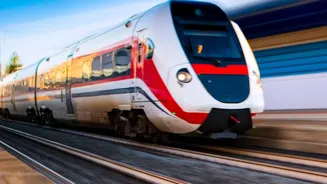
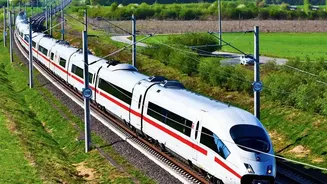
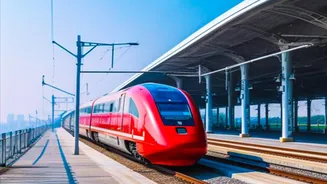
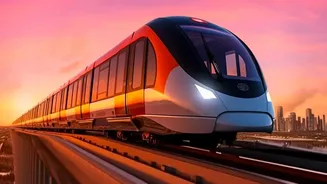
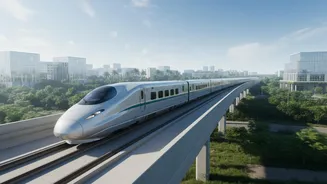
India is embarking on an ambitious journey to connect its major cities with bullet trains, promising to slash travel times and supercharge economic growth. The first of these, the Mumbai-Ahmedabad High-Speed Rail (MAHSR) corridor, is currently under construction,
with a priority section targeted for opening by August 2027. This 508-kilometre line, built with Japanese Shinkansen technology, will see trains running at operating speeds of 320 kmph. Beyond this initial project, the government has announced plans for seven new high-speed corridors, covering nearly 4,000 kilometres and connecting hubs like Delhi, Varanasi, Chennai, and Bengaluru. However, large-scale infrastructure projects are notoriously complex and time-consuming. Learning from the challenges and successes of the first corridor is crucial for the network's expansion.
What is Standardisation, Anyway?
In simple terms, standardisation means creating a common blueprint. Instead of designing every component of each new high-speed rail line from scratch, the National High Speed Rail Corporation Limited (NHSRCL) is developing a 'design library'. This involves creating a uniform set of designs and technical specifications for everything from the massive viaducts and bridges the tracks run on, to the stations, tunnels, and even the signalling systems. Think of it like building with high-tech Lego blocks. While the foundations will always be adapted to local ground conditions, the rest of the structure will follow a pre-approved, optimised template. This approach moves away from bespoke solutions for every project towards a more streamlined, replicable model.
The Blueprint for Faster Construction
Adopting a standardised model promises several key advantages. The most significant is speed. With ready-made designs, the planning and approval phases for new corridors can be drastically shortened. It also creates economies of scale in manufacturing. When producers know the exact specifications for thousands of kilometres of track, girders, and other components, they can set up assembly lines, reduce costs, and ensure consistent quality. This simplification extends to operations and maintenance. A common set of equipment and infrastructure means training for staff is simpler, and managing spare parts becomes much more efficient across the entire network. Ultimately, this interoperability ensures that a train that runs on the Delhi-Varanasi corridor could seamlessly operate on the Chennai-Bengaluru line.
An Indigenous Approach
A key part of this strategy is the emphasis on the 'Make in India' initiative. While the first corridor relies heavily on Japanese technology, the goal is to develop indigenous standards suited to Indian conditions. NHSRCL is collaborating with leading Indian Institutes of Technology (IITs) to create these domestic benchmarks. This extends to both civil infrastructure and the trains themselves. Efforts are underway to develop an indigenous train control and signalling system, the Bharat Train Control System (BTCS), to reduce reliance on foreign technology for future projects. Furthermore, Indian companies like BEML and the Integral Coach Factory (ICF) are developing India's own high-speed trainsets, building domestic capacity for a world-class manufacturing ecosystem.
Navigating the Challenges
While the benefits are clear, standardisation is not without its challenges. One major hurdle is finding the right balance between a rigid standard and the need for flexibility and innovation. A standard that is too prescriptive could stifle technological advancement over the decades it will take to build out the network. Furthermore, India's diverse geography, from the coastal plains to dense urban centres, will test the limits of any single design template. There are also complex issues like land acquisition and regulatory hurdles, which cause significant delays in many large infrastructure projects. Ensuring that the standardised model is robust yet adaptable will be critical to its long-term success.