









An Abort at the Final Second
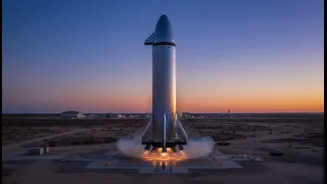
On July 16, all eyes were on Starbase, Texas, for the thirteenth test flight of the world’s most powerful rocket. The countdown for SpaceX’s Starship was proceeding smoothly, with clear weather and all systems appearing ready for launch. As the clock
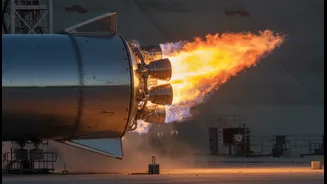
hit zero, the 33 Raptor engines on the Super Heavy booster began to roar to life. But instead of a thunderous ascent, an automatic abort was triggered, instantly shutting down the engines and enveloping the launchpad in a cloud of smoke and vapor. Onboard computers had detected an issue during the critical ignition phase, bringing the entire operation to a halt just as it was meant to begin. The rocket stood silent but safe, a testament to its own built-in intelligence.
What Caused the Shutdown?
The command to abort was not made by a human controller, but by the rocket’s own automated safety system. During the launch webcast, telemetry data indicated that a handful of the 33 engines—reports suggest four—did not ignite as expected. In a complex system like Starship, a partial engine start can lead to instability and a catastrophic failure. The onboard flight computer, constantly monitoring thousands of data points, identified the anomaly in milliseconds and issued a 'hold' command, preventing a potentially disastrous launch. SpaceX founder Elon Musk quickly confirmed the cause on social media, stating, "Some of the engines didn't start, triggering an automatic launch abort." This was the first time a full-scale Starship had experienced such a last-second abort on the pad.
A Success in Disguise
While a scrubbed launch might look like a setback, in the world of rocket science, this event is being widely interpreted as a success. It proves that the complex safety protocols designed to protect the multi-billion dollar vehicle and the launch infrastructure work precisely as intended. A rocket that can correctly identify a problem and safely shut itself down is a mature and reliable rocket. This is a core part of SpaceX's iterative development philosophy: build, test, fly, and learn. An abort on the ground provides invaluable data without the loss of the vehicle, which is far preferable to an in-flight anomaly. Musk underscored this by announcing that to ensure a good flight, two of the Raptor engines will be removed and replaced before the next attempt, which he suggested could be as early as the following week.
The Bigger Picture for Starship
This test flight was a significant one for SpaceX. It was the first attempt since the company's high-profile IPO in June and was slated to carry 20 of its next-generation Starlink V3 internet satellites, a key part of the company's business model. The successful operation of Starship is critical not only for deploying these satellites but also for its contracts with NASA to develop a lunar lander for the Artemis program, which aims to return humans to the Moon. Each test, even one that ends in an abort, moves the program forward. The data gathered from the engine ignition sequence and the subsequent shutdown will be analyzed to refine the system, making the next launch attempt even safer and more robust. The incident has a minor impact on the company's stock but a major positive impact on confidence in the system's safety logic.