




Unmasking an Invisible Energy
When we think of heat, we often picture the warmth of direct sunlight. But a huge portion of the energy Earth radiates back into space is invisible to our eyes. This “hidden heat” is known as far-infrared radiation. While sunlight warms the tropics, this
heat is transported toward the poles through weather and ocean currents. The polar regions then act like vents, releasing this energy back into the cosmos. Far-infrared radiation accounts for nearly 60 percent of the energy Earth loses to space, yet this part of the spectrum has never been systematically measured until now. Understanding this process is crucial because it governs the planet’s overall temperature balance, influencing everything from weather patterns to the stability of ice sheets.
NASA's Shoebox-Sized Climate Watchers
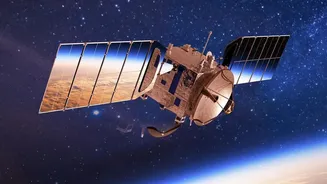
To fill this critical knowledge gap, NASA launched the PREFIRE mission, which stands for Polar Radiant Energy in the Far-InfraRed Experiment. The mission consists of two small satellites, each about the size of a shoebox, called CubeSats. Launched in the spring of 2024, these twin spacecraft began collecting science data in July 2024. They orbit the Earth in near-polar paths, allowing them to pass over the Arctic and Antarctic multiple times a day. This provides researchers with a time-lapse view of how heat is emitted, capturing changes related to cloud formation, surface ice melt, and the presence of water vapor—all of which can trap or release heat in complex ways.
What the Two-Year Record Shows
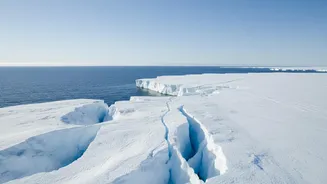
Having now collected data over two complete seasonal cycles at both poles, the PREFIRE mission has provided a continuous record of these dramatic energy shifts. The data reveals the stark differences between the two polar regions. In the Arctic, summers can become warm enough to thaw large areas of tundra and sea ice. In Antarctica, the coldest continent on Earth, much of the landscape remains below freezing even during its summer months. These geographical and seasonal differences create unique signatures in the far-infrared radiation that is released. By measuring these emissions, scientists can get a much clearer picture of the poles' energy budget—the delicate balance between incoming solar energy and outgoing heat.
Why This Hidden Heat Matters
This new, detailed record of far-infrared energy is more than just an academic exercise. The data is essential for improving the accuracy of climate and weather models. For decades, models have had to make assumptions about how this invisible heat escapes the polar regions. By providing actual measurements, PREFIRE helps anchor these models in reality, leading to better predictions about the rate of Arctic warming, sea ice loss, and global sea-level rise. This has direct implications for communities in the Arctic, as well as for global phenomena like shipping routes and river flows that depend on stable polar conditions. The mission has already proven so valuable that it has been extended through at least September 2026, expanding its focus from the poles to the entire globe.