



The Vanishing Glue
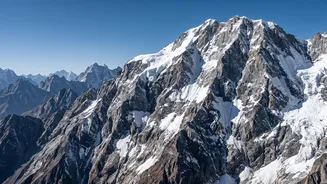
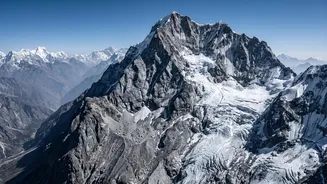
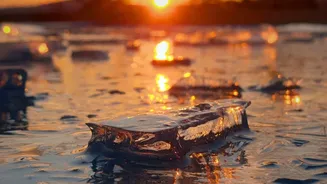
One of the most critical factors in slope stability is something you cannot see: permafrost. This is ground, including rock and soil, that has remained frozen for at least two consecutive years. In the high Himalayas, permafrost acts like a binding agent,
where ice fills the cracks and fractures in the bedrock, essentially gluing the mountain together. As global temperatures rise, this frozen ground begins to thaw. When the ice within the rock melts, it loses its binding strength, weakening the overall structure of the slope and making it much more susceptible to failure. This can lead to catastrophic rockfalls and landslides, as the very foundation of the mountain becomes less stable.
Losing an Essential Support System
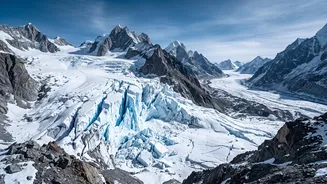
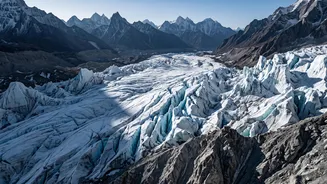
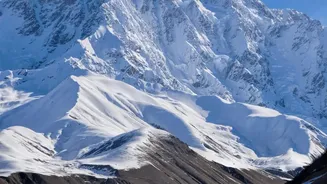
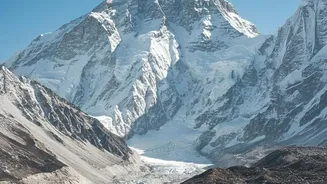
Massive valley glaciers do more than just store ice; they act as a physical barrier, propping up the steep valley walls they have carved over millennia. This process is known as 'buttressing'. A thick, heavy glacier exerts immense pressure on the sides of a valley, providing crucial support. However, as glaciers thin and retreat at an accelerated pace, this support system is removed. This 'debuttressing' effect leaves the over-steepened and often fractured valley walls exposed and unsupported. Once this critical support is gone, the slopes are more likely to collapse under their own weight, a phenomenon observed in mountain ranges across the world, from the Swiss Alps to the Himalayas.
The Danger of Meltwater
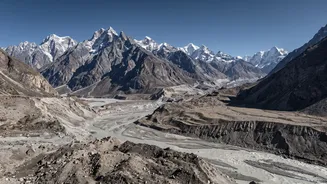
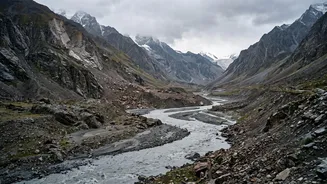
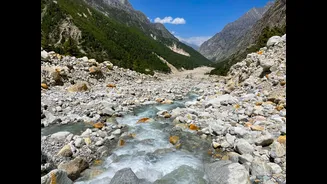
Increased melting doesn't just mean less ice; it means more water. This additional meltwater introduces another layer of instability. Water seeps deep into the soil and rock fissures, increasing what is known as pore water pressure. This pressure pushes the soil and rock particles apart, reducing the friction that holds the slope together. In essence, the water acts as a lubricant, making it easier for large masses of rock and debris to slide downhill. Furthermore, this meltwater contributes to the formation and rapid growth of glacial lakes, often dammed by unstable piles of rock and ice. A slope failure into one of these lakes can trigger a devastating Glacial Lake Outburst Flood (GLOF), sending a torrent of water, mud, and boulders downstream with little warning.
A Cascade of Compounding Risks
These factors do not operate in isolation. Instead, they create a complex and dangerous feedback loop. For example, a landslide triggered by thawing permafrost can crash into a glacial lake, causing a GLOF that erodes the base of other slopes downstream, making them more unstable. This cascading effect was seen in the 2021 Chamoli disaster in Uttarakhand, which involved a rock and ice avalanche that left around 200 people dead or missing. The warming climate also brings more extreme rainfall events, which can further saturate the already weakened slopes, acting as a final trigger for disaster. Recent events in the region, including a deadly Nepal-Tibet flood in August 2026, underscore the increasing frequency of these complex, climate-driven hazards.