

An Inhospitable World
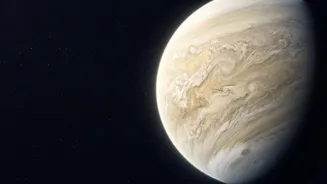
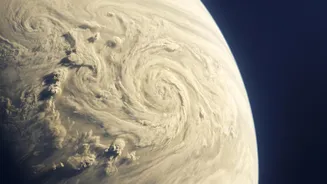
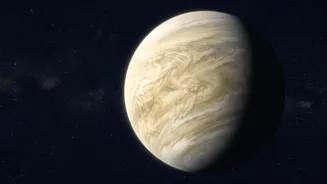
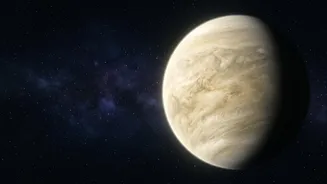
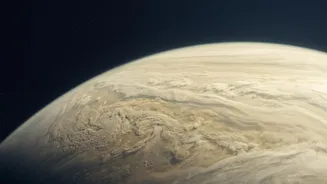
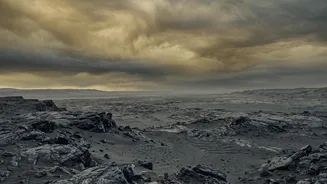
To understand why any hint of life-related chemistry on Venus is major news, you first have to appreciate how utterly hostile the planet is. Its surface temperature is hot enough to melt lead, and the atmospheric pressure is over 90 times that of Earth's
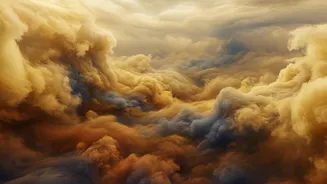
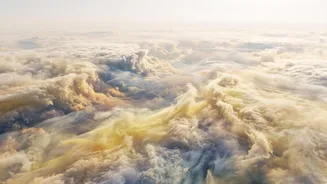
at sea level. The planet is shrouded in thick, dense clouds composed not of water, but of highly concentrated sulfuric acid. These conditions led scientists to write off Venus as a target in the search for life for many years. However, a specific region has kept a glimmer of hope alive: a layer in the clouds, about 48 to 64 kilometres high, where temperatures and pressures are much milder and more Earth-like. It is in this narrow band that the most intriguing chemical questions are being asked.
The New Chemical Clue
The latest stir comes from researchers at MIT, who have been conducting lab experiments to see what happens to life's building blocks in Venus-like conditions. In a study published in the Proceedings of the National Academy of Sciences, they found that short chains of amino acids, known as peptides, can survive when suspended in 98% sulfuric acid. Amino acids are crucial because they form the proteins that make life possible. The researchers were astounded to find that not only did the peptides remain stable for weeks, but they also folded into specific, three-dimensional shapes. A molecule's shape determines its function, so this discovery suggests that these essential building blocks could, in theory, perform biological functions even in such an extreme acid bath.
Why This Finding Matters
This research doesn't prove life exists on Venus. Instead, it pushes back against a long-held assumption: that Venus's acidic clouds would instantly destroy any complex organic molecules. By showing that peptides can maintain their structure, the study opens up a new range of chemical possibilities. The key finding was that the near-total absence of water in the concentrated acid actually protects the peptide bonds from being broken down through hydrolysis, a common chemical reaction. This paradox—that a lack of water could help preserve life's building blocks—fundamentally widens the scope of what scientists might consider a 'habitable' environment, moving beyond the traditional search for Earth-like planets with liquid water.
A History of Hope and Scepticism
This isn't the first time Venus has generated excitement. In 2020, a different team announced the controversial detection of phosphine gas in the Venusian atmosphere. On rocky planets like Earth, phosphine is overwhelmingly produced by living organisms, so its potential presence on Venus was a tantalizing hint of biology. However, that claim has been heavily debated ever since, with some subsequent observations failing to replicate the finding. The new peptide research from MIT is different; it's a laboratory-based study showing what could be possible, rather than a direct atmospheric detection. It provides a chemical foundation for how life might work in an acid-based environment, but scientists remain rightly cautious, stressing this is a clue, not a conclusion.
What Happens Next?
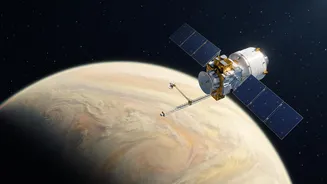
The ultimate answer to whether life exists on Venus can only be found by going there. Fortunately, a new wave of missions is planned to do just that. NASA is sending two spacecraft, DAVINCI and VERITAS, and the European Space Agency is launching its EnVision orbiter. These missions are designed to study Venus's atmosphere and geology in unprecedented detail. They will help us understand its history, such as whether it once had oceans, and investigate the strange chemical signals that have been detected from afar. By directly sampling the atmosphere and mapping the surface, these future explorers will hopefully provide ground truth to the tantalizing hints seen from Earth and demonstrated in labs. The search for life, it seems, is just getting started on our nearest planetary neighbour.