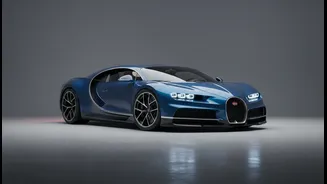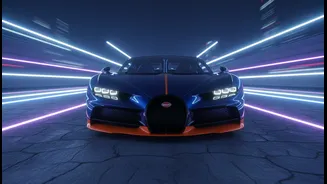







The End of a 16-Cylinder Symphony
Since it first roared to life in the Veyron in 2005, the 8.0-litre, quad-turbocharged W16 engine has been Bugatti's heart and soul. It was an engineering marvel that created a new category of vehicle: the hypercar. Producing an initial 1,001 horsepower,
it shattered records and redefined what a road car could be. Over the years, this powerplant evolved, pushing outputs to 1,600 PS (1,578 horsepower) in later Chiron models and their derivatives. But with the automotive world shifting towards hybrid and electric power, Bugatti has announced the W16's retirement. Its successor is a new V16 hybrid, developed with Cosworth, destined for the next-generation Bugatti Tourbillon. Before that transition, however, Bugatti created one final, defiant masterpiece for the W16: the Bolide.
The Bolide: A Machine Built Without Compromise
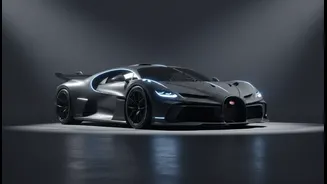
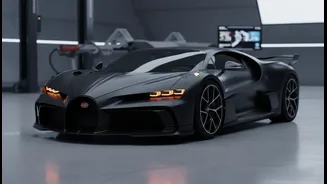
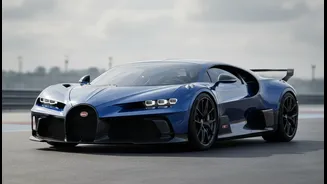
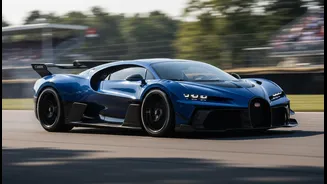
Unveiled in 2020 as a concept, the Bolide was Bugatti's answer to a simple question: what if they built the lightest possible car around their legendary W16 engine? The result was an aggressive, track-only weapon that looked more like a Le Mans prototype than a road car. With a minimalist carbon fibre monocoque and extreme aerodynamics capable of generating nearly three tonnes of downforce, the Bolide was designed for one purpose: to dominate a circuit. Bugatti confirmed a limited production run of just 40 units, each with a price tag of around €4 million. In its production form, the Bolide’s W16 produces 1,600 PS, identical to the Chiron Super Sport, but in a vehicle weighing a mere 1,450 kg. The car was never intended for public roads; it lacked the necessary features like conventional headlights and bumpers and was engineered exclusively for Bugatti-hosted track days.
An Unexpected Twist: From Track to Tarmac
For all its extremism, the story of the Bolide took a surprising turn. While Bugatti designed it as a pure track vehicle, the allure of making such a machine street-legal was too strong to ignore. Renowned British specialist Lanzante, famous for converting track-only McLarens for road use, took on the challenge. In mid-2026, Lanzante unveiled the world's first road-legal Bugatti Bolide at the Goodwood Festival of Speed. This wasn't a simple task. The conversion required significant engineering to meet road regulations, including fitting new headlights and likely adjusting the brutally stiff suspension for real-world surfaces. The result is one of the most unhinged yet captivating road cars ever created—a 1,578-horsepower statement piece that brings the W16 engine's final, most radical expression out of the exclusive confines of the racetrack and onto public view.
A New Life as a Collector's Crown Jewel
The Lanzante conversion gives the Bolide a new life its creators never envisioned. While only a handful of the 40 cars produced may undergo this transformation, it fundamentally changes the car's narrative. It is no longer just a track toy for the ultra-wealthy but a road-going spectacle. This new chapter enhances its status as the ultimate collector's item. The Bolide now represents the absolute peak of the pure internal combustion era at Bugatti, a physical monument to the W16 engine's two-decade reign. As Bugatti transitions to its hybrid future with the Tourbillon, the Bolide—both in its original track form and its newly-legal road guise—serves as the definitive exclamation point on an iconic period of automotive history. It exists as a celebration of engineering extremism, a machine that was too wild for the road until someone decided it wasn't.