




A New Partner in Discovery
For the first time, artificial intelligence is not just solving problems we set for it, but is actively helping mathematicians discover entirely new concepts. For example, Google's DeepMind AI was used to uncover a surprising connection in knot theory,
a complex field of pure mathematics. By analyzing millions of knots, the AI found a relationship between different types of knot characteristics that mathematicians had long suspected but could never prove. The AI didn't 'understand' the theory in a human sense; instead, it excelled at identifying subtle patterns in vast datasets that are too large for any human to process. This allowed mathematicians to focus their intuition and prove the new theorem, demonstrating a powerful new model for discovery.
How Does It Actually Work?
This isn't about a magical black box that spits out answers. The process is a structured collaboration. Systems like DeepMind's FunSearch use a large language model (LLM) as a 'creativity engine'. First, a human scientist defines a problem and provides some initial code. The LLM then generates thousands of creative variations and new functions. These are automatically checked by an evaluator, which filters out incorrect or nonsensical ideas. The best, most promising ideas are then fed back into the LLM, creating a self-improving loop that evolves towards a novel solution. Think of it as an incredibly fast and tireless research assistant that can explore millions of dead ends to find one brilliant path forward.
Beyond Pure Mathematics
While discovering a new theorem in knot theory is a huge achievement, the true transformation lies in what this means for other scientific fields. Abstract mathematics often underpins the real world in unexpected ways. Knot theory, for example, has applications in understanding how DNA tangles and untangles in our cells, a key process in biology and medicine. It also applies to polymer physics, which is crucial for developing new materials, and even quantum computing. By accelerating discovery in these foundational mathematical areas, AI provides scientists in applied fields with powerful new tools and concepts to tackle real-world challenges, from creating new medicines to designing more efficient technologies.
The Human Element Reimagined
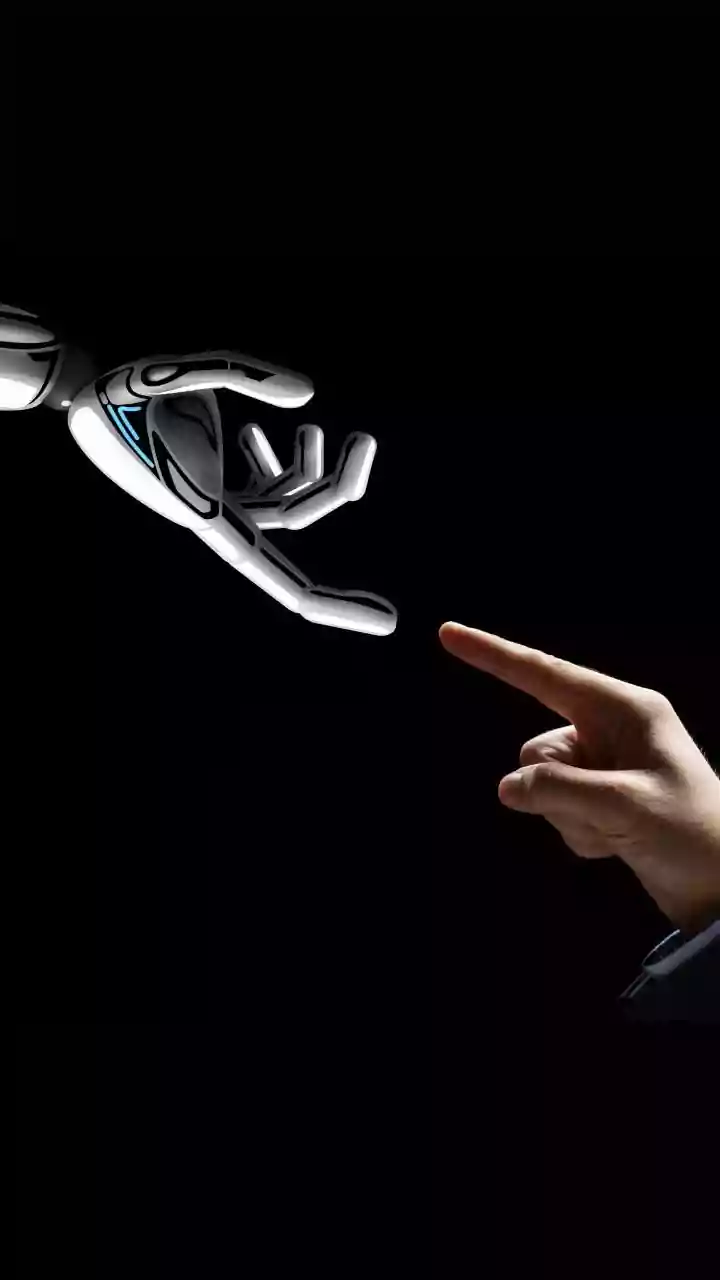
A common fear is that AI will make human scientists obsolete. However, these recent breakthroughs suggest the opposite. The AI acts as a 'force multiplier for human intellect', handling the exhaustive pattern-matching and computation, which frees up researchers to do what they do best: ask big questions, exercise intuition, and interpret results. Mathematicians working with DeepMind noted that they had to weed out many of the patterns the AI found, using their expert judgment to identify the truly interesting ones. The future of research is not AI working alone, but a 'neuro-symbolic system' where human creativity guides the AI's powerful search capabilities toward meaningful discoveries. It elevates the scientist from a calculator to a true strategist of discovery.
An Opportunity for Indian Innovation
This new paradigm of AI-assisted research presents a massive opportunity for India. With its deep talent pool in mathematics, technology, and science, along with a booming AI startup ecosystem, India is perfectly positioned to become a leader in this new scientific revolution. By integrating these AI tools into research workflows at institutions and R&D labs, Indian scientists can accelerate progress in critical areas. Imagine speeding up drug discovery for tropical diseases, designing novel materials for sustainable infrastructure, or developing more efficient climate models tailored to the subcontinent. The key will be investing in the interdisciplinary training and computational infrastructure needed to empower our researchers to collaborate effectively with these powerful new AI partners.