



A Mysterious Red Dot
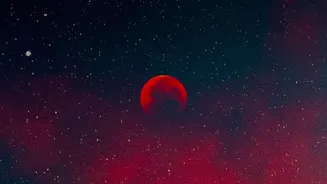
Deep in images captured by the James Webb Space Telescope (JWST), astronomers noticed a peculiar, brilliant red spot. This object, located billions of light-years away, dates back to just 660 million years after the Big Bang. Initially, its colour suggested
it might be an ancient galaxy shrouded in cosmic dust, which reddens light much like smoke makes a sunset appear red. But as researchers looked closer, the story became far stranger. The object, part of a population now nicknamed "little red dots," was exceptionally bright—far too luminous and compact to be a typical young galaxy. It was radiating about 100 billion times more energy than any star could possibly produce on its own.
Meet the 'Black Hole Star'
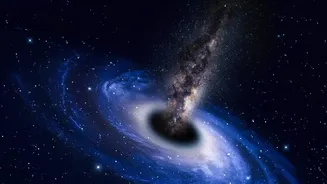
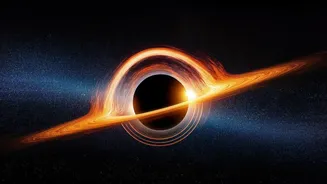
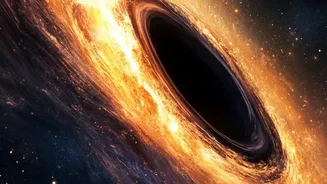
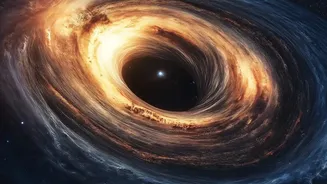
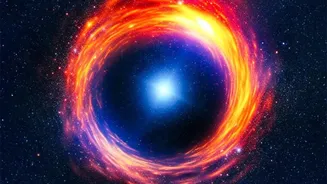
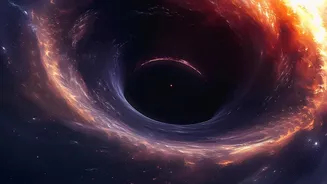
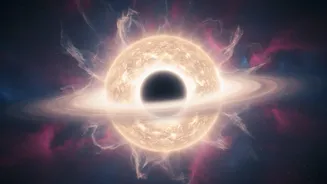
This bizarre combination of traits—looking like a giant star but shining with the power of a black hole—led researchers to propose an entirely new class of celestial object: a "black hole star." This isn't a star that collapsed into a black hole, but something far more exotic. The theory suggests it is a massive, nascent black hole, perhaps 100,000 times the mass of our sun, wrapped in a vast, dense cocoon of hydrogen gas the size of our solar system. In this model, the object isn't powered by nuclear fusion like a normal star. Instead, the intense energy comes from the central black hole feeding on the surrounding gas, causing the entire envelope to glow brightly. This construct of a black hole shrouded in a star-like cloud of gas is a combination that has never been observed before.
Solving a Cosmic Puzzle
The discovery could solve a persistent mystery that emerged shortly after the JWST began its mission: the existence of numerous "little red dots" scattered across images of the early cosmos. Since 2022, scientists have been puzzled by these objects, which appeared too bright and mature for their age, challenging existing models of how quickly galaxies could form after the Big Bang. While some of these dots may be dust-obscured young galaxies, this new "black hole star" theory provides a compelling explanation for the most extreme examples. It suggests we aren't seeing surprisingly large galaxies but rather these unique black hole-powered objects. They are a potential bridge, showing us a phase in cosmic evolution where the seeds of supermassive black holes are growing rapidly inside their gassy nurseries.
What This Means for Cosmology
If confirmed, the existence of black hole stars would have profound implications for our understanding of the early universe. One of the biggest questions in cosmology is how supermassive black holes, like the one at the center of our Milky Way, grew so massive so quickly. These black hole stars could represent a crucial, missing phase in their life cycle. They would be the 'seeds' that eventually grow into the galactic monsters we see today. The discovery, made by a team led by researchers at MIT, was part of a survey originally intended to find the universe's earliest galaxies. Instead, they stumbled upon an object that defies easy classification and forces a rethink of the processes that governed the cosmic dawn, a period from about 50 million to one billion years after the Big Bang.