



A New Window Into Polar Heat Loss
The mission, known as PREFIRE (Polar Radiant Energy in the Far-InfraRed Experiment), uses a pair of shoebox-sized satellites called CubeSats launched in mid-2024. Their job is to measure a specific, crucial type of energy that has been difficult to track
until now: far-infrared radiation. This invisible heat accounts for nearly 60 percent of the energy Earth radiates away to space. Before PREFIRE, scientists had an incomplete picture of this process at the poles, which was a major gap in climate models. By capturing two full seasonal cycles at both the Arctic and Antarctic since July 2024, PREFIRE is giving scientists an unprecedented look at how, when, and where the polar regions shed heat.
The Arctic: A System Losing Balance
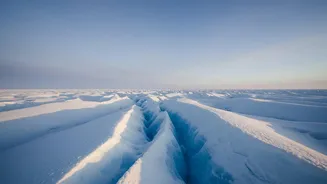
The data confirms that the Arctic is undergoing rapid and dramatic changes. The PREFIRE measurements show significant seasonal temperature swings, with Arctic summers now warm enough to thaw large areas of sea ice and tundra. This creates a dangerous feedback loop. As bright, reflective ice disappears, it exposes the dark ocean underneath, which absorbs more of the sun's energy. This, in turn, leads to more warming and more melting. The new far-infrared data helps quantify how much heat is escaping and how atmospheric conditions like clouds and water vapor trap heat, providing a more detailed understanding of the forces accelerating Arctic warming.
The Antarctic: Colder, Drier, and Different
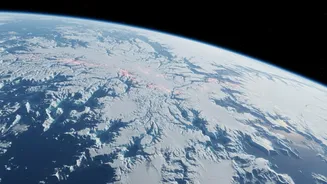
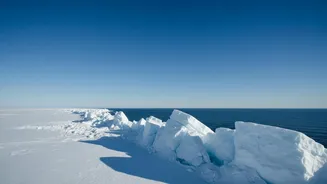
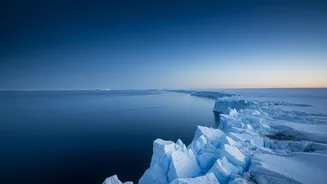
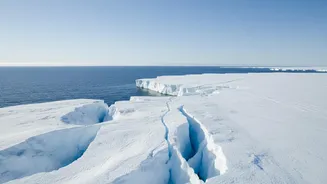
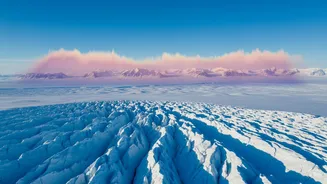
While the Arctic is an ocean surrounded by land, Antarctica is a massive land continent covered in a vast ice sheet. This fundamental geographical difference is key to understanding its energy budget. The PREFIRE data shows that Antarctica remains significantly colder than the Arctic, with summer temperatures on much of the continent rarely rising above freezing. Being higher, drier, and colder, the Antarctic's energy patterns are more stable than the Arctic's. However, the mission's data is crucial for monitoring the stability of its massive ice sheets, which hold enough water to cause catastrophic sea-level rise if they were to melt significantly.
What is an Energy Budget?
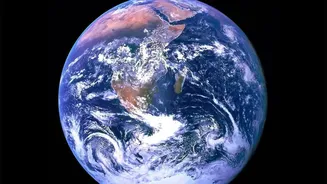
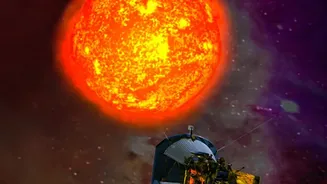
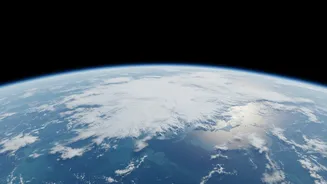
Think of Earth's climate like a bank account, but with energy instead of money. This is the planet's 'energy budget'. Energy comes in from the sun, and to keep temperatures stable, Earth has to radiate an equal amount of energy back out to space. If the outgoing energy is less than the incoming energy, the planet warms up. The poles are critical exit ramps for this heat. Even a small imbalance in this budget, amplified over time, can lead to significant climate changes. The PREFIRE mission is essentially a detailed audit of this energy account at the planet's most critical and least understood regions.
Why Polar Changes Affect Everyone
What happens at the poles doesn't stay at the poles. The Arctic, in particular, helps regulate global weather. As it warms, it can disrupt the jet stream, leading to more extreme weather events—like unusual cold snaps and prolonged heatwaves—in North America, Europe, and Asia. Furthermore, the melting of polar ice, especially from the Greenland and Antarctic ice sheets, is a primary driver of global sea-level rise, threatening coastal communities around the world. The detailed data from PREFIRE will help scientists improve their climate models, leading to better predictions of these global impacts.