











Meet SOLVE, Gaganyaan's New Testbed
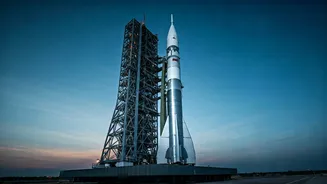
SOLVE, which stands for Sub-Orbital Launch Vehicle for Experiments, is a new rocket designed by the Indian Space Research Organisation. Unlike the giant rockets that hurl satellites into orbit, SOLVE has a very specific, crucial job: to serve as a dedicated
test platform for the Gaganyaan human spaceflight programme. Its primary mission is to carry a prototype of the Gaganyaan crew capsule to a sub-orbital altitude of about 10 to 17 kilometers. Once it reaches this height, it will release the capsule, allowing engineers to perform rigorous, real-world tests of the parachute system designed to bring Indian astronauts safely back to Earth.
Borrowing from a Legend: The PSLV Motor
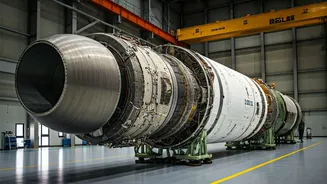
The heart of this new test rocket is a familiar and highly respected piece of hardware: the solid strap-on booster motor from the Polar Satellite Launch Vehicle (PSLV). The PSLV is famously known as ISRO's 'workhorse' for its incredible reliability and string of successful launches over decades. Instead of designing a brand-new motor from scratch, which would be time-consuming and expensive, ISRO has chosen to adapt this proven technology. This strategy of borrowing from a successful legacy system is a classic example of ISRO's engineering philosophy—minimizing risk and cost by leveraging existing, validated components for new applications.
Smarter, Not Just Stronger
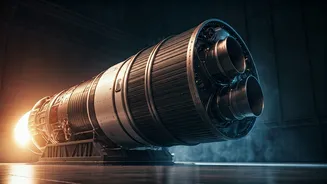
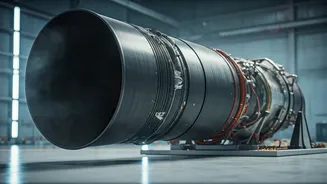
This is not a simple copy-paste job. The PSLV booster has been significantly modified for its new role in SOLVE. For instance, it now uses a slow-burning propellant. This change is crucial because the test rocket needs to achieve a very specific flight path and velocity to accurately simulate the conditions the Gaganyaan capsule will face during re-entry. Additionally, engineers have fitted it with a straight nozzle and a secondary injection thrust vector control system. This provides better steering and control during its short, sub-orbital flight, ensuring the parachute tests can be conducted with precision. On July 3, 2026, ISRO successfully conducted the first ground test of this modified motor at the Satish Dhawan Space Centre, where it performed exactly as expected.
Why This Matters for Gaganyaan
The Gaganyaan mission, which aims to send Indian astronauts into orbit, is one of the most complex and high-stakes projects ISRO has ever undertaken. The safety of the crew is paramount, and the parachute deceleration system is one of the most critical safety components. This system, involving a complex sequence of 10 different parachutes, must work perfectly to slow the crew module from high velocity for a gentle splashdown in the sea. Having a dedicated, low-cost test vehicle like SOLVE gives ISRO immense flexibility. It allows engineers to conduct repeated tests under a wide variety of simulated failure conditions, something that would be impractical and prohibitively expensive with a full-scale orbital rocket. This ensures the entire landing sequence is validated to the highest degree before the first crewed flight.
A Blueprint for the Future
The development of SOLVE is more than just a stepping stone for Gaganyaan; it's a testament to a broader strategy within ISRO. By creating a modular system where proven components like the PSLV booster can be adapted and reconfigured, ISRO is building a more flexible and efficient launch capability. This approach not only accelerates the development timeline for critical test missions but also reinforces India's reputation for cost-effective and ingenious solutions in the global space sector. As India prepares to join the elite club of nations with human spaceflight capabilities, it is innovations like SOLVE that pave the way, ensuring that these ambitious goals are met not just with boldness, but with the wisdom of experience and pragmatic engineering.