




The Latest: A Continent on High Alert
As of mid-August 2026, the situation remains critical across Southern Europe. Countries including Spain, France, Italy, Portugal, and Greece have been battling significant blazes for weeks, spurred on by prolonged drought and record-breaking heatwaves.
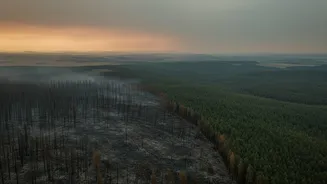
According to the European Forest Fire Information System (EFFIS), over 550,000 hectares have burned across the EU since the start of the year. While some major fires in France and Spain are seeing improved conditions, Greek firefighters are still battling active flames. The latest developments show a continent stretched thin, where a brief respite in one nation is often countered by a new emergency in another. This has prompted mass evacuations of both residents and tourists, disrupting lives and economies.
What It Means: A Climate Change Reckoning
The single most important factor amplifying these fires is climate change. This is not just a 'bad summer'. Scientific analysis has shown that the hot, dry conditions fuelling these fires are now significantly more likely due to human-caused global warming. One rapid attribution study found that the weather conditions driving fires in Spain were 20 times more likely than they would have been otherwise. The number of days with extreme fire risk in southern Europe has more than doubled in the last 40 years. This creates a vicious cycle: hotter temperatures and longer droughts turn forests into tinderboxes, making fires easier to start, faster to spread, and harder to extinguish.
What It Doesn't Mean: That This Is Only a Climate Problem
While climate change is the accelerator, it's not the only part of the engine. Decades of changes in land management play a crucial role. In many parts of rural Europe, the move away from traditional agriculture has led to forests becoming overgrown and filled with combustible material. Fewer grazing animals and the abandonment of small-scale farming mean less natural clearing of underbrush, creating a perfect fuel ladder for fires to climb from the ground to the forest canopy. Experts point out that better forest management, including prescribed burns and clearing vegetation around homes, is a critical and sometimes overlooked part of building resilience.
What It Means: Unprecedented European Cooperation
The scale of the crisis has forced a coordinated response. The idea that each nation is fighting its battles alone is a myth. Through the EU Civil Protection Mechanism and its rescEU program, Europe has deployed its largest-ever multinational firefighting force for the 2026 season. This involves a fleet of shared aircraft, including planes and helicopters, and the strategic pre-positioning of hundreds of firefighters from 14 different countries in high-risk zones. When France, Spain, or Greece request aid, teams and equipment from as far as Romania or Slovakia are mobilised, showcasing a system of solidarity under immense pressure.
What It Doesn't Mean: That Only Southern Europe Is at Risk
For years, wildfires were seen as a Mediterranean problem. That is dangerously outdated. The fire risk map is expanding northward. In recent years, countries like Germany, Czechia, Sweden, and even the Netherlands have battled significant wildfires, a scenario almost unthinkable a decade or two ago. As climate patterns shift, central and northern European nations are increasingly experiencing the hot, dry conditions conducive to fires. This development requires a fundamental shift in mindset, from seeing this as a regional issue to understanding it as a continental challenge that demands preparation and resources far beyond the traditional hotspots.