



A New Tool for Alien Skies
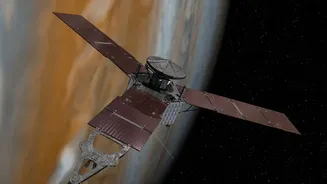
Launched in January 2026, Pandora is a small satellite, or SmallSat, with a very specific job. It's not designed to discover thousands of new planets, nor does it have the sheer power of the James Webb Space Telescope (JWST). Instead, Pandora is a specialist.
Developed as part of NASA's cost-effective Astrophysics Pioneers program, its role is to help larger observatories make better sense of the data they collect. For its one-year primary mission, Pandora will focus on at least 20 known exoplanets, observing each one multiple times to gather a wealth of data. This focused approach allows it to tackle a persistent challenge in exoplanet science that has complicated the search for worlds with atmospheres similar to our own.
The 'Stellar Contamination' Problem
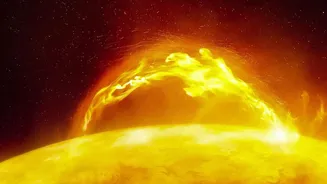
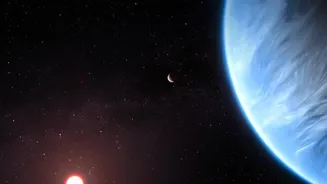
When scientists study an exoplanet's atmosphere, they often use the "transit method." They wait for the planet to pass in front of its host star and measure the starlight that filters through the planet's atmosphere. The chemicals in the atmosphere, like water vapor, absorb certain colors of light, leaving a unique chemical fingerprint. However, stars are not perfect, static balls of light. They have active regions, like sunspots and brighter patches called faculae, that rotate in and out of view. This stellar activity can change the light in ways that mimic or completely mask the very atmospheric signals scientists are looking for. Imagine trying to see a faint watermark on a piece of paper while someone is shining a flickering flashlight on it—that's the essence of the "stellar contamination" problem. It makes it incredibly difficult to be sure whether a detected molecule, especially water, is truly from the planet's atmosphere or just a trick of the starlight.
A Perfect Partner for Webb and Hubble
This is where Pandora's clever design comes in. The SmallSat simultaneously observes stars in both visible and near-infrared light. By monitoring a star for long periods, Pandora can track its variability and create a precise model of its activity. This data allows scientists to effectively subtract the star's 'noise' from the transit data collected by more powerful telescopes like the JWST and Hubble. With a cleaner signal, researchers can determine the atmospheric makeup of exoplanets with much higher confidence. Pandora's ability to stare at targets for extended periods is something that high-demand, flagship missions can't regularly do. This makes it an invaluable support craft, ensuring that the precious time on billion-dollar telescopes is used as efficiently as possible to study the most promising targets.
The SmallSat Revolution in Space
Pandora represents a major trend in space exploration: the rise of smaller, highly focused, and less expensive missions. The Astrophysics Pioneers program, which funded Pandora with a cost cap of around $20 million, encourages faster development cycles and accepts a slightly higher risk in exchange for nimble, cutting-edge science. This approach allows NASA to tackle specific scientific questions without the decade-long timelines and massive budgets of flagship missions like Webb or the upcoming Nancy Grace Roman Space Telescope. By developing specialized tools like Pandora, scientists can maximize the return from their largest investments. Pandora itself even uses a spare near-infrared detector originally built for the JWST, showcasing the resourcefulness of these smaller projects. This model of complementary missions—big and small working in concert—is becoming a cornerstone of modern astrophysics.