


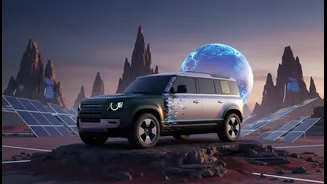


The Electric Off-Road Challenge
Translating the go-anywhere capability of a traditional four-wheel-drive system into an electric vehicle is a complex engineering puzzle. For Land Rover, a brand synonymous with rugged performance, the stakes for its first EV—the Range Rover Electric—are
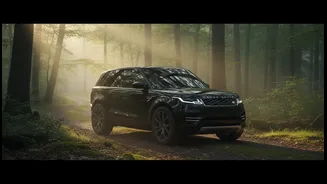
incredibly high. A conventional 4x4 relies on a complex network of mechanical components like driveshafts, transfer cases, and locking differentials to distribute power and maintain grip. These systems are heavy, intricate, and have been refined over a century of development. Electric vehicles present an entirely new paradigm. While they lack the traditional hardware, they offer an unprecedented level of control. The challenge is harnessing that potential to not just match, but exceed the capabilities of their internal combustion engine predecessors, all while managing the immense weight of the battery pack.
Instant Torque, Infinite Control
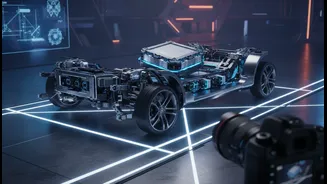
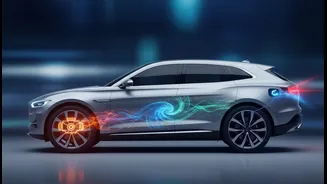
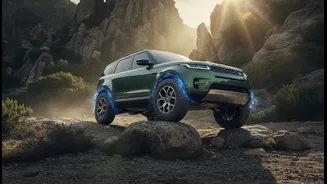
The secret to the Range Rover Electric's off-road prowess lies in its dual-motor configuration. By placing one electric motor on the front axle and another on the rear, the vehicle gains an intelligent all-wheel-drive system without any physical connection between them. Unlike a gasoline engine that needs to build revs to deliver peak power, electric motors provide instant torque from a standstill. This allows for incredibly precise power application, which is crucial when navigating slippery or uneven surfaces. Where a traditional system might take time to react to a slipping wheel, the dual motors can adjust power delivery to each axle independently and almost instantaneously, effectively acting as a virtual locking differential. This ability to manage power distribution with such speed and precision is the key to maintaining traction when it matters most.
The Land Rover Difference
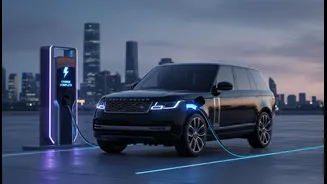
Land Rover isn't just installing two motors; it's building an entire ecosystem around them. The company has developed a proprietary in-house traction control system that moves beyond the traditional anti-lock braking system (ABS) for managing wheel slip. Instead, the system communicates directly with each motor's control unit. This change dramatically reduces the reaction time for torque adjustments from around 100 milliseconds to just one millisecond. This near-instantaneous response allows for exceptionally smooth power delivery, enhancing grip on surfaces from icy roads in the Arctic Circle to desert sand. The vehicle is built on an advanced 800-volt architecture, which not only enables rapid charging but also improves overall efficiency and thermal management, ensuring consistent performance in extreme temperatures.
A New Competitive Benchmark
While Land Rover is making headlines with its dual-motor system, it enters a competitive field where electric off-roaders have already made their mark. Brands like Rivian have pushed the envelope with quad-motor setups, dedicating one motor to each wheel for the ultimate in torque vectoring. Other luxury competitors have also entered the space, each with its own take on electric all-wheel drive. However, Land Rover's strategy is not just about the number of motors, but about the integration of its hardware and software. By developing its electric drive units and control systems in-house, the company aims to deliver a level of refinement and capability that feels uniquely Range Rover. The goal is to prove that its dual-motor system, enhanced by class-leading software, can provide the control and confidence that has defined the brand for over 50 years, ensuring it remains a benchmark for luxury and all-terrain performance.