



A Lonely Voyager in Deep Space
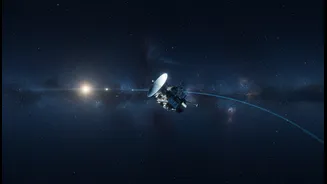
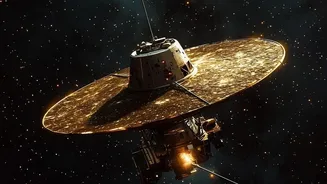
Launched in 2006, NASA's New Horizons spacecraft completed its primary mission with a spectacular flyby of Pluto in 2015, revealing a complex and geologically active world. Since then, it has ventured deeper into the Kuiper Belt, the vast ring of icy
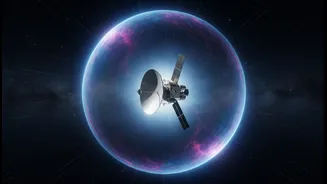
bodies beyond Neptune. In 2019, it made history again by studying Arrokoth, the most distant object ever explored up close. Now, nearly 9.5 billion kilometers from home, New Horizons continues its journey toward the edge of our solar system, a testament to engineering and human curiosity. Its extended mission involves studying the heliosphere and the dusty environment of this remote region, a task it often performs while in a state of carefully managed slumber.
The Strategic Need for Sleep
Keeping a sophisticated spacecraft operational for decades across billions of kilometers is an immense challenge. One of the key strategies for ensuring New Horizons' longevity is hibernation. During these long cruising periods between significant events, mission controllers place the craft into a low-power state. Most of its systems are unpowered, which saves wear and tear on critical components and, crucially, conserves the finite power supplied by its radioisotope thermoelectric generator. This power source naturally decays over time, so every watt saved is precious. Hibernation also significantly reduces the cost and workload for the mission operations team, who would otherwise need to be in constant contact. New Horizons has undertaken these naps numerous times since 2007, with the most recent stretch lasting 321 days.
A Simple, Brilliant 'I'm OK' Signal
Even during hibernation, controllers need to know the spacecraft is healthy. Sending back detailed telemetry would consume too much power, so the team devised a brilliant, low-cost solution: a weekly status beacon. This isn't a complex data packet but a simple coded tone broadcast back to Earth. The onboard computer continuously monitors the spacecraft's health. If all systems are functioning as expected, it sends a 'green' tone. This simple signal tells the team at the Johns Hopkins Applied Physics Laboratory everything they need to know—that their distant explorer is safe. This method is incredibly efficient, providing vital peace of mind without waking the craft or using significant power. During its latest and longest hibernation, every single weekly report came back 'green'.
Listening for a Whisper from Billions of Kilometers Away
Receiving this weekly whisper is a marvel in itself. The signal from New Horizons, now nearly 9.5 billion kilometers away, is incredibly faint by the time it reaches Earth. It takes the signal, traveling at the speed of light, almost nine hours to cross the vast distance. This faint message is captured by NASA's Deep Space Network (DSN), a global system of massive radio antennas in Spain, Australia, and California designed for communicating with interplanetary spacecraft. The precision required to both send commands and receive these simple tones is immense, showcasing the incredible capability of the DSN and the mission planners who choreographed this long-distance check-up years in advance.
Pioneering the Future of Exploration
While New Horizons sleeps, some of its instruments continue to gather data, measuring dust impacts and the charged-particle environment of the outer heliosphere. This data is stored onboard and transmitted to Earth after the spacecraft wakes up. The success of this long-duration hibernation and beacon system is more than just good news for one mission; it's a blueprint for future exploration. As we design missions to venture even farther into the cosmos, the ability to operate autonomously and efficiently for decades will be critical. New Horizons has proven that a spacecraft can be put into a resource-saving state for extended periods while still providing basic health updates and passively collecting science. It’s a strategy that will enable the next generation of robotic explorers to push the boundaries even further, building on the legacy of this pioneering voyager.