





A Time Capsule From The Bronze Age
In the waters off Antalya, Turkey, archaeologists have been studying the remains of what may be the world's oldest shipwreck. While the wooden ship itself disintegrated over millennia, its cargo tells a remarkable story. Researchers led by Hakan Öniz
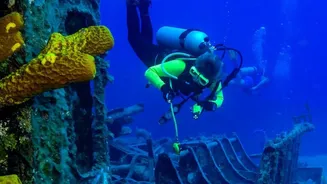
of Akdeniz University found over 30 ceramic jars, known as amphorae, and three stone anchors resting on the seabed about 100 feet down. Based on the style of the pottery, which resembles artifacts found near the Giza pyramids, the wreck is dated to the Early Bronze Age, between 4,400 and 4,700 years ago. This would place its final voyage around the same time the first great pyramids were being constructed in Egypt.
What the Cargo Reveals
The collection of amphorae provides a fascinating glimpse into ancient maritime trade. These jars were the shipping containers of their day, and analysis suggests they were likely used to transport valuable goods like olive oil or wine. Clay analysis indicates the jars were produced in workshops in the Jordan Valley, suggesting the ship began its journey on the Levantine coast. Its destination remains a mystery, but experts speculate it was headed for major trade hubs like Troy or Minoan Crete when it sank. One unique amphora with two holes in its body has led to a compelling theory: it may have been a churn for making butter or cheese, meaning sailors might have kept live goats aboard for fresh milk on long voyages.
The Race for the 'Oldest Shipwreck' Title
The claim of 'world's oldest' is a significant one in archaeology. For decades, that title was held by the Dokos shipwreck, discovered off the coast of Greece in 1975. The cargo from the Dokos wreck is dated to around 2200 BCE, making it roughly 4,200 years old. If the 4,700-year dating for the Kekova wreck is confirmed, it would decisively take the top spot. However, defining 'shipwreck' can be complex. In both the Kekova and Dokos cases, the wooden hulls of the ships are gone, and only the durable cargo remains. The dating relies on comparing the pottery styles with known examples from land-based excavations. While the evidence for the Kekova wreck's age is strong, the title of 'oldest' often inspires spirited debate among experts until all findings are exhaustively verified.
Why This Discovery Is So Important
Whether it's the absolute oldest or simply one of the most ancient ever found, the Kekova shipwreck is a monumental discovery. It pushes back the timeline of organized, long-distance maritime trade in the Mediterranean. The find provides concrete evidence that nearly 5,000 years ago, complex trade networks already connected the cultures of the Levant, Anatolia, and possibly the Aegean. It shows that ancient seafarers were undertaking perilous journeys to move goods, ideas, and culture across the sea, laying the groundwork for the interconnected world of later empires. Each amphora recovered is a piece of a puzzle that helps us understand not just commerce, but the daily lives and resourcefulness of these Bronze Age sailors.