



Gearing Up for Human Spaceflight
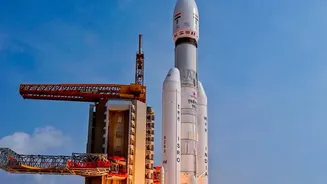
The Gaganyaan programme is India's prestigious mission to send a crew of three astronauts into a Low Earth Orbit of about 400 kilometres for a three-day mission. Successfully completing this will make India the fourth country in the world, after the United
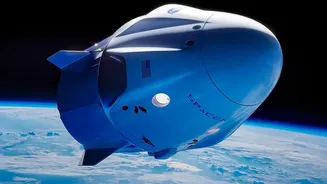
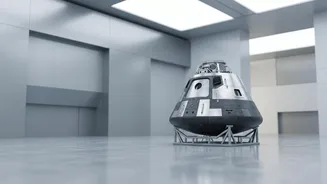
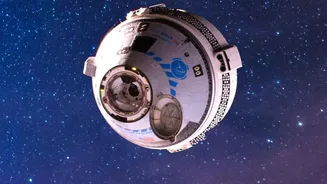
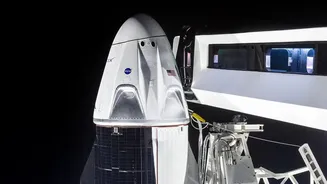
States, Russia, and China, to have an indigenous human spaceflight capability. The mission involves a series of uncrewed test flights before the first crewed flight, currently anticipated for 2027. At the heart of this endeavour is the crew module—the capsule that will serve as the astronauts' home in orbit and their shield during their return to Earth. Every component of this module must be tested to its limits, because when human lives are at stake, there is no room for error.
A Trio of Critical Tests
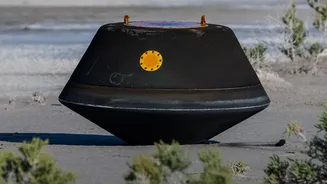
ISRO recently announced the successful completion of three major qualification tests for the Gaganyaan crew module, each designed to ensure astronaut safety during the riskiest phases of the return journey. The first was the Crew Module Up-righting System (CMUS) test. After splashing down in the ocean, a capsule can easily be tilted or even inverted by waves. The CMUS uses a system of inflatable bags, powered by stored cold gas, to automatically rotate the module into the correct upright position, keeping the crew safe until recovery teams arrive. The second test validated the umbilical separation system, which ensures the crew module cleanly disconnects from its service module just before re-entry. The final test confirmed the module's structural strength when the apex cover, which protects the parachutes, is jettisoned to allow for their deployment. Passing these ground trials, where systems are pushed beyond their expected flight loads, is a massive step in certifying the capsule for human flight.
The Fiery Ordeal of Re-entry
Returning from orbit is a violent process. The crew module, separating from the service module which is left to burn up, slams into Earth's atmosphere at tremendous speeds. The spacecraft uses the atmosphere itself for 'aerobraking'—a process where air friction slows the vehicle down, but at the cost of generating extreme heat. The module’s exterior can reach temperatures of nearly 5,000 degrees Fahrenheit, making a robust thermal protection system non-negotiable. Following this, a complex, multi-stage parachute system must deploy flawlessly to continue slowing the descent. This sequence involves smaller drogue parachutes for initial stabilisation, followed by three large main parachutes that reduce the speed to a safe level for splashdown. The entire sequence, from re-entry burn to hitting the water, is a high-stakes, automated process where precision is paramount.
The Final Hurdle: Splashdown and Recovery
Once the capsule splashes down in the Bay of Bengal, the clock starts ticking. The safe recovery of the crew in the shortest possible time is a mission-critical objective. This final phase is a carefully choreographed operation led by the Indian Navy in close coordination with ISRO. Teams have been conducting extensive trials using mock-up modules that simulate the real capsule's mass and dimensions. These drills, held in closed pools and open seas off the coast of Visakhapatnam, validate the standard operating procedures for every step: attaching recovery buoys, towing the module, and carefully hoisting it onto a naval ship's well-deck, which can be flooded to allow for a smoother retrieval. These practices ensure that recovery teams are prepared for various sea conditions and potential emergencies, making the final step of the mission as safe as the launch itself.