



A Fragrance Fit for a Princess
The story of neroli is intertwined with royalty. In the late 17th century, Anne Marie Orsini, the princess of the Italian town of Nerola, fell in love with the intoxicating scent of the bitter orange tree's blossoms. She famously used the essence to perfume
her gloves and her bathwater, creating a personal scent that was so captivating it became fashionable among Italian nobility. Her influence was so profound that the oil eventually took its name from her title, becoming known as 'neroli'. Before long, this royal secret travelled across Europe, becoming a cornerstone ingredient in the world's first Eau de Cologne, cementing its place in fragrance history.
The Generous Bitter Orange Tree
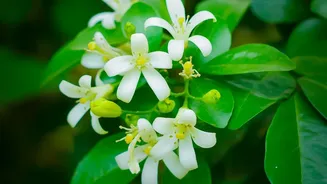
Neroli oil comes from the blossoms of the bitter orange tree, botanically known as Citrus aurantium amara. This remarkable tree is a wonder of perfumery, producing three distinct essential oils from different parts. The peel of its fruit gives us bitter orange oil, known for its use in marmalade and sharp citrus scents. The leaves and twigs are steam-distilled to create petitgrain, an oil with a woody, green, and floral aroma. But the most precious gift comes from the tree’s delicate, waxy white flowers. When these blossoms are harvested, they are handled with immense care to preserve their unique fragrance.
An Art of Extraction
Producing genuine neroli oil is a labor-intensive and costly process. The blossoms are typically hand-picked in late April and early May to ensure they are at their most fragrant. To extract the oil, a meticulous process of steam distillation is used. The flowers are carefully steamed, and the resulting vapor, rich with aromatic compounds, is cooled and condensed. The precious essential oil then separates from the floral water. It takes a huge quantity of flowers—around one ton—to produce just one quart of neroli oil, which explains its high price and luxurious status in both perfumery and skincare.
The Science of Scent and Skin
Beyond its beautiful aroma, neroli oil is packed with benefits. In aromatherapy, its scent is known to have a calming effect, with studies suggesting it can help reduce stress and anxiety by lowering cortisol levels. This makes it a popular choice for promoting relaxation and restful sleep. For the skin, neroli is a powerhouse ingredient. It's celebrated for its ability to help regenerate skin cells, making it useful for improving the appearance of scars, stretch marks, and fine lines. With antimicrobial and anti-inflammatory properties, it can also help soothe irritation and balance oil production, making it suitable for all skin types, from acne-prone to mature.
A Perfumer's Golden Note
In the world of fragrance, neroli is treasured for its complexity and versatility. Its scent profile is a masterful blend of floral, citrus, green, and honeyed notes, with a characteristic hint of pleasant bitterness. Unlike the straightforward zest of orange peel oil, neroli smells more like the entire flowering tree—blossoms, leaves, and all. Perfumers use it as a 'bridge note' to seamlessly connect bright citrus top notes with richer floral or woody hearts. It can feel sun-drenched and warm when paired with amber, or sparkling and clean next to green notes, adding a touch of sophisticated radiance to any composition.