





A Celestial Photobomb
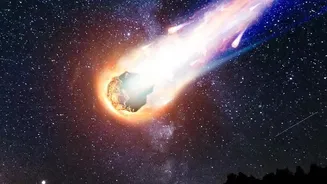
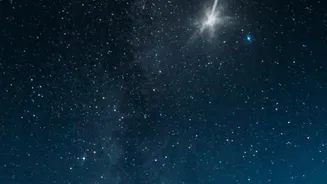
On August 3, 2026, NASA released its Astronomy Picture of the Day (APOD), showcasing a stunning image that has scientists and stargazers buzzing. Captured during a long exposure of the Lacerta Nebula, a bright meteor unexpectedly streaked across the frame.
But this wasn't just any celestial photobomb. The image provides a beautiful and clear example of how meteors, as they vaporize in our atmosphere, display a range of colors that act as a chemical fingerprint, telling us exactly what the space rock was made of. The image, taken from Death Valley, shows that the light isn't just from the rock burning, but from the elements within it getting superheated and glowing intensely.
The Science of a Shooting Star
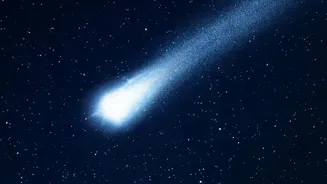
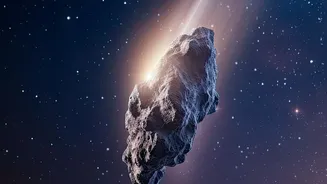
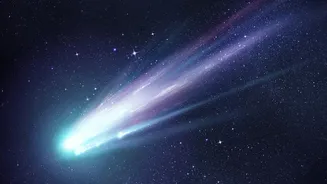
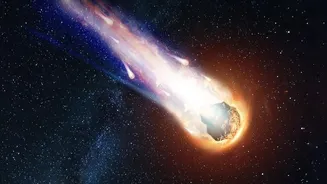
What we call a 'shooting star' isn't a star at all. It's typically a tiny piece of space debris, often no bigger than a pebble or a grain of sand, called a meteoroid. As it ploughs into Earth's atmosphere at incredible speeds—sometimes over 200,000 kilometres per hour—the friction with air molecules generates immense heat. This process, known as ablation, heats the surrounding air and the meteoroid itself until they glow. For years, we've known this causes the bright streak we see. However, the exact colours within that streak are a more complex and revealing story. It’s not just about heat; it's a high-speed chemistry lesson.
A Meteor's Chemical Fingerprint
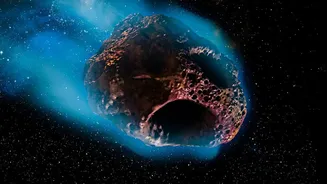
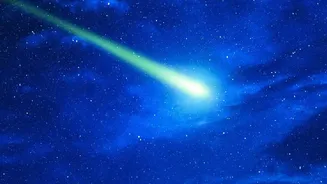
The vibrant colours in a meteor's trail are the direct result of its mineral composition vaporizing. As the elements within the meteoroid are superheated into a plasma, they emit light at specific wavelengths, each corresponding to a unique colour. This is the same principle behind a chemistry class flame test or the colours in fireworks. NASA and other observatories have helped compile a decoder ring for these celestial colours. An orange or bright yellow glow often points to sodium, while a standard yellow suggests the presence of iron, one of the most common elements in meteorites. Magnesium, another common component, creates a striking blue-green light, and calcium atoms produce a lovely violet or purple hue. Even the air itself gets involved, with atmospheric nitrogen and oxygen sometimes glowing red when heated by the passing meteor.
Why This Picture Matters
While the science of meteor colours isn't brand new, high-quality images like the one shared by NASA are invaluable. They provide clear, real-world data that reinforces and refines our models. By analyzing the different colours along the meteor's path, scientists can better understand how the object broke apart and which elements were released at different stages of its fiery demise. This helps in classifying meteor showers, as meteors originating from the same parent comet or asteroid often share a similar chemical makeup and, therefore, a characteristic colour palette. For instance, the famous Perseids are often known for their bright, fast meteors, while the Geminids are noted for their greenish tint, thanks to their nickel and magnesium content.
Your Guide to Skywatching
This new focus on mineral vaporization empowers every amateur stargazer. The next time you're out under a dark sky, you're not just looking for streaks of light; you're looking for clues. August is a fantastic month for this, as it hosts the Perseid meteor shower, one of the best of the year, which is set to peak around August 12-13 under ideal dark-sky conditions. As you watch, notice the colours. Did you see a flash of green? That was likely nickel or magnesium. A pop of violet? You just witnessed vaporizing calcium. Each meteor becomes a unique event, a tiny piece of a distant comet or asteroid revealing its secrets in a blaze of glory.