







What is the Bharatiya Antariksh Station?
The Bharatiya Antariksh Station (BAS) is the Indian Space Research Organisation's (ISRO) ambitious plan to build and operate a modular space station in low Earth orbit. This orbital outpost will place India in an exclusive club of nations with their own
space laboratories, a list that currently includes only the multi-national International Space Station (ISS) and China's Tiangong. The planned station will weigh around 52 tonnes and orbit approximately 400-450 kilometres above Earth. It is designed to host crews of three to four astronauts for missions lasting several months, serving as a platform for cutting-edge scientific research in microgravity, technology demonstration, and human spaceflight. The project is a natural extension of the Gaganyaan programme, which is developing India's human spaceflight capabilities. The entire station is envisioned as a five-module structure, with the full assembly targeted for completion by 2035.
Decoding the Milestone: Baseline Design Review
In complex engineering projects like building a space station, progress is marked by a series of rigorous reviews. The "Baseline Design Review" (BDR), or a similar step like a Preliminary Design Review (PDR), is one of the most crucial early milestones. Think of it as finalising the master blueprint for the entire structure. This review confirms that the fundamental design and architecture of the BAS-01 module are sound, meet all requirements, and can be realistically built. Completing this review effectively "freezes" the core design, creating an approved baseline. This allows engineers to confidently move forward with the next, more detailed phase: designing and developing the individual subsystems that will bring the module to life, knowing that the foundational plan is solid and won't be subject to major changes. It’s a formal declaration that the concept is viable and ready for detailed engineering work.
The Heart of the Station: BAS-01 Module
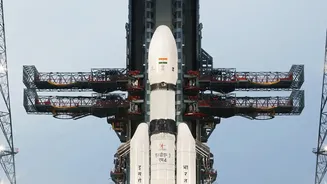
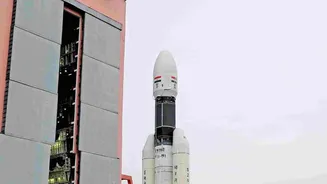
The BAS-01 is the foundational first module of the entire space station. Scheduled for launch in 2028 aboard an LVM3 rocket, this 10-tonne module is the core component that will serve as a testbed for essential technologies. It will house the critical systems necessary for human habitation and scientific work in orbit. A scale model unveiled by ISRO showcased a module roughly 8 meters long, packed with indigenous technology. Key subsystems that will now move into advanced development include a homegrown Environmental Control and Life Support System (ECLSS), the Bharat Docking System (BDS) for visiting spacecraft, and automated hatches. It will also be equipped to protect against the harsh realities of space, such as radiation and micrometeoroid debris.
Why This Matters for India
The completion of the BAS-01 design review is more than just a technical checkpoint; it's a statement of India's growing prowess in space exploration. Developing a space station fosters a unique ecosystem of high-tech innovation, from life support and robotics to materials science. This will not only generate high-skilled jobs but also spur growth in the private sector, which has been invited to participate in the module's construction. As India's private space industry grows, with recent successes like Skyroot Aerospace's Vikram-1 orbital launch, a national space station provides a future destination for commercial activities, including tourism and research. Furthermore, having a permanent presence in orbit enhances India’s strategic autonomy and opens doors for deeper international collaborations on its own terms. It solidifies the nation's journey from being a user of space technology to becoming a global leader in shaping its future.