

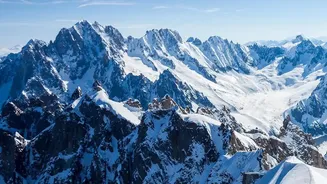
A Summit in Constant Motion
On October 14, 2026, surveyors announced that the peak of Mont Blanc measured 4,807.47 metres. This was a notable increase of almost two metres from its last measurement in 2023, which was the lowest recorded in recent memory at 4,805.59 metres. This back-and-forth
is not unusual; the summit’s height has been oscillating for years. Since measurements began in earnest in 2001, the peak has seen highs of over 4,810 metres in 2007 and a general downward trend since. This constant flux is precisely why experts caution against drawing simple conclusions from any single measurement.
An Icy Crown, Not a Rocky Peak
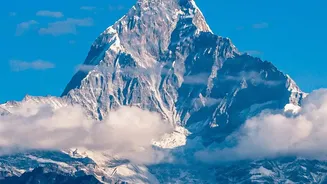
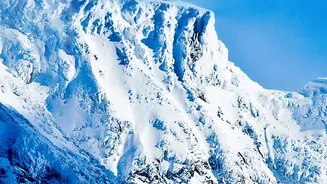
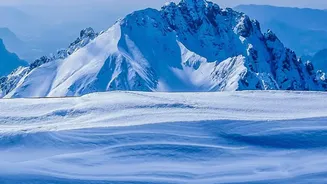
The key to understanding the height changes lies in what is actually being measured. The rocky summit of Mont Blanc stands at a stable 4,792 metres above sea level. What changes is the thick cap of ice and snow that sits on top, a 'perennial ice-and-snow dome' that can be 15 to 20 metres thick. It is the height of this icy crown, not the mountain's rock, that shifts. The measurement is therefore not of the mountain itself, but of the snowpack on its highest point.
Weather, Not Just Warming
The thickness of this snow cap is primarily determined by two competing factors: snow accumulation and wind. The amount of precipitation during the year dictates how much snow is added to the cap. A winter with heavy snowfall can add significant height. Just as importantly, high-altitude winds constantly reshape the summit, moving snow around and affecting its final measured height. The 2023 dip, for example, was attributed partly to lower summer precipitation, while the 2026 rebound suggests different weather patterns in the intervening years. For this reason, a higher summit doesn't mean the mountain has 'gained' ice mass in the long run.
Where Does Climate Change Fit In?
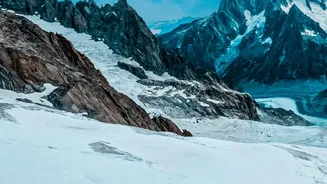
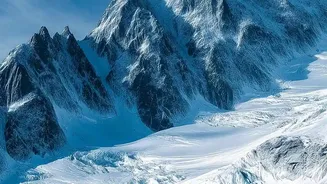
While the summit’s height is a poor short-term indicator, climate change is having a devastating and visible impact on the rest of the Mont Blanc massif. Surveyors and glaciologists note that glaciers at lower altitudes are melting at an alarming rate. Jean de Garet, chief surveyor for the Haute-Savoie region, noted that on the way up the mountain, you can see glaciers that have 'literally melted before our very eyes'. Permafrost, the frozen 'glue' that holds rock faces together, is also degrading, leading to an increase in rockfalls. Experts stress that while the summit temperatures remain below freezing year-round, the overall health of the mountain's glaciers is undeniably declining.
A Tale of Two Signals
Think of it as the difference between a noisy, fluctuating signal and a clear, consistent trend. The biennial height of the snowy peak is the noisy signal, influenced by a multitude of short-term weather variables. It captures a snapshot in time. The consistent trend, however, is the widespread loss of ice across the Alps. Swiss glaciologists have reported an 'explosion of melt rates' in recent years. While the top of Mont Blanc might be higher one year and lower the next, the mountain's overall ice volume is on a clear downward path. Experts say it would take about 50 years of summit measurements to draw firm conclusions about climate change's direct impact at that specific altitude.