


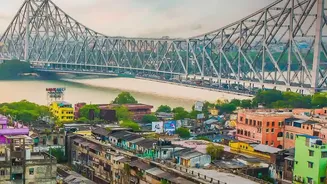
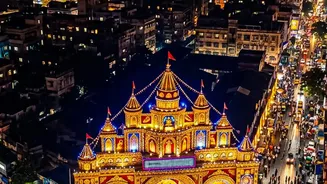
Kolkata carries many names, but few are as evocative as the 'London of India'. This title isn't just a turn of phrase; it's a direct link to a past when the city was the jewel of the British Empire, shaped by architecture of immense scale and power.
The Empire's Second City
To
understand the nickname, one must go back to when Kolkata, then Calcutta, was the capital of British India from 1772 to 1911. As the administrative and commercial heart of the entire subcontinent, the British East India Company and later the British Raj invested heavily in transforming it into a city that reflected their imperial might. The goal was to build a 'second city of the Empire' after London, a grand statement of power etched in brick, stone, and marble. The city's location on the Hooghly River also mirrored London's on the Thames, reinforcing its role as a vital hub for trade and transport.
An Architectural Statement
The British didn't just build functional offices; they imported their architectural ambitions. Styles popular in Europe, like Neoclassical, Gothic Revival, and later, Victorian, were used to design the city's most important structures. Neoclassicism, with its grand columns and symmetrical facades, was meant to evoke the glory of ancient Greece and Rome, linking British rule to the great empires of the past. This deliberate choice of imposing, European designs created a cityscape that felt familiar to the colonists and awe-inspiring to the local population, solidifying the visual comparison to London.
The Heart of Power: Dalhousie Square
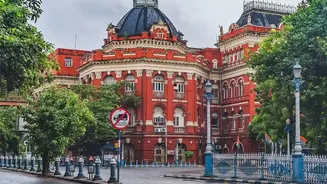
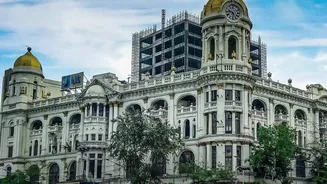
Now known as B.B.D. Bagh, Dalhousie Square was the epicentre of British administration. This area contains perhaps the densest collection of colonial architectural heritage in the world. Dominating the square is the Writers' Building, which started as a residence for the junior clerks or 'writers' of the East India Company and was later expanded into a massive secretariat. Its striking red-brick facade and Greco-Roman elements made it a formidable symbol of governance. Nearby, the General Post Office (GPO) impresses with its high domed roof and towering Corinthian columns, while the Calcutta High Court stands as a magnificent example of the Gothic Revival style. These buildings formed an administrative core that mirrored the functions, if not the exact look, of London's Whitehall.
Grandiose Monuments and Palaces
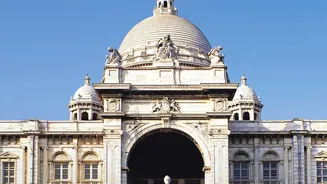
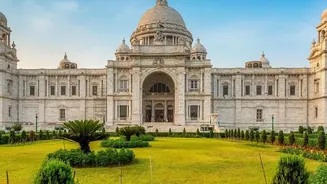
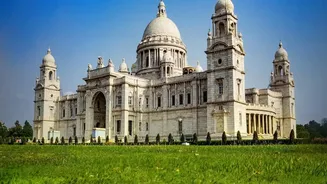
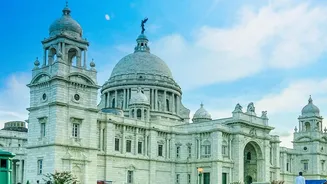
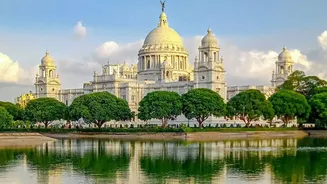
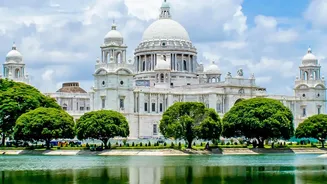
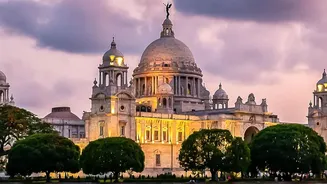
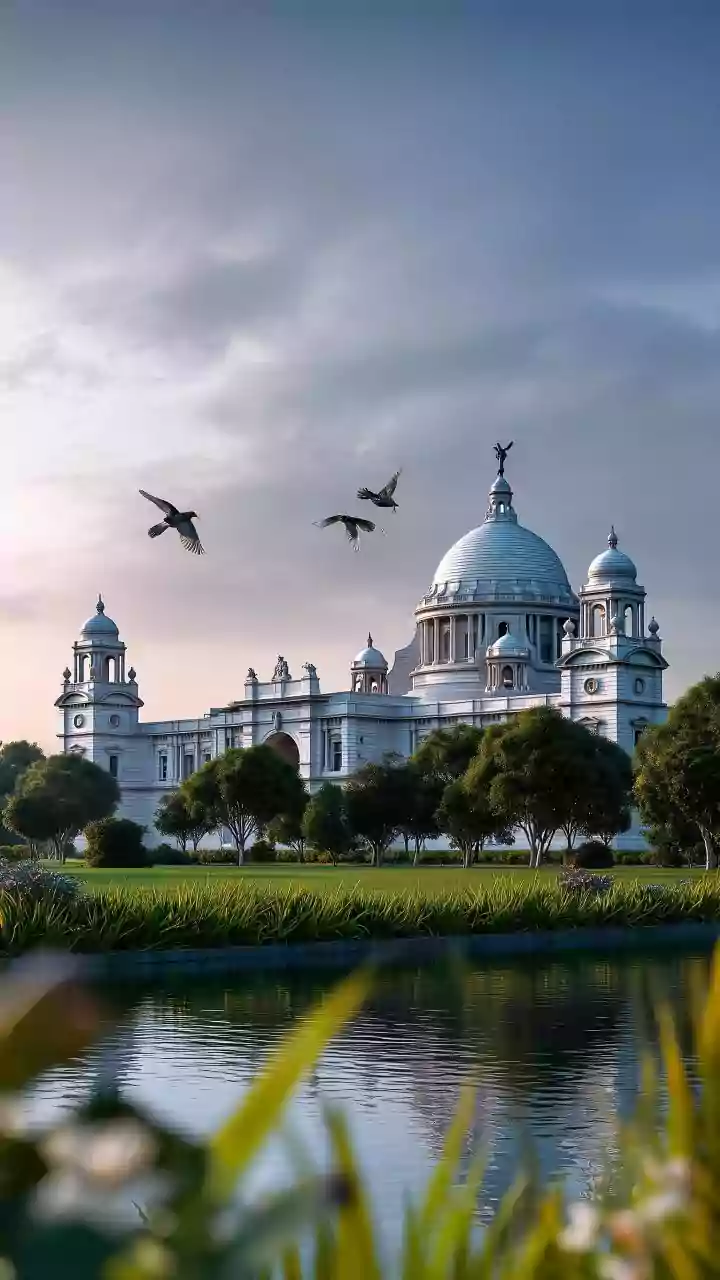
Beyond the administrative district, other structures cemented the city's reputation as a 'City of Palaces'. The most famous is the Victoria Memorial, a breathtaking monument of white Makrana marble built to honour Queen Victoria. Its design is a unique blend known as the Indo-Saracenic style, mixing British architectural principles with Mughal, Venetian, and other influences, yet its scale and majesty were purely imperial. Similarly, the Raj Bhavan, once the residence of the Governor-General, was designed to be an opulent palace showcasing British authority. Structures like St. Paul's Cathedral, built in an Indo-Gothic style, catered to the growing European community and further added to the city's European architectural character.
A Living, Complicated Legacy
Today, Kolkata's colonial architecture is a cherished, if complex, part of its identity. These buildings are not just relics; many are still in use as government offices, museums, and places of worship. While they are reminders of a period of foreign rule, they are also a testament to the city's unique history and the craftsmanship that built them. The name B.B.D. Bagh itself is a post-independence tribute to three freedom fighters—Benoy, Badal, and Dinesh—who staged a daring attack at the Writers' Building in 1930. This act of renaming reclaimed a space of colonial power as one of national pride. The grand buildings remain, not just as echoes of London, but as integral parts of Kolkata's own, distinct story.