




A Sweet Discovery in the Stars
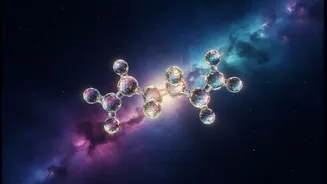
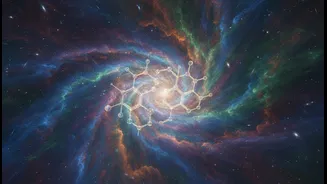
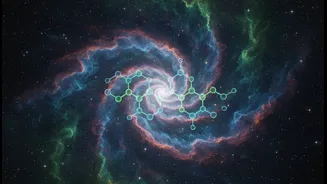
An international team of astronomers has detected a molecule called erythrulose floating in a vast molecular cloud some 27,000 light-years from Earth. This cloud, known as G+0.693-0.027, is a stellar nursery, a place where new stars and planets are born
from massive concentrations of gas and dust. While scientists have found other organic compounds in space before, this marks the first direct detection of a true sugar in the interstellar medium. Erythrulose is a four-carbon sugar, and on Earth, it is naturally found in things like raspberries. Its discovery in such a chaotic and primordial environment is a landmark finding.
Listening for a Cosmic Fingerprint
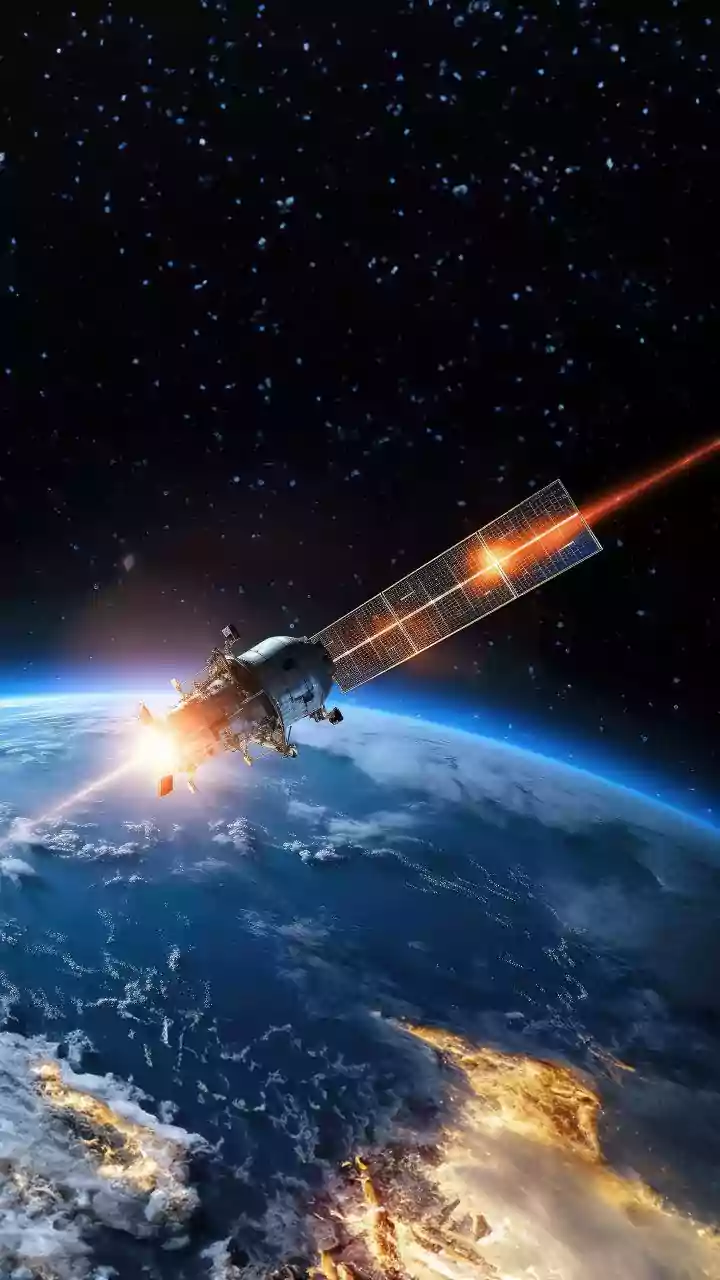
Finding a specific molecule across thousands of light-years is a remarkable feat of cosmic detective work. Scientists used powerful radio telescopes, including the Yebes 40-meter and IRAM 30-meter telescopes in Spain, to listen for tell-tale signals from the cloud. Every molecule emits or absorbs energy at specific frequencies, creating a unique spectral "fingerprint." The team scanned the chemically rich region and picked up 12 distinct radio emission lines that precisely matched the signature of erythrulose, a match confirmed with data from laboratory experiments. This confirmed that the sugar was not only present but existed in significant quantities within the cloud.
The Building Blocks of Life
So, why does finding sugar in deep space matter? Sugars are fundamental to biology. They provide energy, build cellular structures, and, most importantly, form the backbone of our genetic material. Molecules like erythrulose belong to the same chemical family as ribose, the five-carbon sugar that is a central component of RNA. Many scientists subscribe to the "RNA world" hypothesis, which posits that RNA, not DNA, was the primary form of genetic material for early life on Earth. The discovery of a sugar precursor in an interstellar cloud shows that the complex ingredients needed for prebiotic chemistry can form long before planets even exist.
From Cosmic Clouds to Comets
The discovery supports a long-held theory about how life got its start. The raw materials for biology may not have originated in the primordial soup of early Earth. Instead, they could have formed in the vast chemical factories of interstellar clouds. These molecules then become incorporated into the asteroids and comets that form within these systems. For billions of years, these cosmic delivery vehicles could have rained down on young, rocky planets like our own, seeding them with a ready-made starter kit of prebiotic molecules, including sugars, amino acids, and water. Sugars have previously been found in meteorites, but finding one in the interstellar cloud it came from provides a direct link in this cosmic supply chain.
What This Means for the Search for Life
This finding does not mean we have found alien life. What it does suggest, however, is that the chemical conditions necessary for life to begin might be common throughout the galaxy. If the fundamental building blocks are widespread, it raises the tantalizing possibility that life could emerge on other worlds. The discovery of erythrulose is a significant step, but it also opens up new questions. The next challenge for astronomers is to search for even more complex sugars, such as the five-carbon ribose, which would be a direct precursor to RNA. Each new molecular discovery in the cold expanse of space brings us one step closer to understanding our own cosmic origins.