


Why Your Ankles Are Foundational
We rarely think about our ankles until they ache or we twist one. Yet, these complex joints are the literal foundation for almost every move we make. They support your entire body weight, absorb shock, and allow you to navigate uneven surfaces without
falling. Good ankle mobility—the ability of the joint to move through its full range of motion—is crucial for everything from walking and climbing stairs to squatting and running. When ankles are stiff or weak, often due to a sedentary lifestyle or previous injuries, other parts of the body like the knees and hips have to compensate, which can lead to pain and an increased risk of injury.
The Underrated Power of a Simple Circle
This is where ankle circles come in. This basic mobility drill involves rotating your foot in a circular motion, moving the joint through all its planes of movement: up, down, and side to side. It's a dynamic stretch that helps lubricate the joint, release tension, and improve flexibility. Regularly performing ankle circles enhances your proprioception—your body's awareness of its position in space—which is a cornerstone of good balance. By strengthening the small stabilizing muscles around the ankle, this simple exercise makes the joint more resilient and less prone to sprains and other common injuries.
How to Do Ankle Circles Correctly
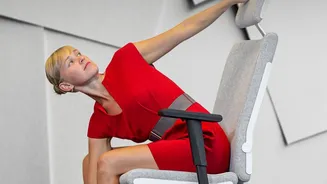
The beauty of ankle circles is their simplicity and accessibility. You can do them almost anywhere, with no equipment required. The key is to move slowly and with intention.For a seated version, sit upright in a sturdy, non-rolling chair with your feet flat on the floor. Extend one leg out in front of you, keeping a slight bend in the knee. From there, slowly and deliberately rotate your ankle to draw the biggest circle you can with your toes. Imagine you are tracing a circle on a wall. Perform 10-15 rotations in a clockwise direction, then switch and do the same number counter-clockwise before repeating on the other leg. You can also perform this exercise while standing, lightly holding onto a chair or wall for support as you lift one foot off the ground.
Common Mistakes to Avoid
To get the most benefit, focus on proper form. A common mistake is rushing through the movement. The goal is not speed, but control and a full range of motion. Another error is moving the entire leg from the hip or knee instead of isolating the ankle. Try to keep your leg as still as possible, letting the ankle do all the work. Also, avoid making jerky movements or forcing the circle if you feel pain. The motion should be smooth and fluid. If you feel any sharp pain, stop the exercise. Some minor clicking or popping without pain is often normal, but if it's a new or worrying sensation, it's best to get it checked out.
Integrating Circles into Your Daily Life
Consistency is more important than intensity. Because ankle circles are so easy to perform, they are simple to build into your daily schedule. Do a set while sitting at your desk at work. Perform them while watching television in the evening. They serve as an excellent warm-up exercise before a walk, run, or any lower-body workout, preparing the joints and muscles for activity. They are also beneficial for seniors or individuals in stroke recovery to improve walking stability and prevent falls. Just a few minutes dedicated to this movement each day can lead to noticeable improvements in your mobility, stability, and overall confidence on your feet.