


The Unstable Water Towers
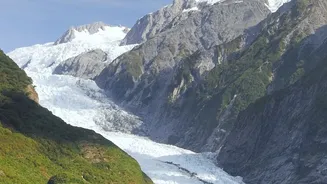
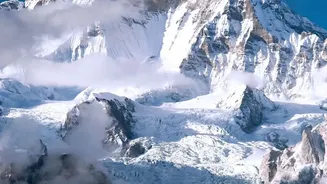
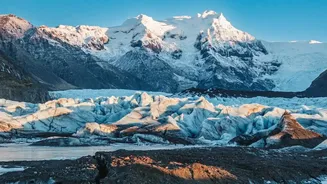
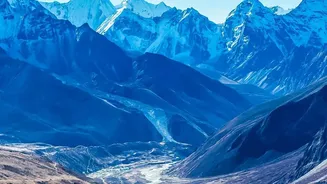
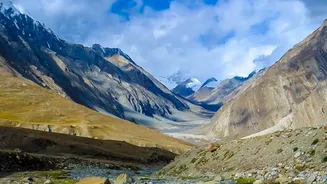
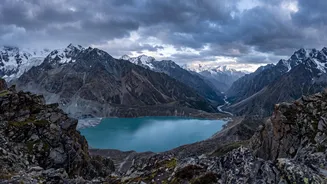
The story of many Himalayan flash floods begins high up in the mountains, at the glaciers often called Asia's "water towers." As global temperatures rise, these massive rivers of ice are melting at an accelerated rate. This meltwater often pools into
vast lakes, dammed only by unstable walls of loose rock and soil, known as moraines. These formations are not solid like concrete dams. They can be breached by a number of triggers, including a large chunk of ice falling into the lake, a landslide, or even just the immense pressure of the growing body of water itself. When these natural dams fail, it results in a Glacial Lake Outburst Flood, or GLOF, unleashing a sudden, catastrophic torrent of water downstream.
When the Sky Bursts Open
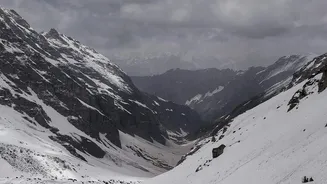
Another primary cause of these devastating floods is a phenomenon known as a cloudburst. This is not just heavy rain; it's an extreme weather event where a massive amount of precipitation—sometimes over 100mm—is dumped over a very localised area in less than an hour. In the Himalayas, the steep topography plays a crucial role. As moisture-laden monsoon winds are forced rapidly up the tall mountain slopes, they cool and condense into dense clouds that can hold enormous volumes of water. When the cloud can no longer contain the moisture, it 'bursts', releasing a deluge that the narrow valleys and steep terrain cannot handle. This sudden rush of water almost always triggers flash floods and landslides.
A Foundation of Fragility
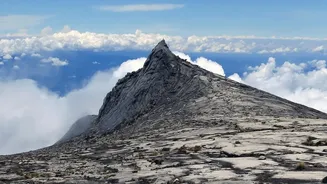
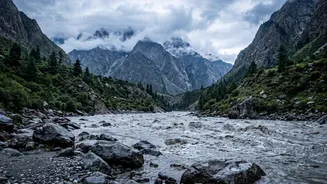
The very nature of the Himalayas makes them uniquely vulnerable. Geologically, they are young mountains, still rising and seismically active. This means the rock is often fragmented, and the slopes are covered in loose soil and debris from past landslides and glacial retreat. When a GLOF or a cloudburst occurs, the water doesn't just flow; it picks up this loose material—rocks, mud, and boulders—transforming into a thick, fast-moving slurry known as a debris flow. This mixture is far more destructive than water alone, possessing the power to demolish bridges, hydropower projects, and entire villages that lie in its path.
The Climate Change and Human Factor
Climate change acts as a force multiplier in this already volatile environment. Not only is it accelerating glacial melt and expanding the size and number of dangerous glacial lakes, but it's also increasing the frequency of extreme weather events like cloudbursts. Himalayan glaciers have been melting significantly faster in the last decade than ever before. This warming destabilises the entire mountain system. At the same time, human activity adds another layer of risk. The construction of roads, dams, and towns often occurs without fully considering the natural flood paths of these valleys. This unplanned development not only puts more people and infrastructure in harm's way but can also further destabilise fragile slopes, making a bad situation even worse.