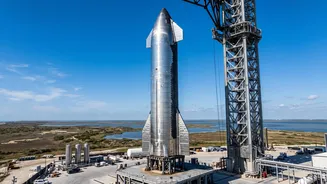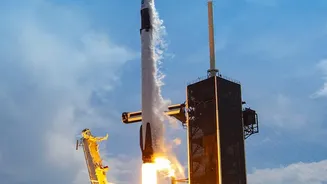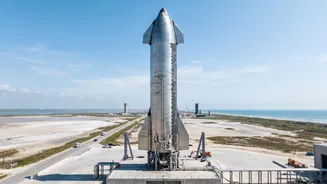


In a landmark moment for spaceflight, SpaceX successfully caught its Starship upper stage for the first time, a feat once considered science fiction. Yet, the mission saw mixed results, with the Super Heavy booster's recovery being aborted.
A 'Chopsticks' Catch for the Ages
On November
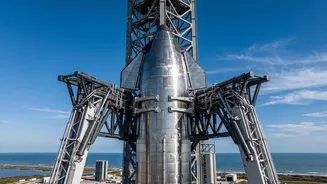
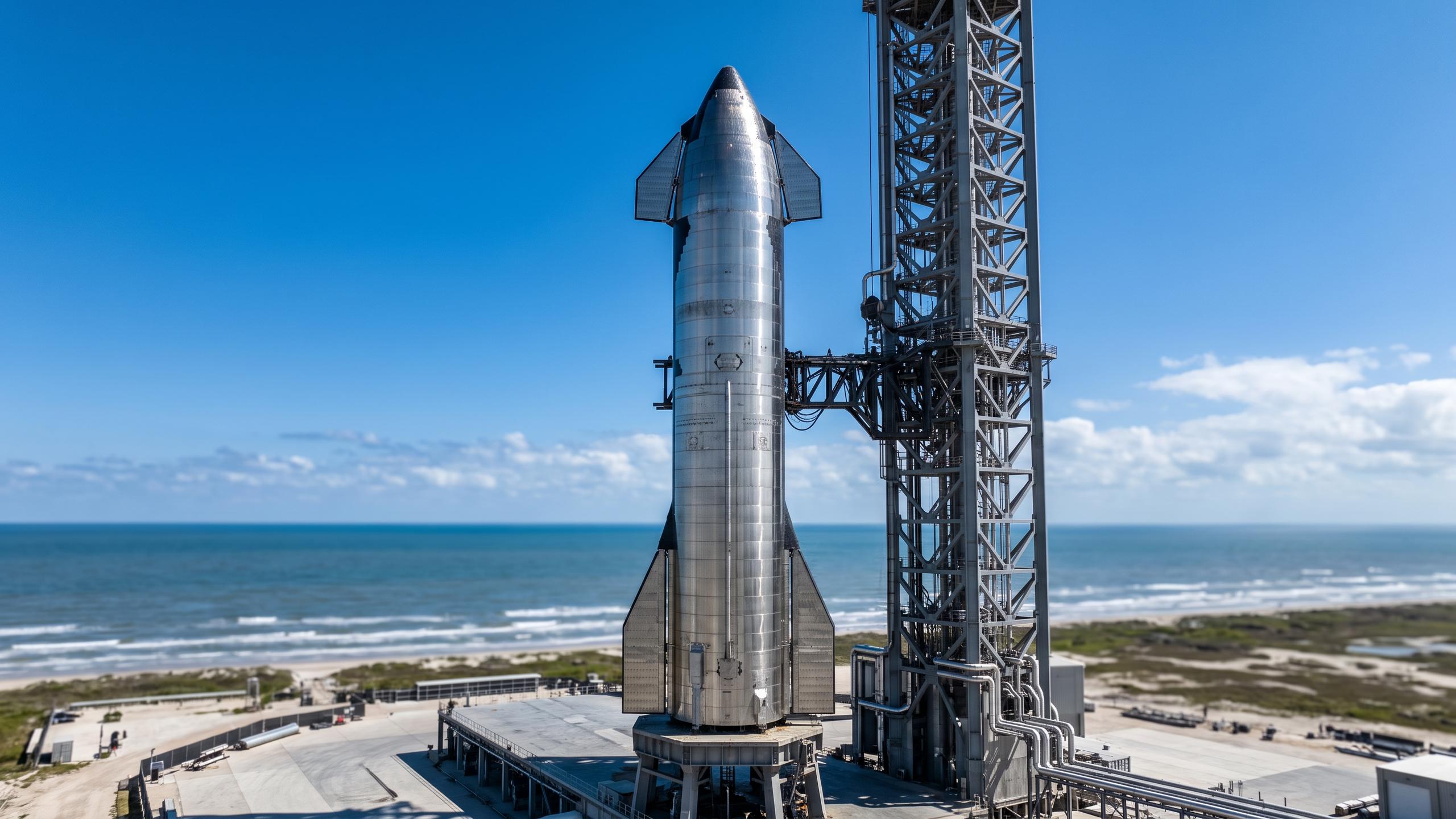
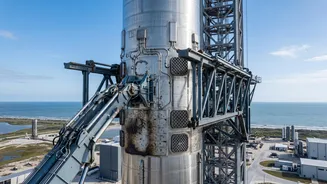
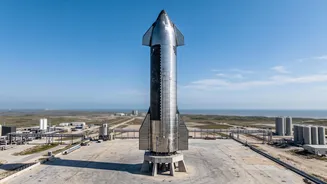
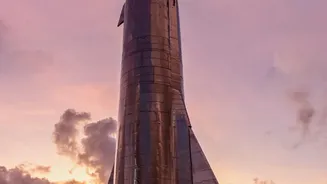
14, 2026, after a nearly 23-hour mission that included 14 orbits of Earth, the Starship upper stage descended through the Texas sky. In an unprecedented maneuver, a pair of giant mechanical arms on the launch tower, nicknamed 'Mechazilla' or 'chopsticks', closed around the 171-foot-tall spacecraft, securing it in a controlled catch. This was the first time any company has recovered an orbital-class upper stage in this manner, a milestone hailed as a 'holy grail' of rocketry. The achievement is a monumental step toward SpaceX’s ultimate goal: creating a fully and rapidly reusable launch system. Unlike its workhorse Falcon 9, whose second stage is discarded after each flight, Starship is designed for both its booster and upper stage to be recovered, refurbished, and flown again, potentially slashing the cost of accessing space.
The Booster's Aborted Return
While the Starship catch was a resounding success, the mission's other primary objective fell short. The Super Heavy booster, the massive first stage of the rocket, did not complete its own return to the launch site. Shortly after liftoff on November 13, the booster separated and began its boostback burn. However, its guidance system detected an issue—later revealed to be a low fuel reading—and automatically aborted the tower catch attempt. The booster then diverted to a designated splashdown zone in the Gulf of Mexico, where its flight was terminated. While SpaceX has successfully caught the Super Heavy booster on three previous flights, the failure to execute a 'double catch' on this mission highlights the immense complexity of recovering both stages on a single flight. The company is currently investigating the root cause of the fuel anomaly.
The Billion-Dollar Question of Reuse
Catching the Starship is a historic engineering feat, but it's only the first half of the reusability puzzle. The next, and arguably more critical, step is demonstrating that the recovered vehicle can be launched again quickly and with minimal refurbishment. SpaceX founder Elon Musk stated that the recovered vehicle, Ship 42, looked to be in great condition and could likely be reflown after a few weeks of work. However, he also announced that because of its historic nature, this specific ship will be retired for public display rather than being risked on another flight. The true test will come with subsequent recovered Starships. Achieving aircraft-like operations, where a vehicle can land, refuel, and fly again in a short period, is the core of Starship's business case. This requires everything from the heat shield tiles to the Raptor engines to withstand the rigours of spaceflight and fiery reentry with little to no repair.
One Step Back, Two Steps Forward
Despite the loss of the Super Heavy booster, Flight 15 is widely seen as a massive net win for SpaceX. Successfully catching the upper stage was considered the more difficult and novel challenge of the mission. The upper stage endures the extreme heat and stress of atmospheric reentry from orbital velocities, making its controlled descent and precision catch a far greater technical hurdle than recovering the suborbital booster. During its time in orbit, the ship also successfully deployed 26 next-generation Starlink satellites, proving its capability as a payload-delivery platform. This successful flight builds crucial momentum for SpaceX as it works to certify Starship for missions including launching its massive satellite constellations and providing a lunar lander for NASA's Artemis program. The mission demonstrated that the most audacious part of the plan—catching an orbital spacecraft from the sky—is possible.