




The Overlooked Chapter
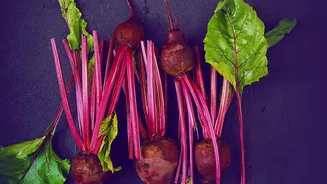
In the narrative of the beet, the root is always the hero. We roast it, pickle it, and blend it into juices. The leaves, however, are often treated as a disposable epilogue. These are the vibrant, leafy tops that grow above the ground, connected to the bulb
by crisp, colourful stems. Their taste is earthy and mild, a pleasant cross between spinach and Swiss chard. Younger leaves are tender and sweet, perfect for raw preparations, while more mature greens can have a slightly bitter note that mellows beautifully with cooking. The stems, which share the colour of the beetroot, are entirely edible and add a delightful, crunchy texture. All too often, home cooks discard them simply because they don't know what to do with them, missing out on a delicious and versatile ingredient.
A Nutritional Powerhouse
The real twist in the beet greens story is their incredible nutritional profile. In many ways, the leaves are even more nutrient-dense than the root itself. They are packed with vitamins A, C, and K. In fact, just 100 grams of fresh beet greens can provide over 200% of your daily recommended intake of vitamin A and a significant amount of vitamin C, which is vital for a healthy immune system. The greens are also an excellent source of essential minerals like iron, potassium, calcium, and manganese. This impressive combination supports everything from bone health to good vision and can help protect against iron deficiency. Despite being so rich in nutrients, they are low in calories, making them a fantastic addition to any health-conscious diet.
From Market to Kitchen
Proper handling is the first step to rewriting the story of your beet greens. As soon as you bring them home, it's best to separate the greens from the beetroot. If left attached, the leaves will continue to draw moisture from the root, causing both to wilt faster. To store them, wash the leaves thoroughly under cool, running water to remove any grit or soil. A salad spinner is great for drying them, but patting them dry with a towel also works well. Wrap the clean, dry greens in a paper towel and place them in a reusable bag in your refrigerator’s crisper drawer. This way, they can stay fresh for several days, ready for you to use.
Tackling the Taste
The slightly bitter taste of some mature beet greens is the main reason some cooks hesitate to use them. However, this is easily managed. Cooking is the simplest way to mellow the flavour, transforming it into something sweeter and more delicate. Sautéing the greens with a bit of fat like olive oil or ghee, along with garlic and onions, brings out their natural sweetness. Adding a splash of acid, such as lemon juice or a mild vinegar, towards the end of cooking can also brighten the flavour and cut through any remaining bitterness. For those who are particularly sensitive to bitterness, a quick blanch in boiling water before sautéing can help, but for most preparations, it's not necessary.
Simple Ideas for the Indian Kitchen
Beet greens are wonderfully adaptable to Indian cooking methods. The easiest way to start is by treating them like any other leafy green. Finely chop the leaves and stems and make a simple sabzi by sautéing them with potatoes, turmeric, and a pinch of garam masala. They can also be added to dal for a nutritional boost. Just chop the greens and add them to your lentils, like moong or masoor dal, while they cook. The leaves wilt down and blend beautifully into the dal, adding flavour and texture. You can also wilt them into soups or even incorporate them into a yogurt-based dish like a kootu, where their earthiness is balanced by the tang of yogurt and the fragrance of coconut.