



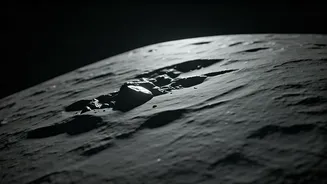


The Challenge: Studying the Moon from Earth
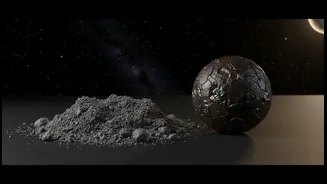
For decades, scientists have faced a fundamental challenge in studying the Moon: a severe lack of physical samples. While the Apollo, Luna, and more recent Chang'e missions brought back invaluable lunar material, these samples are from limited locations.
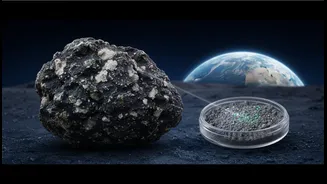
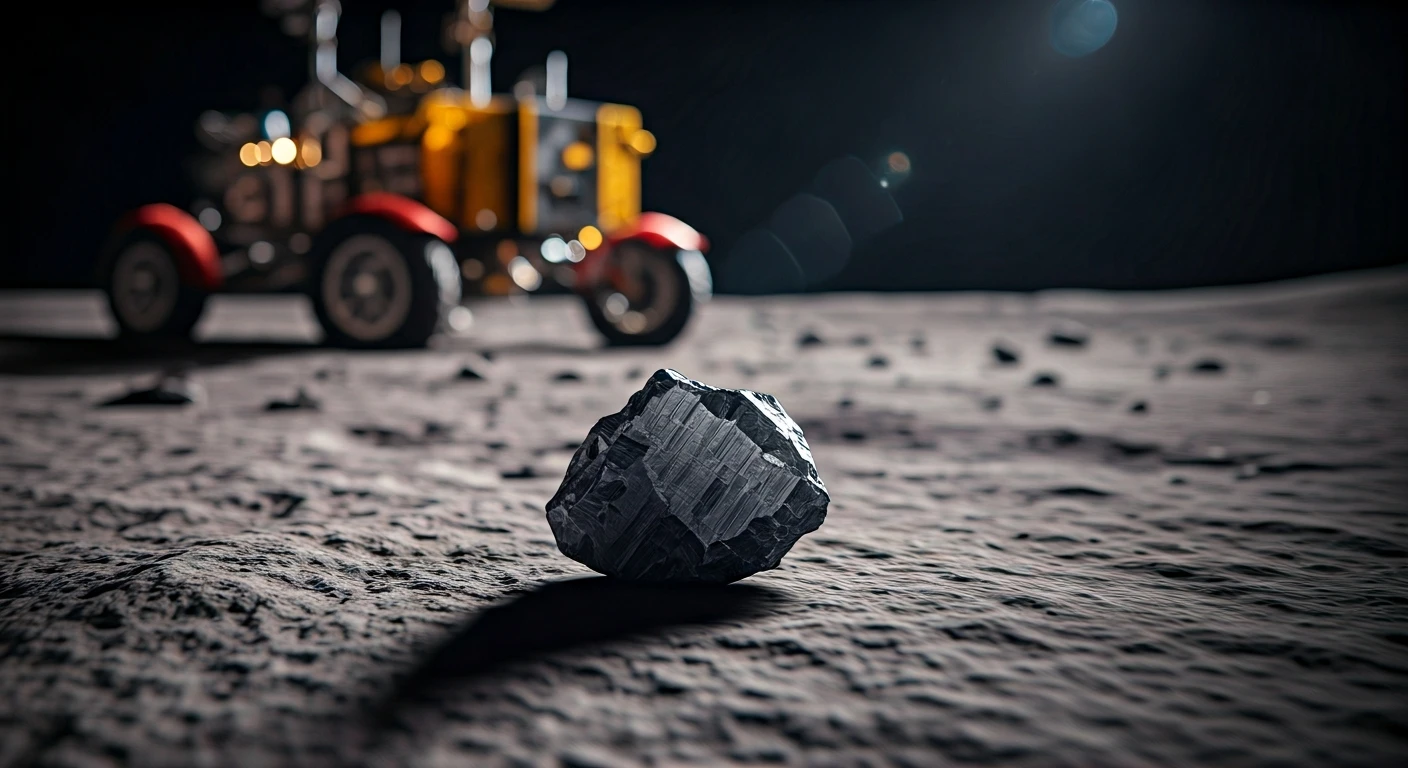
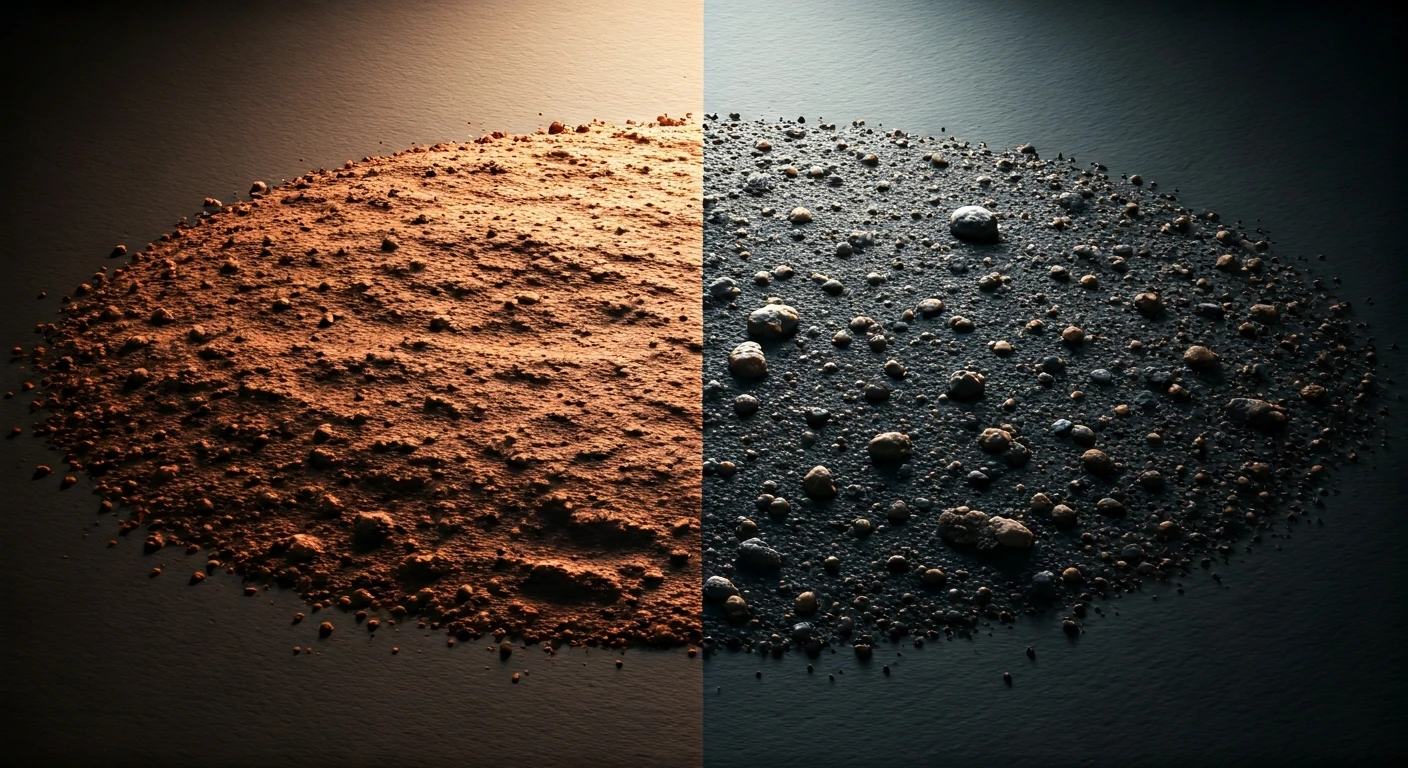
To fill the gaps, researchers have relied on two main proxies: lunar meteorites and lab-created soil simulants. Lunar meteorites are pieces of the Moon that were blasted into space by asteroid impacts and eventually fell to Earth. These are authentic pieces of lunar rock, but without knowing exactly where on the Moon they came from, their context is limited. This has left a lingering question: how well do these Earth-bound samples represent the Moon's diverse surface? Validating this connection has been a long-standing goal for planetary scientists.
Pragyan's Ground-Truth Revelation
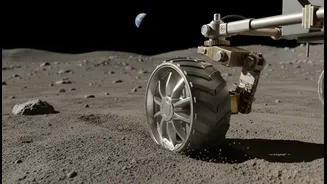
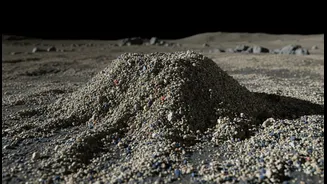
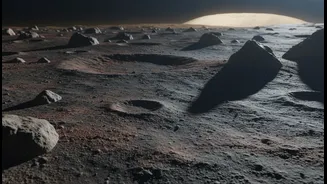
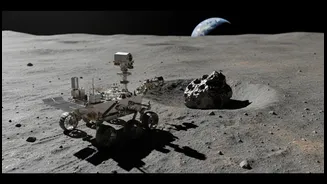
This is where the Pragyan rover's work becomes pivotal. A recent study by scientists at the Physical Research Laboratory (PRL), Ahmedabad, has provided the missing link. Using data from the Alpha Particle X-ray Spectrometer (APXS) on board the rover, they analyzed the chemical composition of the lunar soil, or regolith, at the Shiv Shakti landing site near the south pole. The results were striking. The soil's geochemical makeup closely resembled that of a specific lunar meteorite found on Earth: ALHA 81005. This meteorite was discovered in Antarctica's Allan Hills in 1981 and was the very first rock on Earth confirmed to have a lunar origin. The analysis showed both the Shiv Shakti soil and the meteorite contained nearly identical amounts of key compounds like aluminium oxide and a combination of iron and magnesium oxides.
More Than a Coincidence
ISRO scientists are careful to clarify that this does not mean the ALHA 81005 meteorite was launched from the exact spot where Pragyan landed. Instead, the finding indicates that both the meteorite and the soil at the landing site represent a similar type of magnesium-rich lunar crust. This is hugely significant because it provides the first direct, on-site evidence—or "ground truth"—that validates the use of these specific meteorites as reliable analogues for the Moon's highland regions. The APXS data revealed that the soil at Shiv Shakti is a mix of materials, including not just the upper crustal rock known as ferroan anorthosite, but also fragments of magnesium-rich rocks likely excavated from deeper layers of the Moon's crust, possibly by ancient impacts. This complex mixture is what makes the match with meteorite ALHA 81005 so compelling.
Why This Discovery Matters for Future Exploration
Forging this connection between lab samples and in-situ data has profound implications. It validates decades of research conducted on lunar meteorites, giving scientists greater confidence in the conclusions drawn from these precious samples. This newfound certainty makes future lunar science more accessible and cost-effective, as studying meteorites on Earth is far easier than launching missions to retrieve new samples. Furthermore, this knowledge is crucial for planning future missions, including those aimed at building permanent bases or utilizing lunar resources. Understanding the true composition and properties of the lunar regolith is essential for designing habitats, extracting materials like oxygen, and protecting equipment from the abrasive, glass-like lunar dust. Pragyan's findings help build a more accurate blueprint of the lunar surface, especially in the strategically important south polar region.
India's Growing Legacy in Space Science
The Chandrayaan-3 mission was already historic for making India the first nation to land near the lunar south pole. Discoveries like this cement its scientific legacy. By providing a crucial piece of the puzzle that connects Earth-based labs to the lunar surface, India's rover has opened new avenues for understanding the Moon's ancient past and its geological evolution. This achievement moves beyond exploration and into fundamental science, demonstrating ISRO's capability to conduct high-level planetary research. It not only bolsters the theory that the early Moon was once a molten magma ocean but also provides a detailed chemical profile of a previously unexplored region. Each new data point sent back by Pragyan helps to refine our understanding of our celestial neighbour, paving the way for the next generation of lunar exploration.